


Healthcare Revenue Cycle Management

Automating mid-revenue cycle workflows: What to consider

Published
February 18, 2026
2:28 pm
|
Updated
March 30, 2026
3:47 pm
Sponsored by Nym
The mid-revenue cycle is a critical phase connecting front-end clinical care and back-end financial reimbursement for health systems. Traditionally, this phase relied on labor-intensive, error-prone manual processes, opening the door to potential claims denials,
delayed payments and increased administrative costs.
But now, automation and AI are reshaping mid-revenue cycle workflows related to clinical documentation, medical coding and charge capture, transforming operational efficiency and, ultimately, financial health. That’s especially true at a time when claim denials are rising, requiring a specialized response to appeal, and medical coders have become one of the most difficult revenue cycle positions to fill.[1] Automated workflows and actionable intelligence offer new opportunities to leverage the skills of revenue cycle staff efficiently and effectively by reducing their administrative burden and enabling them to focus on tasks that require human oversight.
Today, as automation becomes more commonplace in mid-cycle revenue processes, health systems are reevaluating their approach as they pinpoint where AI can make the biggest impact.
In this HFMA executive roundtable, 11 healthcare revenue cycle and health information management executives share how they’re implementing AI solutions and shifting traditional staffing strategies as these new tools take hold.
Where is automation driving the most value in your mid-revenue cycle today?
Lisa Crow: Automation is driving value, specifically within hospital billing (HB) and professional billing (PB). In facility and provider coding areas, we have a talent pool that is rather shallow, so we really look to automation to help with volume increases as our staffing pool suffers the effects of well-earned retirements. We rely on simple visit coding, computer-assisted coding (CAC) as well as autonomous coding, and those three technologies have [brought] automation to the less complex cases, allowing the coders to focus on more challenging, complex cases that require critical thinking skills.
Jennifer Artigue: I echo Lisa’s comments about the shortage of qualified folks, especially around clinical documentation improvement (CDI) and inpatient coding. That has forced our organization to delve into AI, using technology to help us be more effective and efficient.
We engaged a vendor to do some post-coding, pre-bill claim review on our DRG payer accounts to help us identify opportunities for queries that were hidden or just not within the bandwidth of our CDI team and also to evaluate missed coding opportunities, both on the reimbursement and the quality side. The pre-bill, post-coding reviews have yielded great results for us, both from a revenue standpoint and from capturing quality metrics.
I will say, though, that we underestimated the lift on our CDI resources to manage those recommendations from AI. It requires a significant number of highly skilled coding and CDI resources to vet the recommendations and validate them before we issue a query or add codes to the code set.
Geneva Stewart: We’re beginning to see a wave of retirements, and to maintain efficiency, we’ve been leveraging technology to fill those gaps. It’s been effective, but it’s not a perfect science — we’re learning and refining as we go. The good news is that we’ve significantly reduced our candidate-for-billing (CFB) volume without seeing a spike in denials. While we automate more processes, we remain focused on ensuring revenue integrity: dollars coming in, denials staying low and accounts receivable managed appropriately.
Trudy Miller: For us, automation is driving the most value in coding. Coder productivity has increased because our coders are concentrating on the most complex work that requires expert review, while automation handles the simpler cases quickly and effectively. Definitely our turnaround time is much more efficient. Our discharged not final billed (DNFB) is much lower, too.
How long did it take after implementing AI to start seeing value?
Ashley Hill: On the physician side, it took about 30 days for them to get comfortable with the rules and the details that the computer-assisted coding (CAC) tool was providing back to them [and] to change what needed to be coded into the system. That coding group initially feels threatened that someone or something is doing the job that they’ve been known to do, so [we needed] their buy-in to say, “OK, it’s not taking away the work that I’m doing; it’s assisting me.”
Artigue: With our post-coding, pre-bill tool, within the first month, we saw improvements in our concurrent coding (CC) and major complication or comorbidity (MCC) capture rates, in our case mix index and in our capture of risk-adjustment diagnoses impacting quality metrics, so it was well worth the expenditure of resources.
Suzanne Layne: We stressed accuracy first and then momentum. The ROI came quickly once the coders became used to the tool and the steps involved. They became comfortable with the quality from autonomous coding.
When you face a mid-cycle problem, which type of automation do you first look toward: RPA or bots, EHR rules or edits, semi-automation like CAC or true automation like autonomous coding?
Hill: We try to optimize our EHR first. Yes, I can optimize my CAC tool, but I need the CAC tool to focus on highly specialized specialties such as surgeries, trauma and interventional radiology. I can use the EHR to correct simple rules quickly by adding some modifiers. In the PB world, I’m combating volume all day long. I never have enough coders, and the volume does not stop, so I need our main [EHR] system to do what it can, the best it can, quickly.
Shannan Bolton: In terms of the amount of money that we pay for our EHR, I will never be able to not start there. Our CFO is looking for me to be able to explain why we’re not able to do something within the system before I’d go outside. I’d say 80% of the time, there are things that we can improve in our workflows within the EHR.
Carolyn Page: From the HB side, we’ve had CAC since 2015, and we did not realize an increase in productivity on our inpatient accounts with CAC. We realized a 20% to 30% increase in productivity on outpatient, same-day surgeries, observations and ED visits, but not for inpatients because our EHR documentation was lacking in so many areas. While automation tools like bots have their place, for coding, we pass over the bots and go right to the EHR and autonomous coding options.
Stewart: We’re also exploring and adding more autonomous coding. As we implement it, we’re monitoring denials closely to ensure accuracy and build trust in the process. It’s not seamless at the start, but by fully utilizing available features and continuously optimizing, we’re already seeing positive impact.
What metrics are most important to you when gauging the success of an AI solution? And, what are some things you’re learning along the way?
Sheila Augustine: The metrics that are going to be important are your coding days, specifically DNFB and CFB, and denials after the fact. Are denials increasing or decreasing? By leveraging AI, we’ve been able to repurpose our staff to other areas and move people to additional denials work. We’ve been able to bring more expertise into those areas because of some AI deployments.
Miller: In the coding space, obviously it’s coding accuracy: CPT codes, diagnoses, the leveling, the modifiers. Outside of just the emergency department (ED) coding, making sure the AI is selecting the correct billing and supervising providers accurately is very important. In our ED, one of the metrics that we look at and gauge to determine success is the coverage. The automation has sustained a certain level of coverage that they are completing for us, and if that decreases, something isn’t going as well as it should.
Michael Nauss: When you go live with an AI vendor, it’s important to make sure the data reporting is as mature as possible. For example, one of the reports we get back is on documentation completeness. An AI tool cannot code an encounter if the note is not complete on the professional side. Although all hospitals typically have bylaws that state that notes must be completed within a specific time frame, you need to have a mechanism by which you can identify those providers who are not meeting that timeline so you can initiate discussions with them. Otherwise, you won’t realize the full benefit of the AI solution.
How is the use of automation impacting your workforce?
Augustine: We’ve been able to move some people to denial work and really bring more expertise into some of those areas because of the AI deployments. Moving more coders up and putting them to work on those complex cases strengthens professional satisfaction.
Artigue: One new AI tool that we’re using in the CDI space is helping us prioritize cases for review to focus on cases where we can have the greatest positive impact, both from a revenue and a quality standpoint. From a workflow standpoint, it’s created reorganization of our processes and teams so the CDI staff can have a better impact and impact the documentation to reflect the “clinical truth” for the patient. This is something we had struggled with from a sheer volume standpoint. It’s not only about capitalizing on the DRG and the diagnosis for reimbursement, but capturing quality-impacting diagnoses as well. We are at such a different place in our collaboration with the quality departments. I never thought in my career that we’d be so closely enmeshed with the quality teams, but together, we have yielded positive changes with a collaborative and compliant approach. The new AI tool really changed the entire way we do our jobs.
Hill: What I’ve done is recreate how I’m using my certified coding staff. I’ve been able to use them for denials that are specific to coding [and] to be educators and support different physician practices. That has [expelled] the initial fear that those team members had. It has also shown that these team members are more than just heads-down coders. For some team members who felt deflated, it gave them a new lease on life because now they get to work hand-in-hand with the physicians, helping them identify the best way to articulate their documentation so we can get that into the chart and get paid accordingly.
Mark Hadala: I’m not equating bots with AI, but we have bots in place that are posting thousands of ambulance charges a day that several human beings were [doing] before that. Now, a human being only has to do the ones that the bot isn’t smart enough to do. So, from a bot perspective, we’ve been able to shave off 10 FTEs that were just manually entering ambulance charges all day.
How do you address skepticism and build buy-in for AI?
Augustine: Healthcare is a slow adopter of AI, and we do it piecemeal to feel comfortable where we are. In revenue cycle, there are always so many projects that we have going on. If you implement AI from a coding perspective, you really want to watch the quality as well, but if you have five other projects going on, you can’t focus on that. That’s why we’re slow adopters and have skepticism. There are a lot of operational resources that go into that to make sure it works for the long term, so it’s an investment not only cash-wise, but in your people as well, operationally.
Page: Change management, particularly as it relates to AI-enabled tools for coding, has been our biggest challenge. I talk with each of our coders to help guide them through this new frontier of autonomous coding to ensure we’re accurately coding the care and services we provide to patients. That’s a big part of our change management model. Coders are a unique breed. We’re sort of perfectionists. Making the transition to automous coding does not happen overnight.
At a glance
Key takeaways from the panelist discussions include the following:
- Mid-cycle automation is driving the most value in areas like medical coding operations, helping organizations manage volume increases and workforce shortages by handling more routine cases.
- Organizations are seeing measurable value within 30 days of AI deployment, once staff become comfortable with new workflows and build trust in the technology.
- Automation is elevating coders to higher-value work rather than replacing them. Organizations are redeploying staff into physician education, denial management, and revenue integrity roles.
- Change management is the most underestimated challenge in AI implementation; technology adoption requires as much focus on people as on the tools themselves.
Conclusion
In automating meticulous mid-revenue cycle workflows, healthcare organizations are streamlining once-cumbersome manual tasks to improve operational efficiency and data accuracy. By embracing AI as an assistant rather than a replacement for skilled staff, labor-strapped health systems are using these tools to address workforce shortages, empowering coders to focus on more complex cases and higher-value work.
While skepticism and other barriers still surround AI adoption in healthcare, revenue cycle and HIM leaders are learning how to navigate the operational realities of automation as they look toward the future of mid-revenue cycle management.
PANELISTS

Jennifer Artigue,
RHIT, CCS, is senior director of HIM, coding and CDI for FMOL Health, Baton Rouge, La.
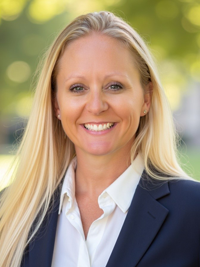
Sheila Augustine,
MHA, FHFMA, EHRC, is director of revenue cycle at Nebraska Medicine, Omaha, Neb.

Shannan Bolton,
CRCR, RHIT, is vice president of revenue cycle optimization and performance excellence at Stanford Healthcare, Palo Alto, Calif.
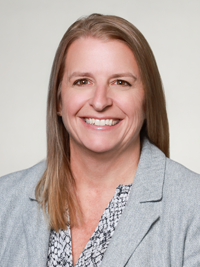
Lisa Crow,
MBA, RHIA, is senior director of revenue cycle at Scripps Health in San Diego.

Mark Hadala,
CRCR, is executive director of revenue integrity at Advent Health, Altamonte Springs, Fla.

Ashley Hill,
MBA, CPC, CHFP, is assistant vice president of revenue cycle at Wellstar Health System, Atlanta.

Suzanne Layne,
MLD, RHIT, is associate vice president of health information and patient identity at Main Line Health in Philadelphia.
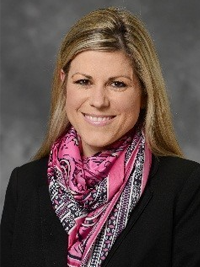
Trudy Miller,
RHIT, CCS, CDIP, is director of ED coding services and inpatient professional coding operations at Henry Ford Health, Detroit.
Michael Nauss,
MD, FACEP, is medical director of revenue cycle at Henry Ford Health, Detroit.

Carolyn Page,
BAS, CCS, CDIP, is senior director of coding at Intermountain Health, Salt Lake City.

Geneva Stewart,
CRCR, is director of revenue cycle and patient access at Montage Health, Monterey, Calif.
About Nym
Nym is the leader in transforming clinical language into actionable information, which can remove inefficiencies that add billions to the cost of care. Powered by proprietary Clinical Language Understanding (CLU) technology, Nym’s autonomous medical coding engine deciphers the information in patient charts and assigns medical codes to encounters in seconds with over 95% accuracy and zero human intervention. Supporting six specialties across inpatient and outpatient settings, Nym currently processes millions of charts annually for more than 300 healthcare facilities nationwide. Named to TIME’s World’s Top HealthTech Companies of 2025, Nym is headquartered in New York City with R&D operations in Tel Aviv. Investors in Nym include PSG, Addition, GV, Bessemer Venture Partners, Dynamic Loop Capital, Tiger Global, Zach Weinberg, and Nat Turner. To learn more about Nym, visit nym.health.
Footnotes
[1]. “Bottom line impacts from revenue cycle staffing challenges” MGMA Stat, March 23, 2023.
