



Fast Finance
Flagged hospitals say they are not financially endangered
The hospital closure risk assessment is just the latest of many similar reports in past years.

Published
May 5, 2026
10:27 am
Some of the hospitals listed as at risk of closing due to coming federal Medicaid cuts reject that assessment.
The left-leaning advocacy group, Public Citizen, wrote in a March 31 report that 446 hospitals “are at heightened risk of closing or reducing services due to Medicaid cuts.”
The widely covered report was based on its identification of hospitals with a payer mix of at least 20% Medicaid and other low-income government payers, as well as those that averaged negative net margins from 2022 to 2024.
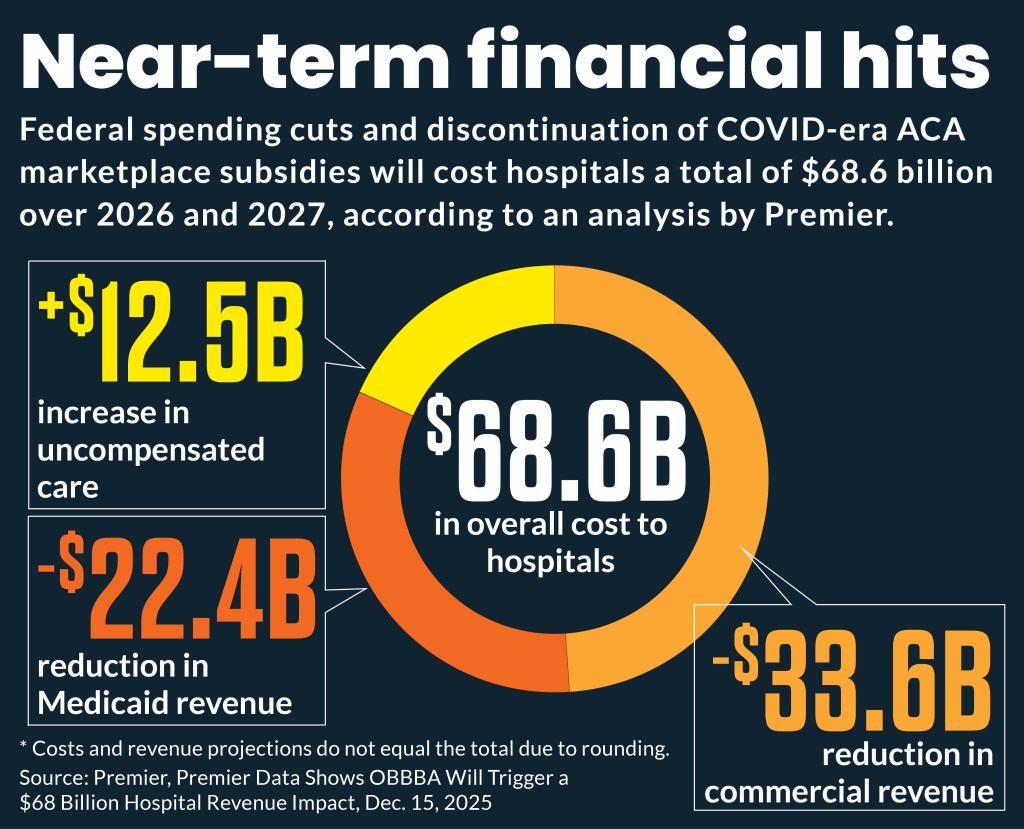
The report claimed the hospitals were at risk due to planned Medicaid spending reductions over the coming 10 years from provisions of the One Big Beautiful Bill Act (OBBBA).
Hospital response
But some disputed that assessment.
“I want to address that directly and clearly: Our hospital is not closing,” Lorie Till, CEO of Northwest Mississippi Regional Medical Center, one of the identified hospitals, wrote in a community note provided to FastFinance. “We are open, stable and moving forward.”
The assessment was mistaken, Till wrote, because it was based on financial information from 2022 through 2024 — “a period of major transition for us.” She said it coincided with the May 2023 reacquisition of the hospital by Coahoma County.
“As often happens with ownership transitions, there was a temporary period of financial and administrative disruption,” Till wrote.
Afterward, it strengthened stability, rebuilt payer relationships and positioned itself for long‑term sustainability, she wrote.
The study period also coincided with a historic low point in hospital margins nationwide, after most federal COVID-era supplemental funding ended but patient volumes had not yet returned to hospitals.
Year-to-date hospital operational margins were at -4.52% in January 2022 but steadily improved to 2.1% in December 2024, according to the Kaufman Hall operating margin index. And they recently peaked at 3.7% in December 2025 before decreasing early this year amid a weak flu season and other factors.
Another of the hospitals listed as at risk in the report was Minden (La.) Medical Center. The 161-bed hospital is owned by Allegiance Health Management, a for-profit Louisiana-based health system that operates and manages 15 hospitals across Louisiana, Texas and Mississippi.
Sarah Haynes, director of business development for Minden, said in a brief interview about the Public Citizen report that “we are not at risk of closing.” She declined to further address the organization’s financial outlook.
Welch Community Hospital (WCH), operated by the West Virginia Department of Health and Human Resources, also was deemed “at risk.”
“There are no anticipated adverse impacts from federal funding cuts and DHF West Virginia Department of Health Facilities does not anticipate any additional funding gaps,” Gailyn Markham, director of communications for the West Virginia Department of Health Facilities, wrote in an email. “While WCH does maintain a significant patient population which receives Medicaid, as a state owned and operated entity, WCH’s funding is appropriated by the West Virginia legislature.”
Metropolitan Hospital Center, one of 11 acute care hospitals in the New York City-owned NYC Health + Hospitals’, also was among hospitals listed as at risk.
“NYC Health + Hospitals’ fiscal health is strong,” Adam Shrier, a spokesperson for the health system, wrote when asked about its hospital’s at-risk status. “Over the past several years, the public health care system has posted record patient care revenue and expanded its staff and services to support our growing patient population. As our leadership has testified, and evidence demonstrates, the public health care system is securely positioned to continue to grow, innovate and deliver high-quality care for the millions of New Yorkers we proudly serve.”
A driver of hospitals listed as at risk
Industry leaders agree that the expected reductions in Medicaid revenue will be significant for some organizations. But there is wide disagreement about the extent of adverse effects — up to closures and service discontinuations — that will result from the OBBBA cuts.
The Center for Healthcare Quality and Payment Reform (CHQPR) has long tracked hospital financial vulnerability. Its latest assessment in January echoed its findings from several years when it concluded that more than 700 rural hospitals “are at risk of closing” before any OBBBA cuts.
However, it concluded that the needed fix was higher commercial rates because half of the services at the average rural hospital are delivered to patients with private insurance (both employer-sponsored insurance and Medicare Advantage plans).
“In most cases, the amounts these private plans pay, not Medicare or Medicaid payments, determine whether a rural hospital loses money,” stated the CHQPR report.
The large role of commercial insurance was echoed in data the Chartis Center for Rural Health provided exclusively to FastFinance. It found that the combined commercial and Medicare Advantage payer mix in 2025 was almost the same for rural and urban hospitals:
- Rural inpatient, 50%
- Rural outpatient, 55%
- Urban inpatient, 51%
- Urban outpatient, 55%
Past is prologue
The assessment that as many as 446 hospitals will close over the coming 10 years appears as a stark break from recent trends. But any future closures also would continue a pattern.
The Public Citizen report is just the latest among many previous assessments of hospitals listed as at risk of closing. Previous closure-risk reports, which did not identify specific hospitals, included:
- A February 2025 report from Chartis — before OBBBA was enacted — revealed that 432 rural hospitals already were vulnerable to closure
- A 2023 report from Kaufman Hall concluded 20% of California’s 118 hospitals were at risk of closure
- A 2022 report from consumer research firm Forrester stated that more than 30% of all rural hospitals are at immediate risk of shutting down
- A 2019 Guidehouse analysis concluded 430, or 21%, of rural hospitals were at risk of closure
Over the last 10 years, 208 hospitals have closed, according to annual reports from the Medicare Payment and Advisory Commission (MedPAC).
Even amid hospital closures, construction on new hospitals has continued. Hospital and clinic new construction starts have hovered around 200 facilities each year since 2017. Additionally, the total number of hospital and clinic projects, which includes new construction, expansions and upgrades was 2,873 total projects in 2015 and 1,701 in 2025, according to industry tracking.
More recently, improving rural finances could cushion adverse revenue effects from OBBBA. For instance, an annual tracking report from Chartis found that from 2023 to 2025, rural hospitals’ median operating margins improved, while the share operating in the red steadily decreased.
