


Healthcare Finance and Business Strategy
Annual Conference 2026, Day 2: With government retrenching, the impetus is on healthcare industry stakeholders to boost sustainability
Highlights Monday in National Harbor, Maryland, included a panel discussion on attaining financial sustainability in healthcare, insights from an HHS policy leader, the annual HFMA keynote and more.

Published
June 8, 2026
10:39 pm
|
Updated
June 13, 2026
5:20 am
Monday video recap:
AC26 Day 2 Recap: Big Questions, Bold Conversations
In this roundup:
Insights from the ‘affordability czar’
Jordan reflects on HFMA’s history and what lies ahead
Vitalic Health session looks at how technology can drive a better system
Most health systems expect to increase their AI spending: survey
AI and affordability will define the hospital of the future, conference panelists say

Government has a role in promoting improved healthcare sustainability, but industry stakeholders must lead much of the change, according to a keynote panel discussion Monday at Annual Conference.
In part that’s because government intervention over the last 50 years has not stanched the rise in prices, said Seema Verma, executive vice president and general manager of Oracle Health and Life Sciences, and previously CMS administrator during the first Trump administration.
“What you’re seeing now is almost like a pushback,” Verma said. “Where we’re seeing the [Affordable Care Act] tax credits didn’t get approved, you’re seeing changes in Medicaid.
“And so instead of what we’ve done traditionally, which is expand coverage, report more money into the programs, they’re actually moving in a different direction, which is to say, ‘We’re kind of exhausted on spending money in healthcare and we’re pulling back a little bit. We’re going to go after waste, fraud and abuse, and we’re going to push back to force more of that efficiency.’”
Rooting out waste
A pair of large-system CFOs on the panel, Scott Hawig of BJC HealthCare and Mike Marks of HCA Healthcare, pointed to decades-old claims, financial transactions and data-exchange systems as core problems bogging down the healthcare system.
The reliance on faxes, mailed records, phone calls and delayed adjudication makes it hard to reduce friction or use AI effectively.
Payers typically deny only a small volume of claims, “but it’s creating all of this havoc with the faxing back and forth of papers,” Verma said.
Standardized, real-time data exchange thus becomes foundational to making improvements.
“There’s no doubt that there’s a role for government setting standards,” said Casey Mulligan, chief economist and regulatory officer at HHS. “Look at price transparency. There’s a lot of controversy around that. But one of the things that we’ve done is say, ‘Look, here’s the standard.’”
That approach “helps make this transparency system work,” Mulligan added.
Standardization would support administrative simplification, better transparency, stronger AI use cases and lower costs, the panelists said.
Payers and providers have an opportunity to collaborate on some of the improvements.
“I’m seeing really good partnerships that are in flight to start addressing this,” Marks said. “But it’s a bit like ‘crawl, walk, run.’ We’ve got to start by getting data and standards. We’ve got to move to more transparent rules for things like prior authorization, concurrent authorizations, and frankly authorizations for post-acute care are just as big a problem.
“And then collectively I think we can make progress about the harnessing the potential of AI.”

Affordability and access as overarching challenges
Insurance coverage, whether through Medicare, Medicaid, employer-sponsored insurance or the Affordable Care Act marketplaces, remains essential to affordable access, the panelists said.
At the same time, providers should look inward to ensure they have “robust plans that drive efficiency and do it in a way that accelerates and enhances quality of care and transparency to our patients,” Marks said.
Innovative access strategies must be prioritized, given the degree to which healthcare demand exceeds available resources, Hawig said.
“We are not going to [meet] that by continuing to oversupply,” he said. “Whether you’d say we don’t have the time, whether the affordability issue is there, how are we going to meet that demand? I think it’s going to require a different approach, and we’re going to need to be more accessible.”
Gauging ROI should encompass clinical outcomes, workforce experience, patient service, quality, and efficiency in addition to financial return, panelists said.
With such considerations, providers can address the core concerns of consumers, said Jason Wolf, president and CEO of The Beryl Institute. Those concerns can be summarized with the acronym CAT (cost, access and trust), he said.
Wolf warned that many people are delaying or opting out of care because of cost, which worsens outcomes and creates larger costs downstream. He also said consumers often feel left alone navigating a system built around institutional needs rather than patient needs.
“My biggest concern is we’ll redesign a perfect system, but we still won’t have it work for the people that need to step into it,” Wolf said. “And so the conversation that you’re trying to generate around bringing people together needs to actually think about the end user first. And I don’t think we do that really well yet.”

Insights from the ‘affordability czar’
In remarks prior to the panel discussion, Mulligan explained how the Trump administration is striving to use federal policy to promote healthcare affordability. He noted his nickname in media reports is “the affordability czar,” reflecting the focus of his newly created role.
Supply-side economics should be a point of emphasis in policy, Mulligan said, meaning policy should not dwell on insurance coverage but also should consider issues such as improving health while lowering cost; giving patients more choices, better transparency and better data; and removing barriers to innovation.
HHS Secretary Robert F. Kennedy Jr., to whom Mulligan reports, emphasizes “that too much policy attention has gone to arguing about coverage cards, while addiction, obesity, mental illness and other chronic conditions have reached historic levels,” Mulligan said.
The impetus for new limits on provider taxes and SDPs
Although provisions in the One Big Beautiful Bill Act (OBBBA, also referred to as the Working Families Tax Cuts legislation by the Trump administration) could adversely affect providers, Mulligan said the Medicaid revenue cutbacks in the 2025 law represent sound fiscal policy.
He specifically called out mechanisms by which states tax providers to draw in federal matching dollars, then compensate those providers through state-directed payments (SDPs). Both provider taxes and SDPs face restrictions under the OBBBA.
The changes will produce significant savings for the federal government and taxpayers, Mulligan said.
“These SDPs affect a lot more than Medicaid because they change behavior in the broader provider market,” he said. “Medicaid financing gimmicks spill over to commercial prices, employer premiums, marketplace premiums, wages and Medicare spending. The small business renewing its health plan or the worker paying family premiums and the taxpayer funding federal subsidies all end up paying for a financing dance they never joined.”
He said the OBBBA will reduce the upward pressure on provider prices, thus lowering spending by commercial payers and Medicare in the range of “hundreds of billions of dollars. That’s a big tax cut in the tax law that nobody talks about, but it’s real money in workers’ pockets.”
Another concern, he said, is that “SDP’s increase Medicaid reimbursement and shift provider resources toward Medicaid patients, reducing the supply available to commercial and Medicare patients.”
Jordan reflects on HFMA’s history and what lies ahead
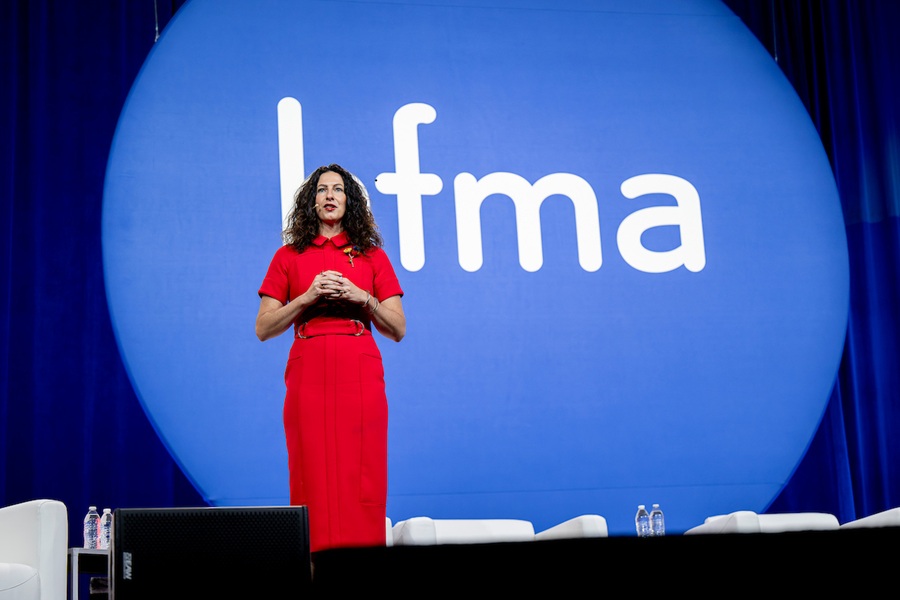
Healthcare is at an “existential tipping point,” HFMA President and CEO C. Ann Jordan said during her keynote talk Monday.
“When the tipping point arrives, it rarely comes as a managed transition,” she said. “It comes as rupture. What follows reorders leadership, competitive advantage and the fundamental logic of how an industry operates.”
The current moment is monumental in both pressure and possibility, Jordan said, driven by strained margins, shifting reimbursement models, workforce shortages, policy uncertainty, rising consumer expectations, and fast-moving AI and Big Tech disruption.
The stressors are reflected in a newly published HFMA survey, with 77% of healthcare executives and thought leaders agreeing that the healthcare delivery model has reached an existential tipping point and 90% saying it is financially unsustainable.
How the past, present and future are converging
There are parallels between the current environment and the one in which HFMA originated 80 years ago, Jordan said. Established in 1946 as the American Association of Hospital Accountants, HFMA emerged during a period of disarray to help bring financial clarity, accountability and structure to hospitals.
Referring to the Hill-Burton Act, a 1946 law that provided an influx of funding for not-for-profit hospitals, Jordan said, “The HFMA founders were formalizing a profession out of chaos [at] the exact moment the federal government began demanding that hospitals behave like accountable financial institutions. Without people who could manage grants, track uncompensated care, plan capital projects and report to regulators, Hill-Burton would have collapsed under its own administrative weight.”
That same enterprising spirit is evident today, and is every bit as needed. Jordan distinguished between being “builders” as opposed to “fixers.” The current operating model cannot merely be stabilized but instead should be rebuilt around affordability, sustainability and better outcomes.
Vitalic Health, an HFMA strategic initiative, strives to achieve exactly those improvements as a cross-stakeholder movement involving providers, payers, employers, technologists, policymakers and investors.
In the coming year, HFMA and Vitalic plan to advance value-based payment through a Payment Model Consortium, improve transparency around total cost of care, and push administrative simplification and standardization, Jordan said, noting survey findings that describe a lack of standardization as a major barrier to financial sustainability (see the session recap directly below for more on Vitalic Health).
She concluded by invoking the Annual Conference theme as a call to action for stakeholders.
“I invite every person in this room to join us to dare to solve,” Jordan said. “Because for 80 years, that has always been HFMA’s work at its best.”
Vitalic Health session looks at how technology can drive a better system
To ensure healthcare technology has a positive systemwide impact, stakeholders should focus on business model change, interoperability and patient-centered outcomes, industry experts said during a panel discussion Monday.
The session showcased insights related to Vitalic Health, an HFMA initiative to advance affordability, financial sustainability and better health outcomes in U.S. healthcare.
“The pace of innovation has added cost into the system without proportional improvements in outcomes,” Jordan said. “This is not an indictment of innovation. It’s a challenge to all of us to ask hard questions about how and where technology is deployed, and whether it’s moving the needle on outcomes that actually matter.”
As measured by Vitalic Health’s U.S. Vitals Tracker, the healthcare system scores a 35.9 out of 100. That indicates a system in “serious condition.” A negative driver is a stagnating health span at the population level, even amid surging costs.
Business model reform should come first
The healthcare business model is the root lever to drive needed change, panelists said.
“Healthcare providers respond to incentives very well,” said Dennis Dahlen, CFO of Mayo Clinic.
Thus, business model reform must precede operational or tech fixes, since optimizing a broken incentive structure simply would exacerbate the problems.
Implementation of new technology also should shift. Technology is underperforming due to fragmentation, with blocked data and isolated applications.
“We’ve all been deploying technology in silos,” said Jeremy Friese, founder and CEO of Humata Health. “Until we deploy the technology across silos and solve the interoperability problem as well as our silo problem, it’ll continue to be a cost driver rather than a cost saver that we can [use to] put money back into the ecosystem.”
The panelists agreed that if CMS could choose one thing to fix immediately, interoperability should be the target. In addition to improving administrative processes across the board, progress would allow patients better access to their health data.
“There is a massive problem with data blocking in this industry where great, innovative companies try to make things better for providers, and they’re simply not able to because they can’t get access to the data to partner with these providers to make things better,” said Marcus Whitney, founding partner of Jumpstart Health Investors.
A better system also would entail automated, predictable financial flows and less administrative cost, including vastly reduced waste in the revenue cycle.
In an ideal future, “we wouldn’t be spending a trillion dollars a year as an economy handling the rev cycle portion of healthcare,” Dahen said, adding that transactional flows should be “automatic and autonomous and predictable.”
Most health systems expect to increase their AI spending: survey
By Rich Daly, HFMA Senior Editor
More than eight in 10 health systems (84%) expect to increase their AI spending over the next 12 months, according to a recent survey.
In comparison, only 69% expect to increase their spending on cybersecurity, according to the early-2026 survey of 93 health system finance executives by HFMA and Fidelity Investments.
Melinda Hancock, executive vice president and CFO of Sentara Health, said her organization is among those growing their AI investments, which have included training senior leadership on its use.
The survey response that surprised Hancock was that 15% of health systems were not planning to increase their upcoming AI spending.
She noted that some organizations plan to reduce certain funds, including:
- 11% for restricted funds
- 9% for unrestricted funds
- 4% for foundation dollars
“We continue to have a lot of systems struggling, and for their ability to invest in the future they probably have to dip into their funds versus using their cash-flow margins,” Hancock said.
Partnership plans
Technology and AI partnerships dominated the types of outside collaborations that health systems plan to undertake. In the survey, 27% of organizations already had such partnerships and another 35% were planning them.
The other dominant outside action was mergers and acquisitions, which 20% already were pursing and another 28% were planning.
In contrast, only 1% of health systems were partnering with private equity (PE), while 5% planned any PE collaborations.
Jamie Richardson, managing director of research, municipals at Fidelity Investments, noted that some states, such as Connecticut, have pushed legislation to restrict PE investments in healthcare. He noted a venture capital firm purchased an Ohio hospital but added, “I wouldn’t expect to see a ton of that because it’s just a tough asset for the types of returns that they’re trying to generate.”
Cost control
Like every employer, health systems continue to struggle with high employee health insurance costs.
Amid projections for 10% to 12% increases in health insurance costs next year without plan changes, large shares of health systems (69% to 73%, depending on size) anticipate offering or continuing to offer high-deductible health plans with health savings accounts (HSAs). Additionally, most (51% to 56%) plan to increase premiums, while smaller shares (20% to 45%) plan to boost deductibles.
Michael Driscoll, senior business analyst, wealth experience, for Fidelity Investments, said smaller organizations typically use enrollee cost-shifting in response to plan cost increases. Larger organizations are more likely to offer tiered benefits or narrow networks to help control costs.
“When you make changes like [greater cost sharing] it is going have an outsized impact on your lower-income workers, so we have to be mindful when we think about cost sharing,” Driscoll said.
He underscored the use by 25% of the largest health systems of income-based premiums, which base the size of premiums on an employee’s pay rate.
Similarly, variable copay plans — used by 24% of midsize health systems — are “a way to manage affordability” for employees, he said.
Additionally, some organizations increase their HSA contributions for their lower-income employees.
AI and affordability will define the hospital of the future, conference panelists say
By Jeni Williams, HFMA Senior Editor
The healthcare industry is ready to tackle consumer cost concerns in a way it wasn’t a decade ago, HFMA Chair Matthew Cox told attendees at HFMA’s Annual Conference on Monday.
It’s a change in mindset that helps position the industry to make a difference on healthcare affordability at a time when tech innovation is reshaping how care and service are delivered.
“Hospitals want to change, care providers want to change, insurance companies want us to change [and] employers want us to change. Not changing is not an option,” said Cox, who also serves as executive vice president and CFO with Corewell Health.
Among the signs Cox points to as a future-forward industry shift: greater intensity to tackle healthcare’s toughest challenges.
“People are so passionate about healthcare now more than ever in my career, and the new people we’re hiring are coming in with the right reasons,” he said. “They want to be part of the stewardship.”
Making the right connections for care
The panel — “The Hospital of the Future: Preparing for a New Era of Medicine”— explored steps that healthcare leaders should take to help their organizations remain relevant, sustainable and patient-centered in a rapidly changing environment. Panelists included two leaders for Corewell Health, based in Grand Rapids, Michigan, as well as four consultants on industry renovation in the areas of revenue cycle, coding and more.
The hospital of the future “will still be a hospital,” said Ben Beadle-Ryby, chief revenue officer and cofounder for Akasa.
Even as much of the care currently performed in hospitals migrates to ambulatory settings, home care and more, “The hospital of the future will be the hub where the industry’s most complex care cases are dealt with,” Beadle-Ryby said.
The question, he said, is “how do we navigate and string together what is happening to the patient across all of those disparate ecosystems” for a connected care experience?
“We are big believers that AI is going to play a central role in that journey, gathering information from across all those settings and supporting hospitals and health systems in continuing to deliver world-class care,” he said.
Today, panelists see the impact that tech-enabled efficiencies in care are making in orchestrating the peer journey.
One health system in Dallas invested savings from shared services into a postpartum program to stay connected with mothers after they give birth. Such a program supports healthy outcomes at a time when one out of seven women struggles with postpartum depression. It’s one way that organizations are thinking about the role of hospitals in the future: taking care of patients not just in the moment, but in the moments before and after care is delivered.
Momentum builds for strategic partnerships
A hospital’s ability to reduce costs of care will increasingly depend on partnerships that help extract excess costs or increase revenue, Cox said. He envisions the emphasis on strategic partnerships increasing as organizations look for ways to do more with less.
Throughout the panel discussion, participants weighed opportunities to drive ROI from AI investment, from agentic AI to ambient listening to applications in generative AI for prior authorization and denials response.
“Five years from now, we won’t be talking about whether AI is embedded in our solutions; it’s just going to be part of the solutions that we’re designing [because of] what the expectation of the market is,” said Cheryl Cruver, president, U.S. markets, and chief commercial officer for AGS Health.
In this environment, the vendors that will stand out will be the ones “that aren’t just selling you the next thing — that are really co-inventing with you, really trying to embed [AI],” she said.
So will those that work with healthcare organizations to apply consistency to AI governance and ensure an organization’s AI touchpoints as well as its data points are tightly integrated, she said.
And while a lot of hospitals in today’s market hope to find one or two AI platforms that can solve many different needs, “It’s been shown that the multiples are there if you focus on deep, purpose-built AI and focus on a specific task as well,” said Nick Zafirson, vice president for Cedar.
“Just with the margins hospitals are facing today, you have to show up and deliver value,” he said.
Critical to demonstrating value as an AI vendor: expertise in assisting hospitals and health systems with change management as AI solutions are implemented, said Tina Freese Decker, president and CEO with Corewell Health.
Beadle-Ryby envisions a future state where AI is foundational to everything taking place in healthcare.
“AI has this raw potential that’s moving with such sheer velocity that it will be in every room, it will be supporting every patient interaction, it will be informing and educating our clinicians to provide better care — and therefore AI partnerships will be critical,” he said.
Reaching a future-forward state
No matter how organizations approach attaining a future-ready state, embarking on this endeavor will be one of the most expensive tasks a health ecosystem will face, Decker said.
“To really have impact in that space, you have to look at, ‘How do we [use AI to] control other spaces? How do we prevent admissions, avoidable readmissions?” Decker said. “And the only way you can really do that is to be able to use the data you have to predict, ‘What are those upfront interventions that we’re able to use to make an impact, and how can we coordinate care and reduce administrative waste through the use of that data?’
“It’s getting the right information to the right person to make the right decision at the right time,” she said. “As we continue to shift care to those lower-cost settings, access to the right data ensures that we can do that safely. … That is the only way people are going to trust embedding AI into healthcare.”
Further reading
For information on ways leading organizations are achieving future-state readiness, read HFMA’s Hospital of the Future report.
