


Payment
Annual Conference 2026, Day 3: Mehmet Oz tells attendees how ongoing improvements will bolster healthcare system sustainability
In addition to the remarks from the CMS administrator, highlights Tuesday in National Harbor, Maryland, included insights from healthcare credit-rating experts and an economic futurist, plus a FastFinance session and thoughts on how providers and payers can collaborate on risk.

Published
June 9, 2026
11:16 pm
|
Updated
June 10, 2026
12:08 pm
Tuesday video recap:
AC26 Day 3 Recap: What’s Next for Healthcare Finance
In this roundup:
Mehmet Oz tells attendees how improvements will bolster the sustainability of the healthcare system
Hospital strategies that don’t have a strong track record
Natural disasters represent another stumbling block for hospitals
Planning should be underway for responding to the OBBBA
How health systems approach risk with payers
Panel assesses what it will take to move the needle on value-based payment

Mehmet Oz, MD, the CMS administrator, had plenty on his itinerary amid his visit to Annual Conference on Tuesday outside Washington, D.C.
Oz addressed attendees in between commutes to Trump administration meetings in which officials discussed the implications of the newly released 2026 Medicare Trustees Report. The second of those meetings was scheduled to be a briefing for President Donald Trump.
For the second consecutive year, the report projects a 2033 depletion of Medicare funding in the Hospital Insurance (HI) Trust Fund. In the event the HI fund is ever depleted, Medicare Part A payments to providers would immediately drop by 11%.
Oz told Annual Conference attendees that points of emphasis in the administration’s initial meeting about the report Tuesday were fertility rates and productivity.
“If our fertility rates are able to stay high, it benefits the program 50 years in the future,” Oz said. “[That’s] nice to have. But the productivity issues in the short term are vital.”
Improved productivity translates to a healthy workforce generating revenues that feed into the fund. Oz noted that if population health improves enough that all Americans can work one year longer, on average, the GDP increase would be $1 trillion annually.
“That generates hundreds of billions of dollars in taxes,” Oz said. “That puts a lot of our social programs back on firm footing.”
The administration is striving to improve health and productivity on several fronts, Oz said. This week, for example, HHS announced an initiative to increase nutrition education at every level of medical education and training.
Aiming for a more rational healthcare system
The administration also is looking at ways to get better value for the healthcare dollar. One is an ongoing crackdown on fraud, waste and abuse in Medicare, Medicaid and the Affordable Care Act marketplaces.
“If you just took the fraud out of Medicare, you would double the life expectancy of the Medicare trust fund,” Oz said.
CMS also is using its power as a healthcare industry convener to push efforts to lower drug prices. The expanding application of most-favored-nation pricing is a lever to tamp down the price of pharmaceuticals, amounting to a projected reduction in spending of $600 billion over 10 years, Oz said.
“We pay on average three times more for the same drugs — made in the same facilities, often here in America, and put in the same bottles — as they pay in Europe or Asia,” Oz said.
Ramping up VBP and scaling back prior authorization
Value-based payment (VBP) is an increasing point of emphasis, as seen in the evolving portfolio of the Center for Medicare & Medicaid Innovation. CMS is merging the potential of AI with that of VBP in initiatives such as the ACCESS Model.
For participating tech companies, “If you reduce the blood pressure of the patient, you’ll get paid money,” Oz said. “If you don’t, but they use [the company’s health apps], you don’t get paid money. I don’t care about engagement unless you actually reduce the illness.”
Another way to improve the quality and efficiency of the healthcare system is by reducing administrative burden. Prior authorization is unpopular among everyone — including payers, Oz said.
“They have to do it because it reduces cost 20%, but they don’t like doing it the way they’re doing it now,” he said.
CMS in 2025 convened the major commercial payers and gave them a “safe harbor” to experiment with new approaches to prior authorization, Oz said. The sticking point now is providers.
“Providers don’t trust the insurance companies,” Oz said. “They don’t give them data on purpose because they think it’s going to be used against them. We’re working aggressively with the hospital associations, other provider groups — many of you in this room can be helpful. If we can protect providers, and the data flows rapidly to the insurance company so no one has to talk, the payments can become instantaneous.”

Hospital strategies that don’t have a strong track record
Strategic decisions for not-for-profit hospitals to avoid include rushing into the launch of a provider-sponsored health plan and buying up for-profit hospitals, according to insights from a keynote panel discussion Tuesday.
The discussion featured Dennis Dahlen, Mayo Clinic CFO; Kevin Holloran, senior director and sector leader of the Not-for-Profit Healthcare Group with Fitch Ratings; and Dan Steingart, associate managing director for U.S. Public Finance with Moody’s Ratings. Dahlen asked the two credit-ratings experts to name a strategy that significantly improved or weakened an organization’s credit profile.
“Maybe a decade-plus ago, there was a number of organizations starting de novo health plans or maybe purchasing a health plan with the idea of growing it,” Steingart said. “[Health plans are] a different business than hospitals, and it did not pan out in the vast majority of cases.”
“Insurance is hard,” Dahlen said. “It’s really hard if you’re used to running provider-based healthcare.”
Holloran said instances of NFP hospitals buying for-profit facilities are relatively rare but tend to hit roadblocks.
“Invariably the cultures are different,” Holloran said. “There’s a lot underneath the hood that you don’t get a chance to look at and really work with until you actually get together and merge. And by then it’s too late, you’ve got them and you’re saddled with them.”
M&A transactions often work best with geographic continuity
Regarding large acquisitions that involve non-adjacent markets, “the jury is still out,” Steingart said.
Many of the strongest health systems are “geographically intact,” he said, even if the footprint spans multiple states.
“They’re not several hundred miles apart, each one of them,” Steingart said.
A more diffuse portfolio can work “where you’re really leveraging the economies of scale,” he added. “You’ve got the leading market positions and you’re operating almost as a collection of regional systems.”
Mounting pressures heading into the next decade
In the big picture, the rating agencies are warily eyeing 2030, which is seen as an inflection point with the youngest baby boomers turning 65 and the cutbacks in the One Big Beautiful Bill Act (OBBBA) starting to peak.
“You’re not going to have enough people, as they’ve left the [healthcare] workforce, to take care of people who get sicker,” Holloran said. “We’ve got to have some really bold thoughts and really bold moves if we’re going to be ready for 2030 and beyond.”
In the context of the looming challenges, a strategy that needs to be emphasized is digital engagement. An optimized approach in that area can be a differentiator by allowing hospitals to mitigate access challenges and provide a seamless customer experience, Steingart said.
Increasing prevalence of natural disasters is another problem for hospitals
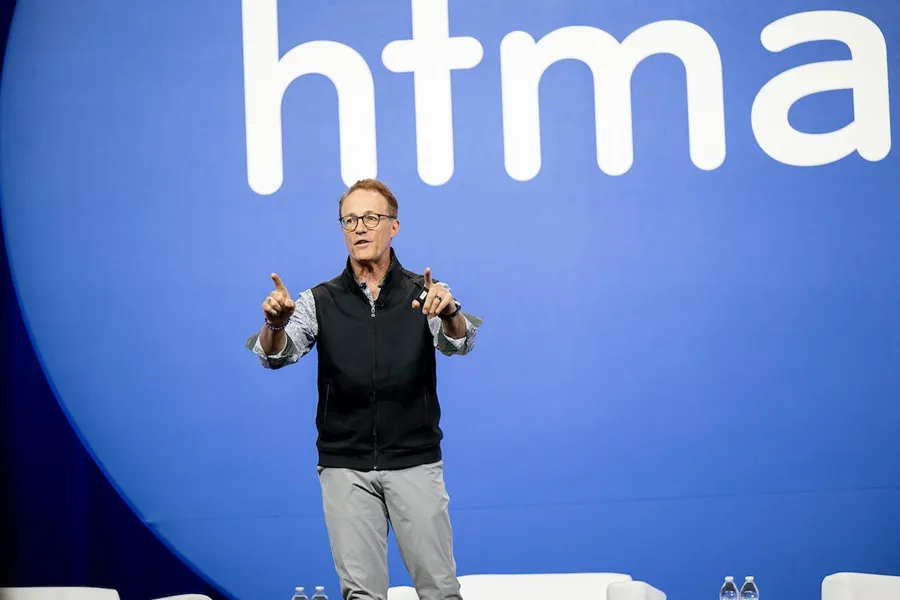
The personal views of a hospital CEO or CFO regarding climate change are immaterial in the big picture, but the perspectives of the companies that insure hospitals have never been more relevant, economic futurist Andrew Busch said as part of a keynote presentation Tuesday.
Insurance companies lost $224 billion in 2025, Busch noted. Such an impact causes them to pull out of certain markets or states altogether. Hospitals thus may need to scramble more to ensure their operation is covered, not to mention budgeting more for premiums as they shop around for policies.
“My big thing for you to think about is this [idea of] resilience,” Busch said. “I want you to think about where your supply chain is running through. Where are your hospitals located? Are they in places that if it flooded, they would be in trouble? What are your mitigation plans for that?
“Start making plans. Otherwise, you’re not mitigating your risk that’s out there, and you will hurt your company overall and hurt your healthcare delivery systems.”
AI is a vital margin booster
Another area Busch discussed was AI, specifically its potential to raise revenues while decreasing costs. Healthcare professionals should not worry that the technology will usurp their jobs.
“You should look at it as: How much more efficient a human in the loop plus AI will be for the industry that’s under duress from affordability and cost reductions as more baby boomers retire?” he said. “Healthcare has a bullseye on its back because the government has to spend so much money every year on it.”
AI becomes even more important amid the shift from a volume-based model to a productivity- and outcome-focused model. The technology can help hospitals reduce administrative waste and maximize clinical efficiency.
A well-designed AI implementation is vital, Busch said.
“It’s super important to engage the multiple groups that are within healthcare to align everybody together,” he said. “That means the clinicians, that means the finance people, that means the data people, that means IT, that means legal and compliance.”
His recommendation is to speak extensively with vendors, the companies with the foremost expertise in the space.
“You can get some amazing information from them, and it doesn’t hurt you at all to talk to them,” Busch said. “There’s no downside. They’re not going to reach in your pocket and take your wallet, steal your lunch money.”
Planning should be underway for responding to the OBBBA
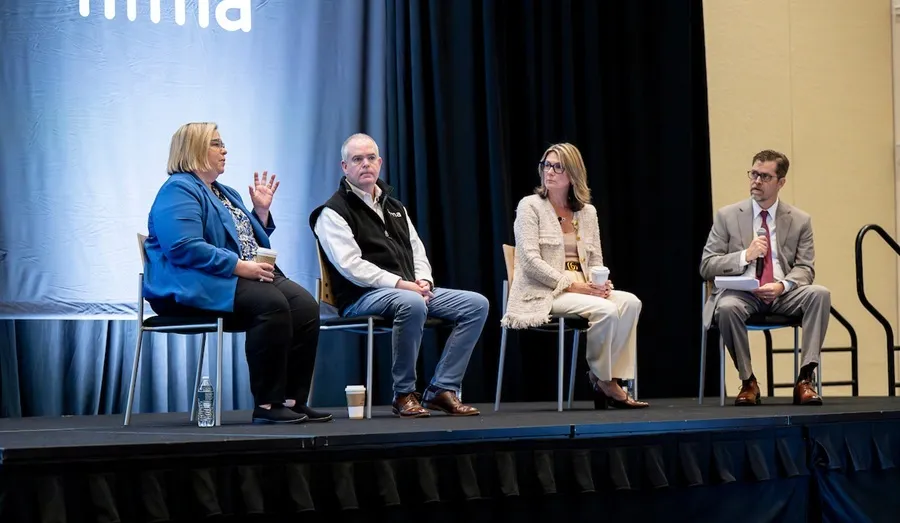
Hospitals should undertake community-based outreach, scenario planning and long-range modeling to anticipate coverage losses and revenue swings under the OBBBA, according to a panel discussion Tuesday.
Medicaid verification needs to shift from being encounter-based, meaning hospitals simply confirm coverage when a patient appears at the facility, to monitoring the coverage status of patients more longitudinally.
“We’re starting to design what that program might look like for our health system,” Billie Jean Mounts, chief revenue officer with Bon Secours Mercy Health, said during the FastFinance Live session moderated by HFMA’s Rich Daly, editor of HFMA’s FastFinance newsletter.
Hospitals should view the looming constraints as not only a reimbursement issue but also an access issue, said Gail Kosyla, CFO with Yale-New Haven Health.
“At the crux of all of this we have to think about how we operate in a different way with the access issues that are potentially out there, with the overcrowding of emergency rooms,” Kosyla said. “You need to think about those populations and how we care for them, and if that’s not consistent with the operating model, then what are the steps, the investments, say, in technology?”
Additional considerations should include the impact on a hospital’s disproportionate share hospital (DSH) percentage, which in turn determines eligibility for the 340B Drug Pricing Program, said Kosyla.
In the bigger picture, hospitals should be “looking specifically at service lines, and how reimbursement schemes are going forward, and how are we modeled — really thinking about the operating model in that scenario plan,” Kosyla said.
A situation in flux
Holloran of Fitch Ratings, participating in the first of his two panel discussions Tuesday morning (see above), said projections of Medicaid coverage loss exceeding 10 million over a decade are worth heeding but should not be viewed as a sure thing.
“Historically speaking, we don’t do a really good job of predicting human behavior when it comes to our own healthcare, maybe our own kids’ healthcare,” Holloran said. “It’s going to be interesting to see who stays [covered] and jumps through all the hoops and all the work requirements and double registrations, versus not.
“We could have very bad adverse selection, so to speak, inside some of these groups, so I think the story is going to be going on for quite some time.”
How health systems approach risk with payers
By Rich Daly, HFMA Senior Editor
Health systems are finding very different interest levels in and approaches to downside risk among health plans in their markets, according to a session Tuesday.
Mark Bortnem, CFO of Essentia Health, said some of their payers have clinical teams that will partner with Essentia’s medical leadership to collectively strategize about how to reduce low-value care and avoidable care. However, not all of their payers have the data sophistication to help in that process.
“So, managing our payer mix and concentration of value-based care at a payer level is another strategy,” Bortnem said.
Essentia also has found that structuring payer contracts to drive alignment is critically important, and establishing a strategic partnership with the payer makes all the difference.
“If we end up paying the plan back based on downside risk, that’s not to their benefit. That means that they lost too,” Bortnem said. “And if they’re paying us shared savings, it means they’re better off, as well.”
In contrast, Baptist Health System in Kentucky has yet to find commercial payers willing to get into downside risk arrangements, said Richard Carrico, the health system’s CFO.
“We are in a great position for risk [but] I don’t think in Kentucky the commercial payers are eager to come in and provide risk contracts that are downside … because of their economic pressure,” Carrico said.
Baptist Health’s strong positioning for downside risk includes a footprint that generates 70% of revenue from outpatient care.
A new phase
Robin Damschroder, CFO and president of value-based enterprise with Henry Ford Health, said her organization has moved past battles with payers over whose value-based model is better to, instead, focusing on their shared understanding on trends, quality scores and determining the fair share when improvements are achieved.
Cost discussions also have aimed to move beyond traditional metrics of readmissions, emergency department visits per calendar day and site-neutral payment.
“You can spend a lot of time and exhaustion around that,” Damschroder said.
A good actuarial team is important, but even more helpful is finding and aligning on the real cost drivers. Those can include comparing the cost of the care management respectively provided by the plan and by the health system.
“So, there’s a lot more that goes into the success of managing the total risk than just taking it all on and getting to the high-level targets,” Damschroder said.
Cost savings
Essentia found that successful value-based contracts can improve patient affordability.
Bortnem described one contract that led to Essentia buying down the contract rates, which enabled the plan to lower its premiums in the market and triple its membership.
“That was another way to improve our payer mix and [our] yield in value-based care,” Bortnem said.
Patient savings under Essentia’s value-based care initiatives can come from improved access, including the provision of low-cost diabetes tests to improve detection and management.
“There’s a cost barrier in these [tests], so, for us to address and lower that cost and not think of it as, ‘Are we making money on the lab test?’ It’s about thinking, ‘Are we creating easy access to the types of preventable patient care that avoids more costly care?” Bortnem said.
Avoiding unnecessary ED utilization — a common goal of VBP models — also can save money for patients with large out-of-pocket costs. Baptist Health is looking to move beyond its long-standing nurse triage line, implementing a pilot to refer calls to a physician before an ED visit is recommended.
“We think that that will help us with our aim of reducing 25% of unnecessary ER visits,” Carrico said.
Panel assesses what it will take to move the needle on value-based payment
By Jeni Williams, HFMA Senior Editor
The overestimation of clinical alignment is a common factor for failure under value-based payment (VBP) models, an expert shared Tuesday during HFMA’s Annual Conference.
During the Vitalic Health session, “The future of value-based payment: Performance, tradeoffs and what comes next,” panelist Joshua Liao, MD, professor of medicine and division chief of general internal medicine for UT Southwestern Medical Center, and others explored the challenges providers and payers must overcome if they are to successfully manage risk under VBP contracts.
For example, even as health plans and providers predict an uptick in adoption of value-based care models and downside risk, “If the employer group is not willing to have a risk model, the payers’ hands are tied,” said James Lee, CFO, MultiCare.
And while Lee has heard one national payer talk about readiness for risk delegation under a specific type of VBP model, “Most of them say, ‘We can’t do it,’” he said.
In particular, “There are severe limitations with one-sided risk contracts,” he told the audience. “By and large, there’s still a fee-for-service contract, and there are certain incentives to do a few [specific] things, and by the way, in the 50-plus contracts we have, they all have different quality metrics. It’s not like trying to do two or three things; there’s like 150 things that we’re trying to do.”
From a provider’s perspective, this level of variability is tough to manage in ways that reduce costs of care and improve health outcomes for members at scale, he said.
“When you don’t have the full risk, it’s very difficult to optimize that care,” he said.
Setting up for the future
MultiCare has deployed a team to determine which types of VBP models will serve the organization well going forward. As part of this effort, MultiCare established an advanced primary care clinic capable of closely monitoring and caring for select patients with chronic conditions.
The challenge: Referrals from physicians are fewer than the organization might have expected, Lee said.
“If they are a primary care physician, [making an advanced primary care referral] means they lose that patient from their panel. If they’re a specialist, they may have concerns about getting those referrals back if primary care is managing that patient well and preventing a lot of these flare-ups from the beginning,” he said.
On the other hand, “There are a number of promising oncology models out there [that incorporate VBP],” Liao said.
These models benefit in part from the ability to identify the population deeply and determine the ways in which fragmented care and service present obstacles to high-quality, affordable care, he said.
