


Healthcare Reimbursement

The State of Payer Negotiations: Data, Visibility and Financial Performance
Trek Health survey findings reveal where provider organizations are falling short in using Transparency in Coverage data, monitoring payer changes, and protecting reimbursement.

Published
July 28, 2026
10:09 am
|
Updated
August 6, 2026
12:35 pm
Sponsored by Trek Health
Provider organizations have access to more payer data than ever before, but turning that information into stronger negotiation strategies and improved financial performance remains a significant challenge.
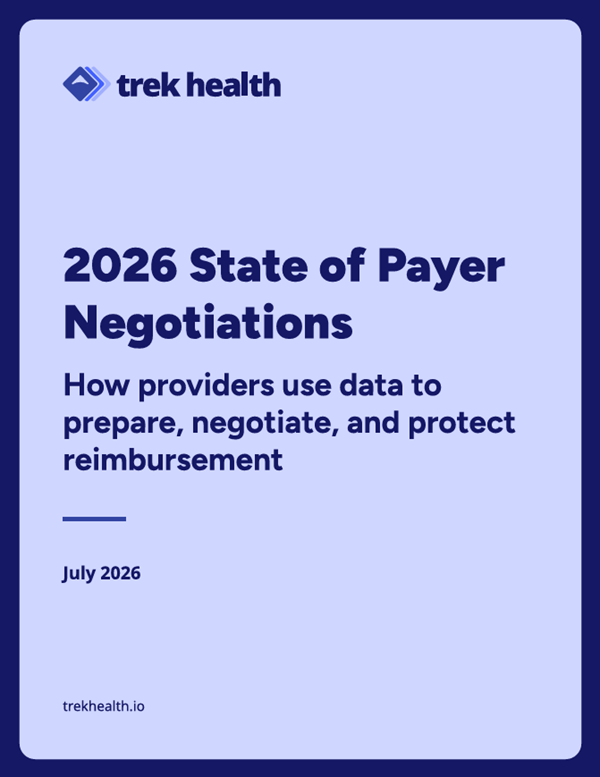
This report, based on a survey of 161 provider organization respondents conducted by Trek Health, examines how healthcare organizations are using reimbursement data, market intelligence, payer policies, and internal contract information to prepare for negotiations and manage payer performance.
The findings provide a benchmark for healthcare finance and managed care leaders to evaluate their organization’s current capabilities against industry peers. The report explores how provider organizations are incorporating Transparency in Coverage data into negotiation preparation, assessing reimbursement performance relative to the market, monitoring payer-driven changes, and identifying potential sources of revenue leakage.
It also examines the operational barriers preventing organizations from making more effective use of available payer intelligence. From fragmented data and disconnected workflows to limited analytical resources, the survey highlights the challenges organizations face in moving from access to information toward consistent, enterprise-wide action.
Beyond the survey results, the report outlines practical recommendations for strengthening payer strategy. Readers will learn how connected data, continuous monitoring, market benchmarking, and more proactive workflows can help organizations improve visibility across payer relationships and make more informed financial decisions.
Download the report to benchmark your organization against industry peers, identify gaps in payer negotiation readiness, and explore opportunities to build a more proactive, data-driven approach to payer performance.
- Understand how provider organizations are using Transparency in Coverage data to support payer negotiations and financial planning.
- Identify the most common barriers preventing provider organizations from turning available payer data into actionable intelligence.
- Recognize where gaps in payer policy monitoring and reimbursement forecasting can create financial risk.
- Evaluate the different approaches provider organizations use to assess their competitive market position.
- Understand the organizational capabilities needed to make payer intelligence a continuous input into contracting and financial decisions.
- Apply practical recommendations for improving data infrastructure, workflow integration, and payer monitoring strategies.
