


GLP-1s spur a new calculation of healthcare value
As use of GLP-1 drugs expands, healthcare stakeholders are weighing steep near-term costs against the possibility of substantial long-term health benefits and confronting fundamental questions about who pays, who saves and when.

The core tension in the policy debate around GLP-1 drugs is whether to view the products merely as a high-cost pharmacy benefit or more holistically through the prism of population health.

In some ways, the choice is tilted: The ultimate payoff of the drugs formally known as glucagon-like peptide-1 receptor agonists is uncertain and subject to interpretation, while the upfront costs are evident and, in some scenarios, prohibitive.
Henriette Coetzer, MD, an England-based leading international researcher on GLP-1 impacts, referred to a December 2025 paper by the Institute for Clinical and Economic Review (ICER), which found long-term value in GLP-1 utilization.a
“ICER is looking at people from a population health perspective over a lifetime,” Coetzer said. “That’s not true for employers.”
If GLP-1 use proves cost-effective, the impact on healthcare operations could be profound. An August 2026 report by Wells Fargo concluded, in part, “Healthcare organizations must reallocate toward obesity medicine, integrated cardiometabolic care, and specialty pharmacy.”b
The rationale for such a shift is not yet a clear-cut proposition. Amid pushback by health plans and employers on the costs and risks of making the drugs widely available, a prerequisite to projecting the strategic and operational impacts of widespread use is to determine whether such use is sustainable — and what, precisely, the value proposition is.
Clinical promise keeps expanding
The clinical potential of GLP-1s is not in dispute. Sixteen years after the drugs hit the market in 2005 as a treatment for Type 2 diabetes, the FDA approved Wegovy for chronic weight management, setting the stage for a surge in use of semaglutide-based and then tirzepatide-based products. A July 2026 Gallup poll found that 11% of U.S. adults take GLP-1s for weight management, up from 3% two years earlier.c
The list of potential clinical benefits has steadily grown. In addition to supporting weight management, GLP-1s appear effective for conditions such as cardiovascular disease, hypertension, kidney disease, sleep apnea and joint inflammation. Newer indications are emerging for Alzheimer’s disease, substance use disorder, osteoporosis and infertility.
“I say to people [that] I’ve been fortunate in my medical career to be around for probably three major medical developments and events,” Coetzer said, also mentioning HIV retrovirals and mRNA vaccines. “This is one of the blockbusters.”
GLP-1 orders for overweight or obese patients
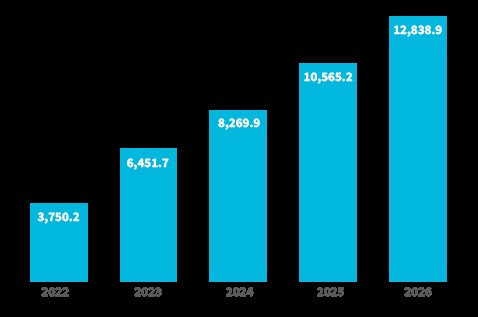
Numbers reflect GLP-1 drugs prescribed, dispensed or started per 100,000 patients in Q1 of
each year, as calculated by Epic Research.
Coverage comes with conditions and concerns
Stakeholder misgivings regarding GLP-1s include questions about adherence amid both high out-of-pocket costs and the potential for significant side effects.
In contemporary data, roughly 50% of patients drop out before true clinical effectiveness is seen, having achieved under 5% weight loss in six months, Coetzer said.

“For most people funding this type of treatment, that means that they’re making a massive investment, but about half of that money is essentially wasted,” she said.
Said Ceci Connolly, president and CEO of the Alliance of Community Health Plans (ACHP), “I don’t know of a single member plan that has come and said to us that they are recouping significant ROI at this point in the journey.”
Such risk helps explain why ACHP and other health insurer advocates argue that when covered for weight management, GLP-1s should be framed as part of a structured program that also includes nutrition, exercise and behavioral health components.
Benefit design similarly becomes critical, such as by targeting coverage to people who have body mass index above a certain level in combination with specified comorbidities.

“If somebody reports they’re saving money over whatever time horizon — say, three to five years — to me, the devil is in the details,” said Susan Pantely, a member of the Health Practice Council with the American Academy of Actuaries. “How did you get your positive ROI? Was it from [high rates of] adherence? Was it because you only let the sickest of the sick in?
“I guess I’d be skeptical until I saw those things. If they said, ‘Oh, we just let everybody take it, and we got a financial ROI,’ then I’d be very skeptical because it doesn’t seem to make sense.”
Savings remain a question mark
Even in GLP-1 users for whom the drugs have the desired impact on weight management, offsets to high pharmacy costs are far from guaranteed in utilization seen to date.
Among patients with diabetes, some downstream savings show up in claims, including reduced use of dialysis and fewer renal complications, according to a 2025 study by Blue Health Intelligence, a data analytics company affiliated with Blue Cross Blue Shield Association.d
Timeline of recorded U.S. healthcare spending on GLP-1 drugs
| 2018 | Total spending reaches $13.7 billion, including $560 million on Saxenda (liraglutide) and $410 million on Ozempic (semaglutide). |
| 2019-2020 | Spending continues to rise across legacy Type 2 diabetes treatments such as Trulicity (dulaglutide) and Victoza (liraglutide). |
| 2021 | Wegovy (semaglutide) hits the market at mid-year as a treatment for obesity, attracting $580 million in spending through year’s end. |
| 2022 | Mounjaro (tirzepatide) is approved for Type 2 diabetes, accumulating $2.51 billion in eight months. |
| 2023 | National spending on GLP-1s reaches $71.7 billion, a year-over-year increase of 62%, with Ozempic amassing $26.42 billion. |
| 2024 | Preliminary totals suggest spending of at least $85 billion, as commercial coverage expands and Zepbound (tirzepatide) debuts. |
| 2025 | Early estimates put spending at roughly $132 billion as the four primary GLP-1s (Ozempic, Wegovy, Mounjaro, Zepbound) account for 14% of all U.S. prescription drug spending and 33% of year-over-year growth). |
For other users, the study authors found a substantial increase in non-GLP-1 healthcare spending over a six-year period, with no compensating savings yet visible in claims. The increase primarily was in ambulatory services and screenings, including for treatment of side effects associated with gastrointestinal issues.
Providers thus may have to initially budget for higher pharmacy and ambulatory utilization in response to GLP-1 use.
“The open question really is on people without diabetes, where the risk of having renal failure or hepatic failure is much lower [at baseline],” said David Wennberg, MD, a strategic advisor with Blue Health Intelligence and one of 12 coauthors on the study (along with Coetzer). “What is the expected benefit, and how long do you have to be on the drugs and follow these people before you see that?”
In August, a peer-reviewed journal published a study conducted by Eli Lilly, manufacturer of Zepbound (tirzepatide).e Relative to a control group, 12-month healthcare costs were 25% to 38% lower for non-diabetic overweight or obese patients who maintained utilization of the drug. Lower rates of hospital admissions and emergency department visits were drivers.
Because it excluded the cost of Zepbound, however, the study did not conclusively show that the drug reduces net healthcare spending. And less than 10% of users remained in observable treatment at 12 to 18 months, which was when the biggest savings appeared.
Employers face a difficult equation

The divergent data among different studies illustrate why employers are wrestling with the prospect of GLP-1 coverage. A survey published in July 2026 found that 60% of employers cover GLP-1s for diabetes only, compared with 36% for both diabetes and weight management and 45% for other FDA-approved conditions.f
“Employers are still struggling with it because there are so many people who are eligible for these medications,” said Paul Fronstin, PhD, director of health benefits research with the Employee Benefit Research Institute.
Another issue is that the window to capture downstream savings can be fleeting because of employee turnover.
“You may invest in a population now that may not be here in five years, when the real health benefits kick in,” Fronstin said.
Outcomes of longer-term GLP-1 studies could alter the ROI conversation. Employers also should consider monitoring whether productivity improves while absenteeism and paid-leave rates fall due to better health, Fronstin said. He added that intangibles to consider include the impact of GLP-1 coverage on recruitment, retention and even employee morale.
Lower prices could transform the calculus
The apparent lack of medical-cost offsets may stem simply from the short-term nature of most GLP-1 utilization thus far. Key inputs in ROI studies are changing rapidly, with next-generation products possibly bringing greater efficacy and fewer side effects.
In addition, while the cost of GLP-1s has been seen as pricing out many individual users and bogging down employers’ income statements, the affordability of the products has improved. The market has moved from a cost of roughly $1,300 per month to self-pay offers around $199 per month. Some lower-dose oral options come in under $150.
Price drops have arisen, in part, from most-favored-nation pricing agreements between the Trump administration and drugmakers, along with the negotiating power granted to Medicare under the Inflation Reduction Act (negotiated prices for several semaglutide products, including Ozempic and Wegovy, will take effect in 2027). The increasing proliferation of direct-to-consumer GLP-1 platforms is another price disruptor.
Generic alternatives can be expected to bring prices down much further, although patent restrictions mean the earliest generics likely won’t reach the U.S. market before 2032.
Asked to estimate the price below which GLP-1 use will generate net savings, Coetzer said her calculations suggest $170 per patient per month, especially for diabetes and for obesity combined with comorbidities.
“That probably [also] is true for people with [only] obesity if you are in a position to participate in the long-term value,” she said. “But with the disjointed finance-value, input-output arrangements that are part of the U.S. financing system, that mechanism has to be risk-equalized before that benefit can be shared equally.”
Fragmented financing complicates the payoff
That systemic fragmentation manifests in the foreseeable scenario wherein commercial health plans fund large shares of GLP-1 therapy, while much of the long-term benefit accrues as employees move into Medicare.
Stakeholders are watching to see what happens with Medicare’s GLP-1 Bridge program.g Some Medicare Part D beneficiaries can obtain the drugs for $50 per month from July 2026 through December 2027.
The drugs are sold to Medicare at a price of $245 per month, with the government (and, ultimately, taxpayers) making up the difference. A KFF analysis estimated that 3.8 million beneficiaries could be eligible.h
A possible downside is what will happen when the program ends and beneficiaries suddenly encounter higher costs. Stakeholders should scenario-plan for cost shifts and, conceivably, a large- scale customer-relationship management issue once the subsidized pricing ends.
“We in the health industry are all being set up for a very upset set of customers,” ACHP’s Connolly said.
“We are actually heading toward a very painful moment in this journey if we cannot, first of all, get the price down to something reasonable and, second of all, educate patients and clinicians about the appropriate use of these for the right target populations in the right circumstances.”
Footnotes
a. Lin, G.A., et al., Semaglutide and Tirzepatide for Obesity: Effectiveness and Value, Institute for Clinical and Economic Review, Dec. 16, 2025.
b. Wenzel, R., and Teasley, J., “How GLP-1s are reshaping the business of healthcare,” Wells Fargo, August 2026.
c. Witters, D., “In U.S., GLP-1 usage reaches new high,” Gallup, July 7, 2026.
d. Wennberg, D., Coetzer, H., et al., “The real-world costs of GLP-1 receptor agonist treatment,” Blue Health Intelligence, Oct. 25, 2025.
e. Upadhyay, N., Bonkadar, A., et al., “Trends in cost of care with tirzepatide in adults aged over 55 years with obesity or overweight without diabetes: A matched cohort analysis,” Diabetes, Obesity and Metabolism, Aug. 24, 2026.
f. McMullin, C., GLP-1 Drugs Survey Report: What Employers Are — and Aren’t — Covering in 2026, International Foundation of Employee Benefit Plans, July 7, 2026.
g. CMS, “Medicare GLP-1 Bridge: GLP-1 drugs for $50 a month,” fact sheet, June 2026.
h. “Nearly 4 million Medicare beneficiaries could be eligible for the temporary Medicare GLP-1 Bridge program covering these drugs for weight loss,” KFF news release, June 29, 2026.
