


Healthcare Revenue Cycle

How pre-bill automation positively affects efficiency and financial outcomes

Published
January 29, 2025
4:14 pm
|
Updated
April 17, 2025
11:22 am
Sponsored by Streamline Health Solutions, Inc.
Eighty-four percent of health systems report that lower reimbursement from payers is a top cause of low operational margins, according to an HFMA survey. Hospital revenue cycle leaders understand that not only are reimbursements lower, but if there are any errors or inefficiencies in coding bills that can also lengthen the process of getting paid. The key to revenue cycle efficiency and effectiveness is getting it right the first time — that is, optimizing claims before they are submitted for billing.
“Improving accuracy of a claim before billing improves the quality of the claim as well as increases reimbursement rates, reducing denials and boosting collections,” says Ashley Lodato, vice president of sales at Streamline Health. “Hospitals are at a fork in the road when it comes to return on investment for claims automation, with some feeling like they have to choose whether the priority is cash or quality of care. But you don’t have to choose if you focus on improving claims accuracy and building partnerships with vendors who understand the needs and can help.”
In June 2024, HFMA and Streamline Health hosted a roundtable for industry leaders to discuss their experiences with pre-bill automation in the revenue cycle, and how they’ve applied technology to save time, reduce errors, and improve revenue integrity and financial performance in the billing process.
How has pre-bill automation impacted your operational efficiency and financial outcomes?
Jeffrey Costello: We have pushed very hard on submitting clean claims over the past 18 months. We’ve really scrubbed our claim system; we’ve had to really get granular to make sure claims are coming from the patient access side as clean as possible.
Making sure claims are as clean as possible and getting denials right at the source has really paid off for us. We just deployed an AI tool that tries to predict a denial before the claim goes out the door. It’s been interesting because it has required us to go back and relook at things all over again to make sure that as a claim goes out the door, it has the best chance of getting paid on the first pass.
Amy Weeks: We’ve sped up days to pay by going through our claims at a granular level. We’ve pinpointed our most common denials, and we’re working through potential rejections from the payer before the claims even get there. That has really helped us focus our attention on more complicated denials by automating the front-end work.
What are some data points prompted by pre-bill automation that you will use to consider future data-driven decisions?
Mike Humbert: We’re looking at denial trends. To compare historical write-offs, we’ll look at very specific data points like demographics, place of service, revenue codes, all those different data points you have in a claim. We’re reviewing it proactively and putting in more edits before submitting the bill. Sometimes the authorized procedure is different than the billed procedure. We’ve run into situations where a surgeon authorizes for the surgery, but they didn’t add the device to the authorization. The results are a denied claim.
Anita Colon: We also focus very much on the front end, leveraging technology to eliminate human error in items like ensuring eligibility authorizations. We’ve had so many denials because somebody put a dash in between the number, or they inverted two numbers of the authorizations when typing.
Also, we’ve found that it’s important to make sure that the CPT code that’s on the claim is correct before we drop that claim. Otherwise, we might potentially miss the opportunity to go back and get that corrected.
One of the biggest things we did was centralize our prior authorization for all the physician groups and the hospitals. It doesn’t eliminate those things from happening, but they’re able to catch those trends and discuss with the physicians. Originally, we tried to automate everything, requiring clinicians to input the procedure and all the CPT codes. But that hasn’t worked well. Now we tell them to go ahead and free form, write if you’re not sure or you don’t have the information, and we just had to train our staff to fill in the blanks. That hurts the automation we’re trying to do, but we’re able to get reports so we know which ones to look at for free-form words, and we try to automate the others. We’ve learned that automation is powerful in the right context, but you have to make it work for the humans involved.
Kimberly Bryan: We’re in a very small rural location, and if we didn’t exist, the closest services for our community are at least an hour away. Our leadership is consistently exploring new services to benefit our community. From a revenue cycle perspective, our approach is granular in the services that they are investigating. We have a very interdepartmental methodology, so we bring everyone to the table and talk through fee schedules and charge masters. Revenue integrity and HIM [Health Information Management] validate appropriate coding prior to implementation.
For data points, we look at clean claim rate, days to pay, denial rate and [discharged not final billed] (DNFB) by reason to address delays in clean claim generation by payer.
What intervention points have you encountered and overcome that strategically reinforce your revenue cycle?
Colon: For us, it was getting the staff to buy in because of the fear of losing their jobs. We had to make sure that we really engaged with the staff as we were planning and stress that we’re trying to help make [their] job easier so [they] can focus and not trying to replace [them].
The other challenge was getting them to trust automation. We’re automating eligibility and we still have people who are manually checking eligibility. They’re afraid it’s going to come back on them if it isn’t right. Being able to overcome that with the staff really helped us.
Bryan: You also have to consider skill set transition with automation. Currently you employ a certain skill set and as you continue to automate, you may be in need of a very different skill set. You have to determine whether your current staff is capable of obtaining the new skills required. That has to be part of the automation strategy.
Seth Katz: Payers will always have more technology than we will. As soon as we get good at something, they’ll find a way to change it. We might get one process automated, and then they’ll decide to change another process. You’ll never just be able to plug it in and walk away. It’s the exact opposite of that.
I think it’s also incumbent upon us to make sure we’re using the right type of technology for the right purpose. You really have to know how these tools work.
Costello: Over the past three or four years, we’ve had to rethink revenue cycle. Traditionally, we operated with a focus on people, process, and technology in that order. When all those are working in concert, we get the right result. Today, we’ve had to flip it around because really, it’s technology, process and people. You can’t fight the technology. You have to understand how the technology works and what the processes are that support the technology to produce the best result. And then the people have to come along with it. As the payer side of our business has become so much more demanding, it commands this exactness.
Like with clean claims, you can’t be good. You have to be great. And the way you are great is that you truly leverage the tools to their fullest.
Humbert: Having worked in payer for 15 years, it helps me understand their systems and how they operate. We’ve just built a new team specifically to partner with payers. If we’re going to automate something, I want to make sure we do it correctly, so it’ll work the way the payers are expecting it. It’s worth a partnership to work with payers to build automation or do whatever is needed to reduce [accounts receivable] AR and meet other goals.
Bryan: I think we are inclined to lose sight of those softer people skills. Sometimes it just means picking up the phone. I find that we are more successful when we have built true partnerships with our payers. They want to see their beneficiaries cared for with quality care. We want to ensure that we’re paid for that quality care. And when you come to the table and have positive intent on both sides, we see an improvement. Not all payers are the same, but we have seen success when we build those relationships.
How have you focused limited human resources on workflows with the greatest impact on revenue integrity?
Kyle Butler: When our revenue cycle team identifies an issue, there are a lot of people that potentially get involved, including revenue integrity and coding. There are also patient-facing folks who have to get involved and managed care as well for maintaining the payer relationships. We’ve tried to make this collaboration efficient by establishing a specific denials prevention and mitigation team.
That accomplishes an organized communication structure, so everybody is not trying to fix the problem at once in their own way. That team also is responsible for producing the relevant analytics. So when we bring all of these people together, we can collaborate and look at the numbers and determine priorities. Then everybody has visibility on that solution when it gets implemented. Everybody sees what the end game is, and that has allowed us to get a lot more collaboration and buy-in from all the separate teams.
Kim Menchaca: We’re data driven. Our KPIs [key performance indicators] help keep the noise at bay. We let the numbers tell a story, let the data drive the action plans and priorities.
We’re transparent with where we need to improve, but we also celebrate our wins.
Andria Stolhand: We have a monthly operating review with all of the stakeholders in the revenue cycle and go through the projects that each of us are working on. It’s amazing because we learn what other departments are doing and the challenges they have, and how different departments’ roles are connected. It’s been really beneficial.
How do you decide to automate a process? And do you try to build it versus buy it?
Bryan: Some of the best successes that we’ve had were because we partnered with a vendor that truly made the difference. It’s important to be able to assess what skill sets you possess internally and where there is a gap. When you know your weaknesses, you can bring in vendors that truly want to partner with you and support you through improvement.
Colon: For us, deciding whether to automate a process is all about volume and complexity. We look for the things that are not really complex or that people are doing over and over again. So, processes like eligibility are no brainers for automation.
Katz: It’s a good idea to start with your knowledge gaps, and sometimes automation provides new opportunities for learning and job growth for staff who are interested. We talk about AI taking people’s jobs, and it is going to disrupt a lot of jobs but it’s also going to create some. If there are staff members who want to be empowered and learn new things, you can send them to [the] training and support their learnings, and that will pay dividends in the long run.
Conclusion
The insights shared by industry leaders during this roundtable underscore the transformative impact of pre-bill automation on healthcare revenue cycle management. By focusing on submitting clean claims and leveraging pre-bill tools, organizations have been able to reduce denials, accelerate payment cycles and improve overall financial performance. The discussions highlighted the importance of integrating technology with robust processes and strong interdepartmental collaboration to optimize revenue cycle outcomes.
While the adoption of automation presents challenges, such as staff buy-in and managing skill set transitions, the consensus is clear: Pre-bill automation is not just an enhancement; it’s a necessity for sustaining operational efficiency and financial health.
As healthcare continues to evolve, the ability to adapt, innovate and strategically implement technology will be crucial for thriving in an increasingly complex environment. With the right tools and partnerships, healthcare providers can ensure that their revenue cycles are not just efficient but also resilient and responsive to the demands of the future.
Panelists

KIMBERLY BRYAN, FHFMA
Director of revenue cycle management with Natchitoches Regional Medical Center in Natchitoches, La.

KYLE BUTLER
Director of revenue analytics with Phoenix Children’s in Arizona

ANITA COLON
Vice president of revenue cycle/patient access operations at Temple Health in Philadelphia

JEFFREY COSTELLO.,CPA
CFO with Beacon Health System in South Bend, Ind.

MIKE HUMBERT, CRCR, CSPR, PMP
Senior director of revenue cycle with Banner Health in Phoenix

SETH KATZ, MPH, RHIA, FAHIMA
Vice president HIM, revenue cycle and finance with University Health KC in Kansas City, Mo.

ASHLEY LODATO
Vice president sales, Eastern region with Streamline Health in Atlanta

KIM MENCHACA, CRCR, CHAM,
Director of revenue integrity director with Peterson Regional Medical Center in Kerrville, Texas

ANDRIA STOLHAND
Former revenue cycle director at Saint Francis Health System in Tulsa Okla.
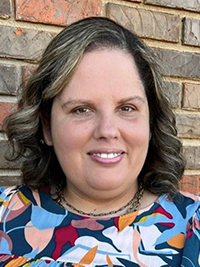
AMY WEEKS
Revenue cycle administrator with Hardin Medical Center in Savannah Tenn.
About Streamline Health
Streamline Health Solutions, Inc. (NASDAQ: STRM) is a leading provider of revenue cycle management software for healthcare providers, empowering providers to efficiently manage and optimize their revenue cycle. Streamline’s comprehensive solutions include charge and coding integrity solutions, ensuring complete and accurate claims prior to billing. At Streamline Health, the mission is to help providers get paid for the care they provide so they can better serve their communities.
This published piece is provided solely for informational purposes. HFMA does not endorse the published material or warrant or guarantee its accuracy. The statements and opinions by participants are those of the participants and not those of HFMA. References to commercial manufacturers, vendors, products, or services that may appear do not constitute endorsements by HFMA.
