


Healthcare Finance Technology

Healthcare finance executives look to automation and technology to optimize revenue cycle

Published
March 31, 2025
6:22 pm
|
Updated
April 2, 2025
3:17 pm
Sponsored by Infinx Healthcare
As health systems face rising costs, a shrinking workforce and mounting financial pressures, they are searching for ways to optimize processes and reclaim their lost revenue. A survey conducted by HFMA and Eliciting Insights showed that more than one–third of health system executives plan to automate two or more revenue cycle management (RCM) and finance functions in 2024.
While automation and technology are yet to be seen by healthcare finance professionals as a holistic solution within revenue cycle, participants in a recent HFMA Executive Roundtable and Navaneeth Nair, the chief product officer at Infinx, discussed the current use of both. They also explored how technology and automation can be used to improve the efficiency of the revenue cycle by helping retain seasoned staff, recruit new staff and reduce their workload to create a resilient infrastructure.[1]
How does staff capacity impact your organization’s ability to implement revenue cycle improvements?
Seth Katz: It’s a big challenge, especially coming out of Covid-19, where so many things got put on the back burner. So not just for our revenue cycle, but across the enterprise. There’s been such a backlog of projects that even now, a couple of years later, we’re still struggling to dig out. And that’s just to do what was backlogged, not including the newer projects like autonomous coding, AI and ambient listening. It’s been a big concern for us to find resources, time and cash to do it all when regulations keep changing, pay requirements keep increasing and complexity grows, and we need more people. Or we need better technology. It really puts us behind the eight ball and puts a lot of pressure on us when we’re competing against the clinical side and the business side to do these, get the latest tech, do the latest automations and all the things that will allow us to be successful.
Robert Boos: In addition, when you put these projects out, the two things that you need are IT support and staffing, particularly on the management side. All projects need IT and staffing from a leadership level. Who’s going to be the ‘boots on the ground,’ dealing with vendors and programmers? We learned quickly that we were spread very thin. While we’re on Project A and talking about the next big project we want to do, we must complete Project A, because the same team that’s working on the first project is the one who’s going to guide the second project. So, you’ve got to stagger them and then leave some time in between to do our ‘normal job’ for a while, so it’s indeed stacking it, and being very regimented in how you put a project together.
Sharon Kelley: At Mayo, one of our key strategies for success has been shifting our staffing model to recruit nationally. By opening our hiring process to candidates across the United States, we’ve enhanced our talent pool. Currently, we have employees spread across 43 states, which has been instrumental in reducing turnover and creating a stable team to manage infrastructure. Another key component of our strategy is to have the IT functions related to revenue cycle report directly to our team. This has allowed us to better control the pace of innovation and automation within our operations. Opportunities still exist to ensure revenue cycle is brought in early for automation initiatives outside our area. For instance, ambient listening raises challenges to ensure the quality of the physician notes support the billing. To address this, we emphasize early collaboration with the practice to ensure we are aligned with the requirements we need to effectively bill.
Given the IT constraints and budget limitations your organization might face, what specific automation or AI strategies have you implemented to optimize revenue cycle management?
Kelley: We’ve made significant progress with autonomous coding [by] partnering with an outside vendor in the physician space. We now have an 80% automation rate in the radiology space utilizing the product. We intend to automate surgical pathology, GI [gastrointestinal] and surgery in the months ahead. As this automation reduces workload, it helps our teams focus on higher-value tasks without impacting existing staffing levels. We’ve ensured strong controls around revenue, compliance and the quality results to make us comfortable with AI usage.
Sheila Augustine: One thing that helped us from an AI perspective is to implement the missing charges opportunities. We have found that our hospital-based clinics are set up to not have charges generating or have things routing to the appropriate revenue code. Historically, we’ve had a vendor come in to identify these for us. In the patient financial services area, we’ve used AI to help create an appeal letter, which has reduced the time spent from 15 minutes to 7 minutes.
What strategies have been effective in overcoming staff capacity challenges in your revenue cycle operations?
Boos: I think we’re at a crossroads here. We have loyal staff members that have been with this health system for a long time and while it’s wonderful, eventually we will all retire. And we’re not seeing the replenishment of 20-year-olds and 30-year-olds coming into revenue cycle at all. So maybe 10 years from now, some of this technology will help us with some of this “boots-on-the-ground” work, because we’re not going to have the replenishment of staff from a younger generation.
Kelley: We’ve begun exploring a global vendor strategy, something we hadn’t considered before. While it’s a small initiative now, it’s helping us understand what it would take to adapt to future workforce demands. This strategy isn’t about eliminating current positions, but rather about preparing for future gaps as the workforce evolves.
Does anyone have anything that has worked to move things forward?
Katz: I think we have two challenges. One is revenue cycle isn’t something that you go to school for which makes it hard to recruit. It’s not a typical career path. Secondarily, patient access staff are tasked with learning all the rules about insurance. It’s an in-person job and a big challenge for the pay.
Barbara Townsend: There is no education other than what we provide. We can see with the insurance companies that they don’t know the reason for the denials. We have to spend our time training the staff to understand payer reimbursement and why claims are denied. Where can we use AI in that section of revenue cycle? Maybe this is the perfect place to put it.
Navaneeth Nair: Revenue cycle was never that simple. But the question is, How does technology help make it simpler? For Gen Z to learn the level of complexity that we deal with, with respect to revenue cycle, AI can serve as a copilot to get them engaged as they want to work with technology. That’s one way to attract them.
How do you see the role of technology evolving in revenue cycle management, particularly with AI and automated systems?
Katz: AI is not going to replace people. It’s people who know how to use AI who are going to replace people who don’t. I think there’ll be a lot of new jobs actually created because of this that we haven’t even thought of because it’s new technology. I say that we now have an opportunity to grow in our careers, to take ownership and understand this technology and how you train it, support it and learn with it. You can build a niche and become an expert here.
Boos: We’ve had some great engagement with the patient portal shift, where 91% of our patients will make a payment or a payment arrangement self-assisted. We thought our older, rural population would give us some resistance. But we have 91% engagement, which has energized us to look at more front-end engagement, patient estimates, patient payment arrangements, registration and insurance verifications to see how to automate it. We are trying to get the technology together to make it happen. But we feel that the opportunity is there.
Augustine: We are on Epic and implemented the “Welcome” kiosks. We had resistance from both patients [who were not sure about using the new technology] and staff who were afraid that this new technology would put their jobs in jeopardy. We encouraged our staff to be ambassadors to the patients and help them navigate through the kiosks. It’s shifted their mindset to one where we still need them but in a different capacity.
Nair: Akin to the mechanization of farming, everyone asked, “What will the farmers do?” But then we needed farmers to manage tractors and the other activities on the farm and consequently, the size of farming increased. The questions that should be asked are, “Which of these tasks within the process can be automated?” And, “Can you orchestrate them to allow for hand off to a human when there is an exception or complexity?” In this manner, automated agents will coexist well with human agents. If we try to automate all of it, we have this peak of expectation and trough of disillusionment.
How does your organization uncover and address ‘hidden’ issues within your revenue cycle management that may not be immediately apparent?
Townsend: We recently took our denial reports and sorted them by dollar amount. Everybody’s looking at the high-dollar accounts, but the ones that were really hurting us were those lower dollar repeat ancillary service accounts that we’re not getting paid on but are simple to solve. So, it’s really taking a look at all of your [accounts receivable] AR. And that’s what we started doing — trying to find these low-dollar, high-volume easy-to-solve denials.
Augustine: Because of COVID, our volumes went down which gave us an opportunity to see issues on a granular level. We shifted resources and fixed those issues. We also shifted our mindsets and started going after the smaller denials: Don’t look at the dollars, look at the pattern of denials and address it.
Townsend: It’s not so much the actual dollars of the claim. It’s the resources we spend to look at it, evaluate it, do the rebill, change the coding and get it back out the door. By now we’ve spent more money than we’re going to obtain. Can we better use our resources to look at the big dollar, complex accounts without having to circle back to the small-dollar, high-resource accounts?
Boos: Old time finance would say, “Don’t chase that $500 reimbursement denial! It’s not worth it. Focus on the big dollars.” But when there’s thousands of them, it becomes an issue, and when the payers realize that your weakness is not fighting for them, they’ll deny them in larger balances. With thin margins and rising costs, if you don’t fight for the little dollar, they’re going to be your undoing.
Conclusion
This conversation uncovered ways we can implement current technology into revenue cycle workflows now, but participants agreed there was no silver bullet on the horizon just yet. Whether it’s through automation or AI, the key to success is in integrating technology where appropriate to create a resilient infrastructure that may include outside and international vendors.
Participants said that health systems and hospitals must become proactive in adopting these technologies and finding the experts among their talented staff to lead and support the technologies that can ultimately optimize their financial outcomes and improve patient financial experience.
Panelists
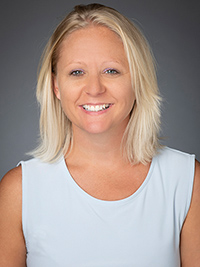
SHEILA AUGUSTINE
FHFMA, MHA, CRC, is director, revenue cycle at Nebraska Medicine in Omaha, Neb.

ROBERT BOOS
is vice president, revenue cycle at Centra Health in Lynchburg, Va.

SETH KATZ
is vice president of revenue cycle and HIM, finance at University Health KC in Kansas City, Mo.
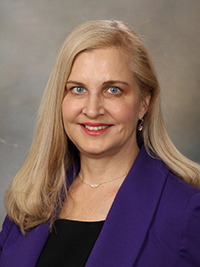
SHARON KELLEY
MBA, CPA, is chair, revenue cycle with Mayo Clinic in Rochester, Minn.

NAVANEETH NAIR
is chief product officer with Infinx in Austin, Texas.

BARBARA TOWNSEND
FHFMA, CRCR, CPB, is regional director, revenue cycle, at McLaren Health Care in Shelby Township, Mich.
About Infinx
Founded in 2012, Infinx provides scalable, AI-driven solutions that optimize the financial lifecycle of healthcare providers, covering all aspects of patient access and revenue cycle management. Our cloud-based software, powered by advanced automation, is supported by over 6,000 experienced consultants and billing specialists across the U.S., India, and the Philippines. Serving a client base of over 172,000 healthcare professionals across 4,000 facilities—including ambulatory, acute care, and post-acute care providers—we help healthcare organizations capture more revenue, adapt to evolving regulations and payer guidelines, and stay focused on delivering exceptional patient care. For more information, visit www.infinx.com.
This published piece is provided solely for informational purposes. HFMA does not endorse the published material or warrant or guarantee its accuracy. The statements and opinions by participants are those of the participants and not those of HFMA. References to commercial manufacturers, vendors, products, or services that may appear do not constitute endorsements by HFMA.
Footnotes
[1] “New report projects robust investment in healthcare revenue cycle and finance solutions, despite economic headwinds,” HFMA press release, Aug. 17, 2023.
