


State of Medicare: Trustees push back projected date of Part A insolvency, but issues must be addressed
Even though the Hospital Insurance Trust Fund now is expected to be depleted in 2028 instead of 2026, Medicare still faces daunting challenges.
Utilization review staff may be hurting results when fixing incorrect inpatient admissions
There's a clear financial winner when choosing a method for correcting an incorrect inpatient admission.
Insurer groups issue report showing the No Surprises Act’s early impact on patient billing
More than 2 million potential surprise medical bills were prevented during the first two months of the No Surprises Act, according to the health insurance lobby.
Cost Effectiveness of Health Report, May 2022
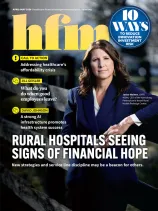
The May 2022 edition of HFMA’s Cost Effectiveness of Health Report includes a conversation with Lance Robertson, former U.S. Assistant Secretary for Aging at the U.S. Department of Health and Human Services Administration for Community Living, on practical ways the United States can begin to meaningfully address social determinants of health. Another article explores considerations for hospitals and health systems regarding the decision to pursue a “hospital at home” strategy, and a column shares perspectives and lessons learned from a 47-year active member of HFMA on the nation’s evolution toward value.
How HFMA/Boise State master’s degree cohort members are putting new knowledge to work
Abby Birch, Grayson Johnston and Jacob Dalmas, three members of the first HFMA/Boise State master's in Population and Health Systems Management cohort, discuss their experiences in the program.
The financial crunch of the pandemic is unlikely to subside anytime soon for hospitals
A leading credit-rating agency says the not-for-profit hospital sector will face significant headwinds for the rest of this year and beyond.
25% of Medicare patients suffer clinical harm in the hospital, OIG report indicates
A quarter of Medicare patients experienced harm while being treated in hospitals during a single month in 2018, according to a new report from the HHS Office of Inspector General.
News Briefs: Hospital labor costs rose by almost 40% between 2019 and early 2022
As published in hfm magazine, a monthly roundup of top news for healthcare finance professionals.
David Johnson: Cracks in the foundation – Overcoming regulatory headwinds
Healthcare leaders have an important opportunity today use the new regulations to drive value-based care throughout their organizations. But that doesn’t mean completely relinquishing their traditional revenue streams. To seize this opportunity, they should undertake a dual transformation that promotes more efficient operation of their traditional businesses, while nurturing and growing new businesses focused on population health and value.
Hospital prices increasingly are coming under a microscope
Newly issued reports and policy recommendations are examining hospital prices in the context of high healthcare costs.