


Financial Sustainability
Bold Conversations for a Healthier System
Diverse stakeholders gathered to explore ways to improve affordability, financial sustainability and better outcomes in U.S. healthcare.

Published
December 2, 2025
5:16 pm
|
Updated
December 3, 2025
9:33 am

With support from:


Dear Colleagues,
It is an unmistakable reality that the U.S. healthcare system is becoming less affordable and more financially unsustainable — and all without improvements in health outcomes to show for it.
Now is the time for healthcare leadership to change the conversation and pursue real solutions. That’s why I want to thank you for being part of the first-ever gathering of the Vital Collective. This milestone event was born out of HFMA’s new strategic business initiative, Vitalic Health — a bold effort dedicated to financial sustainability and better outcomes in U.S. healthcare.
At the very heart of Vitalic Health is the practice of solve-based convening and the reality that no single stakeholder can solve the challenges of affordability, care delivery and quality outcomes. We envision the creation of a bold, constructive space where healthcare is no longer a fragmented battleground of conflicted stakeholders, but a mosaic that’s diverse by design and united in purpose. That’s exactly what the Vital Collective was designed to achieve.
Our conversations underscored that aspirational talk alone isn’t enough. Vitalic Health exists to help identify the right problems, facilitate the right conversations and drive real-world solutions. And this is a pivotal moment in healthcare. Innovation is accelerating faster than current structures and payment models can contain, while shifting policies, misaligned incentives and eroding public trust challenge the very foundation of healthcare. In this environment, leadership isn’t about having all the answers. It’s about stepping forward with clarity of purpose, courage and a commitment to shared accountability.
This event showcased what that kind of leadership looks like. We saw payers and providers explore new models of partnership, heard candid dialogue about the barriers that too often hold our system back and examined the policy landscape shaping the years ahead. And throughout, a common theme emerged: It’s time to get serious about affordability.
The rallying call of Vitalic Health is meaningful action, lower costs and healthier lives. Together, we can chart a better course for healthcare — one that is more equitable, more sustainable and more human. I look forward to the progress we will continue to make together!
Sincerely,
C. Ann Jordan, JD
President & CEO
HFMA
Convening industry leaders to solve healthcare’s top challenges

President & CEO
America’s Physician Groups
HFMA Author
Moving the needle on healthcare affordability, sustainability and health outcomes depends on bringing together diverse stakeholders to work toward meaningful action. During the Vital Collective in late September, leaders with varied backgrounds deliberated the most pressing issues in healthcare — and offered ideas on forward-thinking, scalable solutions.
Moderated by Susan Dentzer, MS, President & CEO, America’s Physician Groups and HFMA Author.
3 high-impact conversations on pressing U.S. healthcare issues
1. Provider-Purchaser Partnerships

Vice President, Chief Network Officer
Blue Cross and Blue Shield of Kansas City

Former Executive Vice President & CFO
Yale New Haven Health
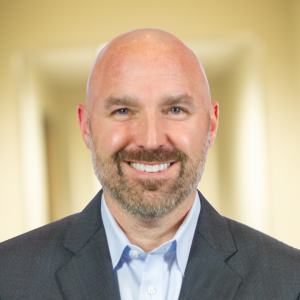
President & CEO
The Beryl Institute
2. The Future of Healthcare
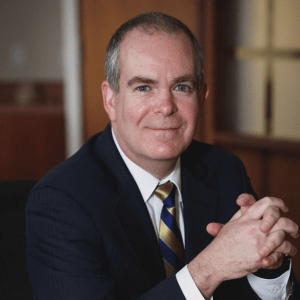
Senior Director
Fitch Ratings

CEO
4sight Health

Principal, National Sector Leader, Healthcare and Life Sciences
KPMG (retired)
3. The Policy Landscape

Health Industry Analyst Managing Editor
The Keckley Report
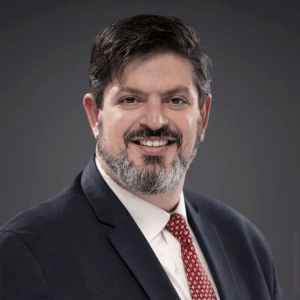
Partner, Team8 Health Director, Medicare Initiative
Paragon Health Institute

Powered by HFMA’s Vitalic Health, The Vital Collective generated dynamic thinking about how to drive financial sustainability and better outcomes in U.S. healthcare.
Bold ideas for fixing what’s broken in healthcare
The Vital Collective brought together a diverse group of stakeholders to explore real-world solutions to address healthcare’s top challenges.
Belief in the art of what’s possible in healthcare fueled three discussions centered on barriers to financial sustainability and better health outcomes — and how to engineer a turnaround.
This past September, healthcare industry leaders met for the Vital Collective, a modern forum that sought to unite stakeholders in deliberating healthcare’s most pressing issues. The goal: to jumpstart creative thinking and collaborative solutions for change.
Confronting healthcare’s top pain points
Throughout the forum, four key takeaways emerged.
1. We’re not delivering on the promise of health or healthcare outcomes at sustainable cost.
The U.S. healthcare system is so disconnected, even physicians don’t always know where things stand in getting patients the care they need. Ultimately, fragmentation adds cost for everyone. It also leads to poor patient experiences and unnecessary struggles related to access to care and care management.
It’s an environment where no single stakeholder stands out as either the villain or the hero. A recent HFMA survey of healthcare thought leaders found that nearly 90% of respondents believe policymakers and healthcare stakeholders are not effectively leading the way to sustainability at a macro level.
For example, breakdowns in transitions of care are all too common.

– Gail Kosyla, MBA, former executive vice president and CFO, Yale New Haven Health
“There’s unsustainability in that, and it grows every year,” said Gail W. Kosyla, MBA, formerly executive vice president and CFO, Yale New Haven Health.
In addition, insufficient resources are directed toward preventive care and health literacy. Increased investment could not only strengthen health, but also avoid the expense associated with delayed care and health complications.
“We do a great job of saving people from drowning, but we don’t teach them how to swim,” said David Johnson, CEO of 4sight Health, a healthcare advisory company.
Caught in the middle are patients, who encounter breakdowns in communication at each point in the care journey, including during their financial experiences.
“We’ve built a system that people need to survive after their care,” said Jason Wolf, president and CEO of The Beryl Institute, a nonprofit organization focused on the human experience in healthcare.
And despite healthcare being inherently consumer-oriented, with consumers making decisions on whether to seek care, “we’re nowhere near” empowering consumers to become more influential in the healthcare marketplace, said Paul H. Keckley, PhD, a healthcare policy analyst and former health system administrator.
“The fact is that people are still very much disempowered,” Keckley said. “The information isn’t free and flowing in the way that it ought to be.”

– Jason Wolf, president and CEO, The Beryl Institute
Too often, patients are subjected to “a bunch of disparate, disconnected conversations” throughout their care journey, Wolf said. Adding to consumers’ frustration: the need to take on administrative aspects of care, from care coordination to billing and payment, while they are sick.
Perhaps what most stands in the way of supporting better health outcomes at sustainable cost is the design of the U.S. healthcare system. It’s a system built for treatment, Johnson said.
Advancements in our ability to predict major health events four to five years in advance will be “hugely disruptive to the way we currently do things, and ultimately, better for us as people,” Johnson said.
These advancements will lead the industry toward a state of evidence-based prevention, helping to decrease reliance on expensive acute care treatments.
“None of this sounds like it’s going to do anything fundamentally to address affordability,” said moderator Susan Dentzer, MS, president & CEO of America’s Physician Groups.
But Johnson and Fitch Ratings Senior Director Kevin Holloran anticipate earlier detection and treatment could reduce costs by treating complex conditions at an earlier stage or preventing them altogether.
2. Affordability concerns and challenges extend across stakeholders.
Affordability of care is a huge issue for stakeholders, and it will become an even bigger concern as insurance premiums rise by double digits and as higher levels of risk are pushed to providers.
More than one out of three American adults say they are unable to access affordable, quality healthcare, according to a 2024 Gallup poll.[a] It’s not uncommon for consumers to delay or avoid care or shift care to nontraditional settings to avoid the expense. Some are even seeking care outside the United States to decrease care costs, Wolf said.
Meanwhile, concerns around the ROI of the healthcare dollar — “What are we getting in return for our investment?” — leave purchasers frustrated.
“Our health system is not really a health system in this country. It’s a sick care system,” said Kosyla. “The more sick patients we have, the more we treat those patients. That’s how we’re incentivized and how we derive our revenue.
“There clearly is a misalignment there — that’s very easy to say — and I think we nip at it with value-based contracts. We have components of our contracts that are value based, but it’s only a small piece.”
Both providers and payers are intently focused on finding new ways to reduce costs and strengthen efficiency. During HFMA’s Thought Leadership Retreat, which followed the Vital Collective, attendees were asked, “What word best captures the future we want to build together?” The word “affordable” tied for third, just below “healthy” and “sustainable.”
“We’re spending so much money on things that aren’t value-added, and I think if we could redeploy those resources, we’d be in a much better space,” Kosyla said.
Yet most of those polled during the Vital Collective believe the future of care will cost the nation more, not less. It’s an issue the industry has attempted to address for decades, and it’s getting worse, not better.
Administrative complexity alone adds expense to an already expensive system of care. Strata Decision Technology estimates more than 40% of the total costs hospitals incur in delivering care can be attributed to administrative expense.[b]

– David Johnson, CEO, 4sight Health
Meanwhile, The Commonwealth Fund points to administrative complexity as “the single biggest component of excess U.S. spending,” with costs for both payers and providers comprising about 30%.[c]
But Johnson believes that when it comes to healthcare cost containment, signs of change are on the horizon.
“We are on the cusp of self-insured employers having the ability to become better buyers, investing in programs that flood the zone of primary care so that the workforce stays healthier and they don’t need as much access to acute care,” he said.
Keckley, too, sees pressure for change coming from self-insured employers.
“My conclusion is that [healthcare transformation is] not going to come from the inside,” he said. “Outside forces will force us to change and not accept all of our excuses. And my sense is it’s large, self-insured employers that are just kind of fed up, and I’m seeing that in various industry groups.”
3. Serious action is needed to drive a sustainable turnaround.
“We are at this inflection point, this tipping point, where no matter what we do, we’re just layering on top of a system that is inherently broken,” Holloran said.
From the ongoing divide between payers and providers to reimbursement pressures and a rapidly changing regulatory environment, the need for transformational solutions to the challenges healthcare faces is clear. Two-thirds of leaders polled during the Vital Collective believe a combination of technology-driven disruption and payment reform are needed to support long-term change.
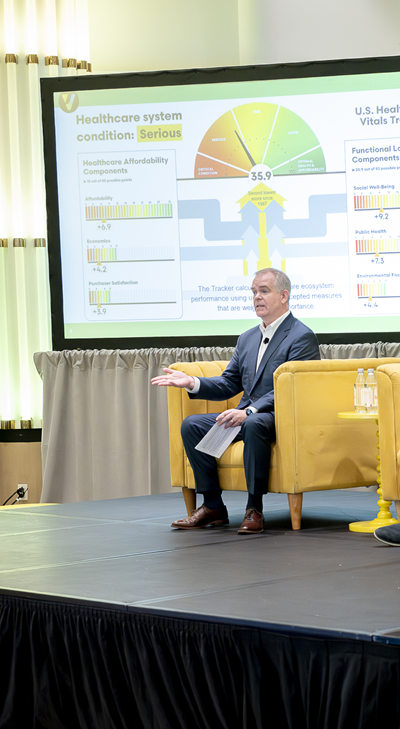
– Kevin Holloran, senior director, Fitch Ratings
However, 24% of leaders say neither technology nor payment reform will be sufficient. Holloran puts himself in that camp.
Despite the promise of AI in strengthening care, efficiency and the experience of care, applying advanced tech to a system in need of reform won’t have the desired impact until the system’s deeper issues are addressed, Holloran said.
“We haven’t fixed the underlying problem,” he said. “And so adding more tech to it — AI, in this particular case — is just going to add cost to the system. It’s not going to fix the problem.”
The complexity of the U.S. healthcare payment system was also a top-of-mind issue for Vital Collective attendees.
Some experts say if the United States were to start from scratch, the nation could come up with a better payment model for healthcare, like a single-payer system, Johnson said.
“In some ways, our system is overly complex because we haven’t chosen one model or another. Until we have a payment model that actually allocates risk in the right way, we’re just kind of spinning our wheels,” he said.
Ash Shehata, KPMG principal and national sector leader for healthcare and life sciences (retired), predicts we’ll see payment reform under the Trump administration.
“If you look at the current administration, they’re essentially saying, ‘Let’s start with our government system,’” Shehata said.
Another healthcare payment structure that is gaining ground: direct-to-consumer payment, especially for medications and drug therapeutics like GLP-1s.
“There are good examples today of parts of the system saying: ‘We are going to simplify. We’re going to move to a cash basis or a real-time payment basis. We’re going to exit the insurance layer because it might be too complicated for certain procedures, and we’re going to move direct to the consumer with the help of technology,’” Shehata said.
4. Bold moves toward payer-provider collaboration are needed to create a healthcare system that truly delivers value.
During the Vital Collective, more than 35% of attendees viewed lack of strong payer-provider partnership as a leading cause of high costs and poor outcomes. Half said it’s one of several causes, according to a conference poll.
In the past two-and-a-half years, Holloran estimates he’s spoken with more than 200 healthcare CFOs about the state of payer-provider relations. There’s an overwhelming sense that relations have become worse, he said.
Consumers feel the tension, too, and they’re frustrated by it, Wolf said.
“I think what consumers see is: ‘Well, the hospital wants more. The payer wants more. And so you’re arguing over who gets more money, and I’m still trying to figure out how to get my healthcare paid for or if I can even go get this procedure,’” he said.
If payers and providers could instead work together to determine what the patient needs to successfully manage their health, “I think that would lead to better outcomes overall, and hopefully then, collaboration and alignment would reduce care costs and streamline processes,” Wolf said.
Kosyla, formerly of Yale New Haven Health, is hopeful that better relations are on the horizon.
“I don’t think the divide is going to last much longer,” she said.
Top areas for collaboration include claims processing — where standardization of payer claim edits is increasingly viewed as a step that could make a dramatic impact on efficiency and expense — and prior authorization, with a focus on making processes easier for both parties and improving decision times.

– Jennifer Atkins, vice president, chief network officer, Blue Cross and Blue Shield of Kansas City
“We’re working on a real-time system that will turn prior authorizations around in less than an hour,” said Jennifer Atkins, vice president, chief network officer for Blue Cross and Blue Shield of Kansas City.
Combined with processes like pre-claims adjudication, these steps can better equip providers with the information they need to understand what services will be paid and how, she said.
Strengthening communications with consumers also is an area where payers and providers could more effectively collaborate to reduce confusion and build trust, leaders agreed.
For value-based care partnerships between payers and providers to take hold, both parties need to commit to convening to solve problems, Atkins said.
“I don’t think one-off use cases are going to get us there. It’s really going to come down to conversations in rooms like this, where we bring everybody together and say, ‘How do we solve this?’” Atkins said. “We need more rooms like this.”
It’s also time to think differently about value: what it means to achieve value in healthcare, how it’s going to be delivered and by whom, “instead of just taking yesterday’s approach to value and putting a new coat of paint on it and saying, ‘Yesterday was quality. Today, it’s value,’” said Demetrios L. Kouzoukas, partner at Team8 Health and director of Paragon Health Institute’s Medicare initiative.
Kouzoukas said the direction for change in healthcare will come not just from employers, but from generational and cultural forces. Younger generations, for example, are willing to forgo seeing a movie in a theater if they can’t select their desired seat, he said. What will this mean for consumerism in healthcare as these generations take the driver’s seat for choice?
The time is now
Vitalic Health’s approach centers on solve-based convening: bringing diverse stakeholders together to develop real-world solutions to healthcare’s top challenges. Testing solutions in the marketplace will be a vital aspect of this initiative.
HFMA is uniquely positioned to convene stakeholders to uncover practical solutions for addressing financial sustainability and better health outcomes, said Zeev Neuwirth, MD, head of strategic partnerships and network development for Rezilient Health and is the author of two books on healthcare transformation.
“What’s really cool about HFMA is that the people who control healthcare operations, financially, and who also actually know how the healthcare machine works and understand it — those are the people leading this effort,” Neuwirth said.
The 4 pillars of Vitalic Health
Vitalic Health is a multi-stakeholder framework designed to move the needle on affordability, financial sustainability and better outcomes in U.S. Healthcare. Here’s what’s coming in 2026:
- IMPACT MEASUREMENT INSTITUTE
The first output will be the “U.S. Healthcare Vitals Tracker,” a first-of-its-kind tool designed to monitor and measure the U.S. healthcare ecosystem’s vitality. Comprising 25 well-known and universally accepted metrics, the Vitals Tracker scores the system based on factors of affordability and health span. - SWARM STUDIES
These studies will identify key healthcare industry problems that are perceived as difficult to solve due to their complex and interconnected nature. From there, Vitalic Health will partner with stakeholders, academic partners and business groups to explore new solutions for driving meaningful change. - SOLUTIONS STUDIO
This initiative will bridge the innovation gap by partnering with health systems, startups and technology companies to develop, test and scale practical solutions for financial sustainability challenges. Rapid implementation and measurable impact will be key. - PAYMENT MODEL CONSORTIUM
The consortium will bring together health systems, payers, employers, technology, retail health and policymakers to collaboratively design, test and scale sustainable payment models. The consortium will be the only national forum specifically focused on payment model innovation through the lens of both financial sustainability and value-based care.
About Vitalic Health
Powered by the Healthcare Financial Management Association, Vitalic Health strives to advance financial sustainability and better health outcomes. It facilitates solve-based convening among diverse industry stakeholders to address the complexities of lowering health expenditures and increasing health and lifespan to improve the vitality of communities across the U.S. Vitalic Health seeks to expand HFMA’s longstanding mission of leading the financial management of healthcare by revolutionizing business practices and payment models.
Vitalic Health
1015 15th St. NW, Suite 600
Washington, D.C. 20005
www.vitalichealth.com
About Healthcare Financial Management Association (HFMA)
The Healthcare Financial Management Association (HFMA) equips its more than 140,000 members nationwide to navigate a complex healthcare landscape. Finance professionals in the full range of work settings, including hospitals, health systems, physician practices and health plans, trust HFMA to provide the guidance and tools to help them lead their organizations, and the industry, forward. HFMA is a not-for-profit, nonpartisan organization that advances healthcare by collaborating with other key stakeholders to address industry challenges and providing guidance, education, practical tools and solutions, and thought leadership. We lead the financial management of healthcare.
Healthcare Financial Management Association
2001 Butterfield Road, Suite 1500
Downers Grove, Illinois 60515
hfma.org
If not now, when? If not us, who?
To get involved in the Vitalic Health movement, contact Lisa Eyer at [email protected].
Copyright ©2026 Healthcare Financial Management Association. All rights reserved.
Footnotes
[a]. Witters, D., and Maese, E., “In U.S., Inability to Pay for Care, Medicine Hits New High,” Gallup, April 1, 2025.
[b]. “Skyrocketing Hospital Administrative Costs, Burdensome Commercial Insurer Policies Impacting Patient Care,” American Hospital Association, September 2024.
[c]. “High U.S. Health Care Spending: Where Is It All Going?” The Commonwealth Fund, Oct. 4, 2023.
