


Healthcare Finance Technology

Coding-aware ambient AI gains traction for revenue integrity and compliance

Published
February 20, 2026
2:37 pm
Sponsored by Ambience Healthcare
The use of ambient AI offers strong potential for transforming healthcare by automating tasks to reduce documentation time and burnout from time spent on after-hours documentation, according to research by the American Medical Association.[1]
A KLAS report indicates that while only a minority of organizations have reached deep adoption (defined as greater than or equal to 86% of clinicians), most are in the middle stages of deployment. Among ambulatory organizations, over 80% report at least moderate adoption of ambient AI. Hospitals and health systems trail behind, with nearly half still in the early adoption stage (less than or equal to 15%).[2]
Revenue cycle impact is a crucial consideration for organizations when selecting ambient speech solutions, KLAS notes. Coding-naive tools may integrate cleanly, but without built-in CDI and coding awareness, they expose health systems to denials, audit risk and downstream rework.
The benefits and challenges of ambient AI, particularly for coding, were discussed in a recent HFMA roundtable discussion sponsored by Ambience.
How are you currently thinking about AI documentation in your organization? What’s driving your interest? What are your concerns?
Lisa Nelson: We were one of the first health systems that had a secure instance of ChatGPT in early 2023. We’ve also dabbled with a couple of startups – cut and paste – nothing integrated into Epic. As we have evolved with Epic’s integration, we took it through our revenue cycle of governance so everybody had full awareness of what was going on.
I had our informatics group lead the change management. The last thing we want to do is put out technology that nobody’s using. You’re spending all this money. We’ve had an adoption rate of 65%. We’ve had people say this changed the trajectory of how they’re practicing medicine.
It’s shocking to me how much the process of doing the notes was baked into how they practice medicine. We had to change that.
There are some providers who are really efficient, and [ambient AI] didn’t really help them. Other people are at the end of their career and don’t want to change the way they’re doing stuff. Some people didn’t like it. Patients did not realize that providers were keeping all of that information in their head. Only a small number of patients don’t want the ambient AI recording their conversations with physicians.
Sandra Johnson: We had an initiative around the well-being of the clinician and tried to see what we could do to decrease documentation burdens. That’s what made us start looking at AI. We have the recommendation of our physicians who tried each platform, and we used their feedback to make the decision around which solution we felt would best integrate into their workflow.
We were very deliberate about this. We started looking at risk around compliance; risk around denials. We thought the biggest risk was making sure the physicians actually reviewed the AI notes to make sure the quality and accuracy was there.
We put a lot of emphasis on training physicians. You have to read [the AI-generated notes]. You have to make sure they are accurate. They may not read the summary thoroughly, but they definitely will look at it before they sign their name. With legal and compliance, we wanted to make sure we had the right consent from patients to be using a tool like this as well.
We hope as we build this and scale it, [our ambient AI tool] will begin providing some prompts so physicians can start to see some of the expanded value. They don’t have to sit there for hours and do their notes anymore. They are extremely happy. Their productivity is going up. We hope to see a financial impact coming out of that, because now, we’re begining to see those organic productivity gains that we’re trying to get over time – instead of six patients, maybe they can see seven and not even stress out about it.
Carmen Titleman: Our system has implemented an AI-powered tool that automates note creation. I’ve got a team of auditors that look at everything to make sure that everybody’s compliant. The records look fine, but there’s not a lot of adoption. You want to make sure you’re not overpaying your providers, so it’s a big deal to make sure that they’re not over-coding.
This [tool] is almost perfect. I’ve seen a shade of gray, but there’s always going to be a shade of gray. You can be in the room with three coders, and they’re all going to have different answers. There’s always room for perfection. It’s capturing the ICD-10 codes.
Joel Onsager: We have been dabbling in the ambient AI space in our four rural health clinics, and we offer [ambient coding] as an option to our providers. I would say about half or so are using it. Some love it, and some are in different phases of their career and aren’t necessarily interested in learning more technology at this point. We have a number of cerebral providers who want to figure out the intellectual puzzle, engage with patients in a less verbal way and consequently don’t use terms that display nicely in a medical chart. It’s a rural area with patients who want to understand what’s happening during a visit, and some providers currently find it a little too disruptive to change their language and the way they interact with the patient throughout the visit to get the most out of ambient AI.
But for those willing to adjust, make an effort to verbalize things a little differently and embrace the technology, they are reporting much less time spent completing the documentation so that claims can be sent out the door and paid.
Our CEO has essentially been pushing the idea that AI is coming. We never know each day what new tool will be available and our organization as a whole has been taking the approach that we may as well evaluate as much as we can, understand as much as we can and roll with the changes as best we can because AI is not going away.
We’re not demanding adoption of AI at this point, but we are definitely pushing the concept that one should be comfortable talking about AI, because it’s going to be around for a while. We do try to use AI as a recruiting and retention tool, as we are trying to offer options to our providers to make our organization a desirable place to work.
Heidar Thordarson: I have an eight-month-old daughter who went to the pediatrician. They had an ambient listening solution at the clinic. It’s a game-changer. We’re moving to Epic on Sept. 1, 2026. I’m excited for it. But with that, we’re starting to look at what AI services and what technology tools we get with Epic. Our goal is to implement a lot of them. We don’t want to wait until we’re on Epic to explore these possibilities.
We’re in the middle of doing a pilot for 100 physicians, just to get a few who become fans of the ambient listening product, and then they can tell their friends.
We do a lot with scribes right now, so after the first 100, our goal is to use ambient listening to see if we can reduce that cost so that by the time that Epic comes in, they’re ready and it’s a seamless transition.
Use of ambient listening solutions is like going back to the good old days, when doctors spent more time with patients before EHRs came into play. This is really giving the physician back [the types of work] they’re meant to do.
It’s great to see how far AI has come and how many health systems are taking advantage of everything out there.
If you’re evaluating tools, what’s on your checklist?
Raemarie Jimenez: We’ve evaluated AI tools across the revenue cycle at AAPC. There are a few things we’re looking to explore. One is to help our members understand the new technology coming out. We know this is going to augment their work. We have constraints on the workforce now where we don’t have enough humans to do the work, so we see this as an effective tool.
As we’ve talked about deficiencies in documentation, we know that no matter how we’ve tried to capture documentation with handwritten notes, we couldn’t read what they were doing. With [EHR-based AI tools], we can’t believe what they are doing with some of the features like copy and paste and pull forward.
We see a lot of gains with the use of ambient scribing to be able to capture the full record and the prompts we were able to get. Some of the scribing tools that come with EHRs don’t have built-in prompts, so you’re just relying on the provider to remember everything they need to capture.
That’s where the prompting and [reminder tools] are going to be important: [in] capturing the right documentation to support the coding and medical necessity.
The technology is moving very quickly. We see it as a great opportunity to help support our providers as well as our workforce scaling on the revenue side of things.
David Schweer: The crux of AI is to improve processes. I could argue that you could replace radiologists in part with AI, but you still need the human aspect for good decision-making, validation and verification to back it up.
I’m more on the analytics side. A lot of organizations are exploring how they can use AI to supplement analysts and make good tools. I think AI has a huge potential to augment scarce resources.
The legal implications are still being defined as we move into this space. Where does the data reside? How do you keep it safe?
Looking at accounts receivable, how do we keep it manageable? There’s huge potential there to make life easier for analysts, executives and decision-makers along the way. Everyone’s trying to jump in, but jump in smart.
Sam King: One of the issues typically encountered with AI or any technology is when physicians say, “You tell me it’s more efficient, more effective, but now it’s pushing the workload.” In many organizations, physicians are keenly aware of that: “Instead of six appointments, now I can have seven because I’m more efficient. What’s the point of having AI if my work life is miserable?” We’re very conscious of that.
We’re at the very early stage of getting [ambient AI] implemented on a trial basis. We want to make sure physicians understand [why it’s being used] and their concerns are fully heard and make sure every step along the way is right.
We don’t have to rush. Rushing does not mean anything if the outcome is not what we wanted. You can set yourself back so many years by rushing. I’m an IT executive, but I’m also a finance guy. For me, I think about not just shiny objects and the latest and greatest, but also their purpose for our organization. The physician voice is strong and powerful. We want to make sure we have their support.
Thordarson: We’re trying to create a guideline of what we are looking for and when to bring it in. Initially, it’s going to be more of a physician satisfier and recruiting tool and ultimately getting the code and documentation in there. We’re going to make everything easy for the provider again – document everything in the office without doing it at home. It’s going to make everything easier for coding and for billing.
Conclusion
Healthcare organizations that are exploring coding-aware platforms find that they help avoid compliance pitfalls and reduce denials and increase efficiency. They also point to ROI from the potential for more patient visits in a day or increased revenue. But participants also noted that ambient AI’s success depends in part on physician engagement and training. When emphasis is put on physician communication and training, this increases the potential for higher levels of physician satisfaction.
PANELISTS

RAEMARIE JIMENEZ,
CPC, CCS, CPB, is president, membership and content, for the American Academy of Professional Coders (AAPC), Salt Lake City.

SANDRA JOHNSON,
FHFMA, FACHE, MBA, is chief revenue officer for Medstar, Columbia, Md.

SAM KING,
FHFMA, EHRC, FHIMSS, CPHIMS, CPHQ, is chair, digital health, for UC Irvine and chief information and innovation officer, Care to Caregiver in Orange, Calif.
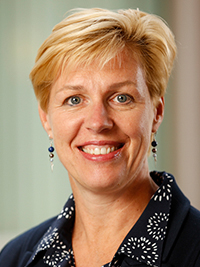
LISA NELSON,
Pharm D, is chief applications officer and associate vice president, applications, University of Rochester Medical Center, Rochester, NY.
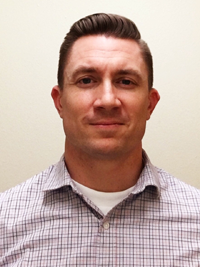
JOEL ONSAGER
is CFO, St. Luke Community Healthcare, Ronan, Mont.

DAVID SCHWEER
FACHE, is director of finance projects for Mercy Siouxland Medical Center in Sioux City, Iowa.
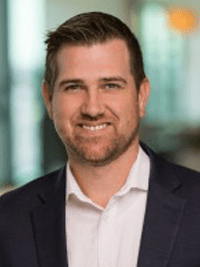
HEIDAR THORDARSON
is CFO of Central California Network for Adventist Health, Roseville, Calif.
CARMEN TITLEMAN
CCSP, CDIP, CHC, is executive director of coding and compliance for Piedmont Health, Atlanta.
About Ambience Healthcare
Ambience Healthcare is the leading AI platform for documentation, coding, and clinical workflow, built to reduce administrative burden and protect revenue integrity at the point of care. Trusted by top health systems across North America, Ambience’s platform is live across outpatient, emergency, and inpatient settings, supporting more than 200 specialties with real-time, coding-aware documentation. The platform integrates directly with Epic, Oracle Cerner, athenahealth, and other major EHRs. Founded in 2020 by Mike Ng and Nikhil Buduma, Ambience is headquartered in San Francisco and backed by Oak HC/FT, Andreessen Horowitz (a16z), OpenAI Startup Fund, Kleiner Perkins, and other leading investors.
This published piece is provided solely for informational purposes. HFMA does not endorse the published material or warrant or guarantee its accuracy. The statements and opinions by participants are those of the participants and not those of HFMA. References to commercial manufacturers, vendors, products, or services that may appear do not constitute endorsements by HFMA.
Footnotes
[1]. Robeznieks, A., “New reason to use AI ambient documentation: Patients like it,” American Medical Association, Jun 30, 2025.
[2]. Taylor, B., “The rise of ambient speech technology in healthcare,” KLAS, Feb. 15, 2025.
