


Healthcare Finance and Business Strategy

Healthcare providers seek solutions for growing patient financial burden

Published
February 20, 2026
3:28 pm
|
Updated
June 1, 2026
3:15 pm
Sponsored by PayZen
Patients today are responsible for a growing share of healthcare costs due to rising deductibles and co-insurance. Self-pay balances continue to rise and are increasingly difficult to collect. In fact, 76% of patient bills are going uncollected, according to an in January 2025. in January 2025.
In a recent HFMA roundtable sponsored by PayZen, providers , providers discussed emerging solutions and strategies on the patient pay side of the revenue cycle, emphasizing the human side of billing. They shared deep empathy for their communities, underscoring the need for compassionate financial strategies. Some expressed particular concern about patients losing Medicaid coverage due to regulatory shifts, which could increase the number of uninsured patients significantly over the next few years. patient pay side of the revenue cycle, emphasizing the human side of billing. They shared deep empathy for their communities, underscoring the need for compassionate financial strategies. Some expressed particular concern about patients losing Medicaid coverage due to regulatory shifts, which could increase the number of uninsured patients significantly over the next few years.
What’s top of mind for you when it comes to patient balances or the patient pay side of the revenue cycle?
KIMBERLY SPRADLING: We’re in a rural area. Deductibles and co-insurances are rising — and so is everything else. It’s hard for patients to pay.
KAYLA GROSS: Top of mind is access to insurance that fits their needs. They’re paying very high premiums now, and they don’t understand their benefits. We’re seeing more people choosing to become self-pay because of that, so we’re making sure we have adequate options for them.
SONIA KAUL: Some of our patients ask us, “I’m comfortable paying this much. Can I create some payment plans and divvy up my payments?” Unfortunately, apart from our own shorter-term payment plan options we have now, there’s not an extensive presence of options for them that we can provide. We’re looking for partners in that.
JON NEIKIRK: As insurance deductibles and co-insurance amounts continue to rise, our self-pay receivables are also increasing. While we offer extended payment plans, larger balances are becoming harder for patients to manage — and without consequences such as credit reporting or legal action, many choose not to pay. For many patients, the reality is they simply cannot afford these growing balances, making collection even more difficult than before.
JENNIFER DZENDZEL: I’m worried about what’s going to be happening with Medicaid and Medicaid expansion, and how many more people are going to be getting dropped off Medicaid with new regulations. I’m wondering what we are going to be looking at in a year or two from now. How’s that going to look for our patients, and how are we going to be able to continue to help them get treatment with the lack of resources that’s going to be coming in the next few years?
TAMMY DUMLAO: I live in Hawaii. It’s very expensive there, and especially on our neighboring islands, it’s even more expensive. More people have a hard time paying their bills. We have a large Medicaid population, so that might affect us in the future.
JOSE CELIO: I am in the balancing act of being transparent with our costs but also trying to not push families away because of the estimates. We offer payment plans, but as we expanded our estimates, there’s always that fear someone’s not going to show up because of it. Families sometimes won’t contact us back [after they have received an estimate].
JASON METCALF: My biggest issue is making sure we’re getting everything out in a timely fashion and that we’ve got sufficient notifications to patients about assistance programs when or if requirements for estimates expand beyond the current rules.
With patients taking on more of the financial burden, how are you supporting patients financially today? Where do you see room to work?
CELIO: When price transparency laws became effective, we used that as an opportunity to create and provide a lot of our estimates [to our families].
DZENDZEL: We have a robust financial assistance program with tiers. A lot of Americans fall into that category where they’re working, they have insurance, but can’t afford the deductible, co-pays and medications. That’s a big challenge for many people. Organizations can expand their financial assistance options and incorporate larger groups of people at different and higher levels of poverty through a tiered system to help as many people as they can seek treatment.
SPRADLING: We go by their balance for how long we’ll push out their payment plan. Our staff are the ones who are coming in, and every paycheck, [they are] trying to pay on these. You want to help. It’s the communities, the people we work with, go to church with, see at the grocery store. If we always keep in mind we want to help them, so they can do the things they do as well, we’ll all be in a better spot.
GROSS: We’re working to improve access to our financial assistance program. It wasn’t very accessible and easy for our patients; we’re working on quite a bit of automation there. Anybody who wants financial assistance, we automatically review them for other payer opportunities, hopefully benefiting them in the long run so they do find insurance.
KAUL: Where we can actually do more is extending our payment plans. We have a very restrictive payment plan. It is a two- to four-month option we provide them. We can expand it. We’re looking into leveraging AI for estimates because we have regional price variances and want to be competitive when it comes to offering pricing to our self-pay population. We created our own estimator apart from what Epic has, to see what the market rate is for that; does our pricing make sense for the patient and how can we be more proactive and competitive in the market?
NEIKIRK: We offer a robust financial assistance program for patients earning up to 400% of the federal poverty level, with applications available through MyChart and mobile devices. Although we’ve simplified the application process, there are still many patients who do not engage in the application process. To address this, we launched a presumptive eligibility program last year that has proven very effective. For patients who are screened and found ineligible for Medicaid or other government assistance, we can determine eligibility presumptively, which eliminates the need for an application. This approach allows us to reclassify dollars from bad debt to charity care, which more accurately reflects the reality that these patients cannot afford to pay.
DUMLAO: We have a tier in charity based on percentage. The higher the percentage, the less of a discount they get, but they at least get a discount. We do have the problem where they just don’t want to apply. We’re trying to think of ways to present it so that it’s we’re here to help them, and it’s not a pride thing. That’s hard with all the different cultures involved in Hawaii.
METCALF: We’re extending longer-term payment plans for those who need that. Generally, our hospital will take care of stuff for up to 24 months, but a lot of patients with larger balances and high-deductible plans need a little bit longer, especially if they’re hitting the higher end of their deductibles. We extend those out to five years with some of the programs we offer, [with] no interest for our patients.
It seems that the best time to have conversations about affordability is up front, so a lot more of these conversations are shifting to the front of the revenue cycle. Has this been your experience?
MEZGER: This has certainly rung true for the health systems we work with. Some of their most successful collections initiatives have been in this area. The other part is kind of having a complete conversation and blending payment options where it makes sense, so you can kind of be mixed, right? So someone could have partial financial assistance and extended payment plan options for the rest.
NEIKIRK: We recently implemented Epic’s pre-service payment plans. For any service with a cost estimate, patients can now establish a payment plan at the time the estimate is generated. Setting up a plan in advance of service is far more effective than trying to collect balances after services are rendered.
KAUL: The big challenge for pretty much every health system on Epic has been creating the estimate. Epic has improved the estimator tool, but it’s still not that accurate [as to] what the patient financial responsibility is up front. That’s why a lot of health systems are still reliant on the back-end billing and then the balance billing, and then we engage the patient.
SPRADLING: The No Surprises Act put us all in a bind. It affected the patients more than us. It scares people; they [think they] can’t afford it. They’ll think, “We’re not going to do it.” We say, “We have to give you the estimate.” There’s someone just shopping around, and now that’s even more scary to them.
How have you leveraged AI in financial conversions?
METCALF: There are some vendors out there – I wouldn’t call it AI – but they’re using public data sources so even when we send out our first statement, we’ll make an offer. Depending on what’s in there, it will make an offer to the patient for a payment plan versus trying to pay the full balance.
In other cases, the patient will get the full balance and that will be the first offer. The patient can have a paper or electronic statement. In the electronic environment, they can counter, and it will approve or not based on rules set in place whether or not they’ll accept that payment plan. In a sense, it is self-service, but also a conversation done electronically. There’s no person involved.
How do you evaluate new solutions or services on the patient-pay side?
KAUL: For us, it’s definitely looking at the regulatory environment. It has to be 100% adhering to the compliance of local regulations. When we are evaluating our vendor partners for payment processing solutions, we look at the ease and the patient experience – acceptance and adaptability.
For example, we just switched our payment processing partners. The first thing we look at is how are they going to be integrated with Epic? That is a big thing for our EHR integration, because we don’t want to leave the EHR systems. What kind of payment options would it be accepting? Would it be easier?
For patients, would it accept the [the various mobile payment apps]? Would it be intuitive for the patient when they’re paying? Would the patient be able to pay through the portal, or have several options for them or through the messaging services so the human touch is not there when it comes to the payment options and plans?
We look at our ease for monitoring and how we can generate reports and analytics based on that. We look at the company reputation. We do talk to other providers. Have you worked with them before? What is your feedback? What are some other things that have worked well? The primary key factors are it has capacity compliance processes; it has to be patient-acceptable and ease-of-usage for the end users and Epic integration.
Cybersecurity is the biggest thing we worry about, especially when it comes to third parties that we’re not in control of, and data leakage, especially in an environment like now where healthcare data is the most-priced data. Breaches sometimes restrict us from going third party because we’re not sure if our data would be secure.
DZENDZEL: We’re heavily into cybersecurity too. If we integrate with somebody and they have a breach, it’s on our face as well, because they know they’re our partner. We look for compliance and cybersecurity. At the end of the day, we’re all revenue cycle geeks. The wow factors of enhanced analytics are very attractive.
When you are looking to bring on a new patient financing partner, for example, what are some of the things you’re looking for?
KAUL: Who is your parent company? What are the intentions? Are you data mining, or are you truly just for the service? We like to chase those red flags. The parent company is very important to us because you have a lot of spin-offs. Everything in the vendor space is very dynamic.
So we do look for who are the people we’ll be working with and, most important, who are the people who own this company. At the end of the day, we’re not talking to the machine yet. We do look for that one-on-one connection, the reputation of the leaders as well as of the companies, the must-haves like the full Epic integrations, the ease of care for the patients and definitely the analytics. What is lacking in Epic is what we actually look for.
There’s a time and a place to integrate new technologies. Make sure you truly partner with your providers and understand their biggest pain points, that it’s going to integrate seamlessly and not add work that wasn’t expected. Understanding automation is good, but we still need humans. How does that come into play?
SPRADLING: We look for references, collaboration with our billing software and whether they’ve worked in Texas.
Conclusion
Overall, it is clear that health systems are embracing a more flexible, data-driven and patient-centric approach to affordability. From extended interest-free payment plans and personalized self-service options to modernized financial assistance programs and presumptive eligibility, organizations are reducing friction and giving patients more control over their financial journey.
Technology plays a key role too: whether through AI-driven offer customization, automated screening tools or digital-first payment experiences embedded in Epic. By moving affordability conversations to earlier in the process, providers are not only increasing collections but also building trust with patients from the start.
PANELISTS

JOSE CELIO,
MBA, is director of patient access financial services at Ann & Robert H. Lurie Children’s Hospital of Chicago.
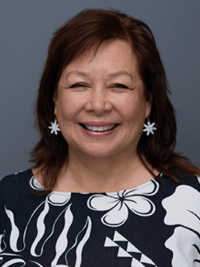
TAMMY DUMLAO,
CRCR, EHRC, is director of revenue cycle with Hawaii Health Systems Corporation in Honolulu, Hawaii.

JENNIFER DZENDZEL
is director, revenue cycle, patient access with University of Virginia Health System in Charlottesville, Va.
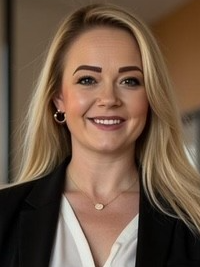
KAYLA GROSS,
CRCR, CSBI, CHAM, is patient access services director with Banner Health in Phoenix.
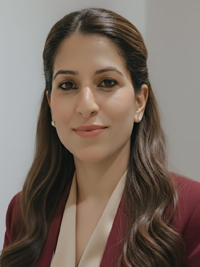
SONIA KAUL
is executive director, revenue cycle and finance with Cleveland Clinic in Cleveland.

JASON METCALF,
FHFMA, is division director of corporate revenue cycle at CommonSpirit Health in Chicago.

TOBIAS MEZGER
is the chief revenue officer at PayZen in San Francisco.

JON NEIKIRK
is executive director, revenue cycle with Froedtert ThedaCare in Milwaukee.
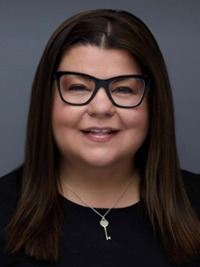
KIMBERLY SPRADLING,
CRCR, CCS, CMBS, is director of patient financial services at Moore County Hospital District in Dumas, Texas.
About PayZen
PayZen is a mission-driven healthcare fintech company with smart technology and a patient-first mindset. Rated the top Patient Financing Company by KLAS, PayZen is expanding beyond financing and building a comprehensive AI platform that brings financial health to healthcare. The company is backed by premier capital partners and led by tech veterans with a track record of helping millions of Americans overcome financial struggles. To learn more about how PayZen is helping health systems strengthen financial performance while delivering an empathetic, high-quality patient experience, visit payzen.com.
This published piece is provided solely for informational purposes. HFMA does not endorse the published material or warrant or guarantee its accuracy. The statements and opinions by participants are those of the participants and not those of HFMA. References to commercial manufacturers, vendors, products, or services that may appear do not constitute endorsements by HFMA.
