



Healthcare Revenue Cycle Management

Integrating human-enabled AI emerges as key consideration for revenue cycle

Published
6 hours ago
Sponsored by Solventum
Revenue cycle management (RCM) has reached a turning point: Health systems must adopt AI to keep pace with payers, which are increasingly using AI to deny claims. With AI, payers can issue denials almost instantaneously and sometimes at rates 16 times higher than typical.a This shift has turned AI adoption from an elective efficiency tool into a strategic necessity for protecting health system revenue.
For nearly half of health system leaders participating in a recent HFMA executive roundtable sponsored by Solventum, the current reality is that RCM processes are more or less evenly split between reactive, manual processes and proactive AI automation.
For revenue cycle leaders navigating this landscape, roundtable panelists advise focusing on use of AI for practical applications and high-volume, background tasks. Using AI to automate repetitive functions — such as authorizations, notice of admissions (NOAs) and claim status checks — is proving successful in freeing up human expertise so it can be applied toward high-value interventions that actually require staff support.
Moving AI interventions upstream to the point of clinical documentation and medical necessity vetting is also a key strategy, helping ensure a cleaner claim before it ever leaves the system.
In this roundtable, seven healthcare revenue cycle leaders and executives share insights and details about these strategies. They also explore how to move toward thoughtful AI adoption that makes an impact in protecting revenue integrity.
When you look at revenue leakage today, do you see a disconnect between the highest losses and how your team spends their time?
JONATHAN DAVIS: We have high-dollar work queues where claims are prioritized for review according to their dollar amount, both before they are submitted and after a high-dollar claim has been denied.
DURGA ZALLY: From a pharmacy perspective focused on medication denials, we define high-dollar medication claims based on total financial impact over time and not just the one-time price. For example, a $30,000 recurring therapy may represent greater exposure than a $50,000 one-time treatment. We route these upstream to our medical necessity pharmacist team to validate documentation before authorization, so we are not spending downstream time on avoidable denials. Our recovery team then prioritizes interventions based on overall financial impact and the expertise required to resolve root causes.
THEA CAMPBELL: Earlier in my career, in my work as a vice president of revenue cycle for two health systems, any denial less than $750 was written off. It wasn’t worth our time. That was just over five years ago. And now, across the industry, that threshold has gone down to $50. So many revenue cycle teams are chasing all of that.
DANIELLE REESE: Over the last 15 months, we’ve taken a close look at our denials. We’ve established new committees and governance structures, and we’ve put a lot of work into retraining initiatives, including scheduling and registration. We’ve replaced warning stops with hard stops to capture critical data at the point of scheduling. We’ve also invested in quality assurance, with dashboards that zoom in — down to the user level to find out where team members are spending too much time on redundant workflows. I’m in the process of centralizing our financial clearance team, which I’m really excited about, and we’re centralizing our quality assurance team, too, to support real-time insight that will allow us to be more proactive than reactive.
JOSEPH KOONS: We are taking a staged approach, focusing as far up in the revenue cycle stream as possible, starting with clinical documentation. We have implemented ambient listening to capture clinical events for a more complete record. We partner with technology vendors to identify incomplete documentation and alert providers in real time. Layering technology allows us to predict outcomes and apply that intelligence upstream, enabling teams to work by exception rather than a rule.
CAROL PLATO: We prioritize our accounts, with leaders taking a close look at our large-balance accounts to determine who needs to be involved in working those accounts. We’re reaching the point where many of our denials are non-controllable — where insurance downcodes a DRG [diagnostic-related group] and we believe the medical record supports the diagnosis. We do have a strong clinical documentation improvement (CDI) team, but some of those claims still get denied. We’ve put a lot of work into root cause analysis and appeals, but it’s difficult to keep up.
What percentage of your denial effort today is still reactive? What’s preventing a bigger shift to prevention?
ASHLEY TEETERS: We are probably 50/50 reactive and proactive. We build in edits to ensure claims go out clean, although new requirements are thrown our way every week. We’re adopting AI to navigate inconsistent clinical guidelines. For example, we developed a hybridized clinical rationale for sepsis to ensure our documentation meets the requirements for both Medicare and Medicare Advantage.
ZALLY: Speaking specifically about medications, we are in that 50/50 range as well. Denials are getting more nuanced, which is increasing the complexity of frontline documentation. The main challenge is keeping pace with rapidly evolving payer policies while ensuring frontline teams can consistently operationalize increasingly granular requirements.
REESE: We are roughly 50-50 proactive and reactive. Data accessibility is critical for a deep dive, root cause analysis. But even then, we’ve found misclassifications where coding or medically unlikely edits (MUEs) were the cause, along with post-procedure CPT [Current Procedural Terminology] code changes. On the front end, we’ve implemented our bot to help with NOAs, which we found was greatly needed support on evenings and weekends, especially. We’ve seen a downshift in our authorization-related denials since taking that step. Now we’re looking at decreasing eligibility denials related to front-end processes, such as in registration. We’re working to get ahead of those denials rather than chasing them.
Which upstream activities have had the most measurable impact on reducing denials or write-offs?
REESE: We consolidated our plan mapping and established a governance committee to manage new plan codes. We mapped out workflows and added hard stops within Epic with physician buy-in. We’re also putting more effort into real-time eligibility (RTE). We’re getting a new RTE vendor, and we’re looking for ways to pull in insight around policy changes and common denial triggers up front — even during scheduling — so we can stay ahead of denials for certain services.
PLATO: I agree that we need technology, but I do think sometimes you have to force it to work for you. For instance, with RTE: I’m also switching to a new RTE vendor because while the technology we had seemed to check all the boxes, it wasn’t telling us whether someone was a hospice patient, or whether a patient was in a skilled nursing facility or any number of other factors that could result in denials at the back end. It would tell us, “This person has insurance,” but I need more information than that to prevent denials. Sometimes, even when you have technology, you have to guide the technology to get the information you need. You end up doing 50% of the work.
CAMPBELL: The most measurable gains tend to come from focusing on the basics earlier and more consistently, like getting eligibility right, building stronger intake workflows and making sure documentation supports medical necessity before the claim is submitted. When organizations can catch those issues upstream, they reduce both denials and the amount of low-dollar write-off activity that ends up consuming staff time.
TEETERS: We’ve been eliminating unnecessary repetitive functions so that our people can fight the denials. We let a bot do our authorizations and are working on implementing bots for our NOAs and our claim statuses. Then our staff can react if there’s something that requires them to act. This has given us more bandwidth because we haven’t been able to change the behavior of some payers.
DAVIS: We evaluate DRGs by length of stay to identify those frequently denied. When we lose 90% of specific inpatient cases on appeal, we implement policy changes to classify them as outpatient from the get-go. The challenge is that this takes effort, and we’re only able to tackle slices at a time. But when we’ve taken this approach, we’ve found that it works well.
What has helped build trust in AI-driven recommendations with your revenue cycle teams?
KOONS: We reference AI and our technology partner as augmented intelligence that complements what our employees do and allows them to focus on higher value tasks and responsibilities. It’s been well received.
DAVIS: The challenge is turning AI into a practical application for daily workflows. We had success with radiopharmaceutical authorization forms where AI translated what used to take 40 minutes to complete. Our teams love it because it actually translated into something very specific for their work. That’s a capability that was missing from a lot of other applications.
TEETERS: We intentionally launched AI in HR before we did so in revenue cycle. We started with a bot that eliminated 75% of our organizational calls to HR. Our teams built trust by using it for tasks that were not directly related to their specific roles, like rewording emails. Now they use AI for appeal letters by loading payer policies and their draft letters. They receive a totally rewritten letter for a second-level appeal in about 30 seconds versus an hour.
CAMPBELL: When you’re trying to identify trends in denials, have you found an AI tool that has been able to tell you, ‘Hey, did you know that 50% of the time, this type of claim is getting denied?” or “Did you know your mammogram denials for this commercial payer have gone up 50% over the last 30 days?’ Or are you still in that space where you might only see a concerning trend 90 days out?
DAVIS: We’re actually piloting a technology that will help us identify these types of trends faster. Without the right tools, we might not notice that mammogram denials have suddenly increased because these denials comprise a small fraction of our entire denials pool. The technology we’re piloting could put us in a better position to be able to react quickly.
TEETERS: We’ve had to get creative in looking at both underpayments and denials because the payers are getting creative, too. They’re masking things and not sending them through as denials; they’re sending them through as a contractual discount, or they’ll tell us, ‘We changed the code, and we paid you less once we changed the code.’ Those types of things are not going to come through as a denial. As a result, we miss some of the really bad behavior. And we don’t have technology today that can assist us with that.
What advice would you give peers evaluating AI-based revenue integrity solutions right now?
TEETERS: Find the most uncontrollable thing that is happening in your space and try to throw some technology at that. We have really focused on our medical necessity, authorization and repetitive functions. Deploying your AI resources where they are going to have the most impact for your organization is key.
ZALLY: When evaluating vendors, be clear on their specific area of expertise, and be wary of one-size-fits-all solutions. Focus on what they truly excel at beyond just the AI. They need to demonstrate deep expertise in the clinical or business logic they are automating, whether that’s medical necessity, policy interpretation or authorizations.
KOONS: Don’t boil the ocean. Be intentional when prioritizing which use case to apply AI to and ensure you understand what the value or ROI is for that particular application. I also recommend short-term contracts; the technology is changing so rapidly that a specific solution may or may not meet your evolving needs. Starting with a shorter commitment allows for the flexibility to pivot as the market matures.
DAVIS: Understand what it’s going to solve, and quantify the impact through dollars; FTE [full-time equivalent] counts or growth. Find a solution that brings value today, rather than the perfect solution that involves a long build out and may or may not show any net value.
Conclusion
Health systems are navigating an era where payer behavior and hidden denials have rendered traditional recovery strategies insufficient. With many health systems still in the foundational stages of selecting AI for RCM, there is a unique opportunity to build high-impact frameworks from the ground up. Meanwhile, those organizations already using and building out AI automation tools should not consider their work complete but instead continue to seek insights from other early adopters and use them to sharpen their own frameworks.
In particular, health system leaders should carefully consider how to integrate AI into high-impact, redundant workflows — such as medical necessity vetting and clinical documentation — to decrease the chance of denial prior to submittal. This shift allows staff to offload monotonous tasks to AI, allowing them to focus on more complex denial management work. At the same time, this approach supports a culture where AI is empowering, not threatening.
PANELISTS

THEA CAMPBELL
is global business director, revenue cycle/revenue integrity at Solventum, Eagan, Minn.
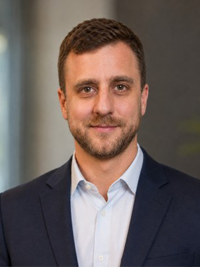
JONATHAN DAVIS,
CPA, is executive director of revenue cycle at Yale New Haven Health, New Haven, Conn.

JOSEPH KOONS
is senior vice president chief revenue officer at Lifebridge Health, Baltimore.

CAROL PLATO
is vice president of revenue cycle at North Mississippi Health Services, Tupelo, Miss.

DANIELLE REESE,
MSHA, is vice president, patient access and pre services at Hackensack Meridian Health, Hackensack, N.J.
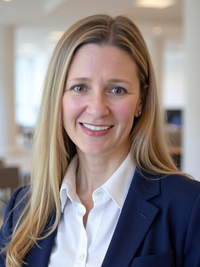
ASHLEY TEETERS,
EHRC, FHFMA, MBA, is formerly vice president, revenue cycle at TMC Health, Tucson, Ariz.

DURGA ZALLY,
Pharm D, CRCR, is system director – pharmacy revenue and oncology services at Geisinger, Danville, Pa.
About Solventum
Solventum, formerly 3M Health Care, redefines revenue cycle management with AI solutions rooted in clinical expertise. With over 40 years of clinical insights and 400+ content experts, Solventum delivers audit-defensible, deterministic AI that transforms clinician documentation, revenue integrity, and compliance workflows—ensuring results that are both reliable and transparent. As the creators of foundational patient grouping methodologies like APR DRGs, CRGs, and Potentially Preventable Events, we set the industry standard for classification and reimbursement, while our integrated technology platform bridges the gap between automation and clinical accuracy, reducing rework, preventing denials, and improving financial and care outcomes.
This published piece is provided solely for informational purposes. HFMA does not endorse the published material or warrant or guarantee its accuracy. The statements and opinions by participants are those of the participants and not those of HFMA. References to commercial manufacturers, vendors, products, or services that may appear do not constitute endorsements by HFMA.
Footnotes
a. U.S. Senate Permanent Subcommittee on Investigations, Refusal of recovery: How Medicare Advantage insurers have denied patients access to post-acute care, October 2024.
