


Patient-facing innovation requires a new approach to ROI
As health systems invest in AI and other patient-facing technologies, leaders are broadening the business case beyond short-term financial returns to include patient loyalty, market share, workforce satisfaction and long-term organizational value.

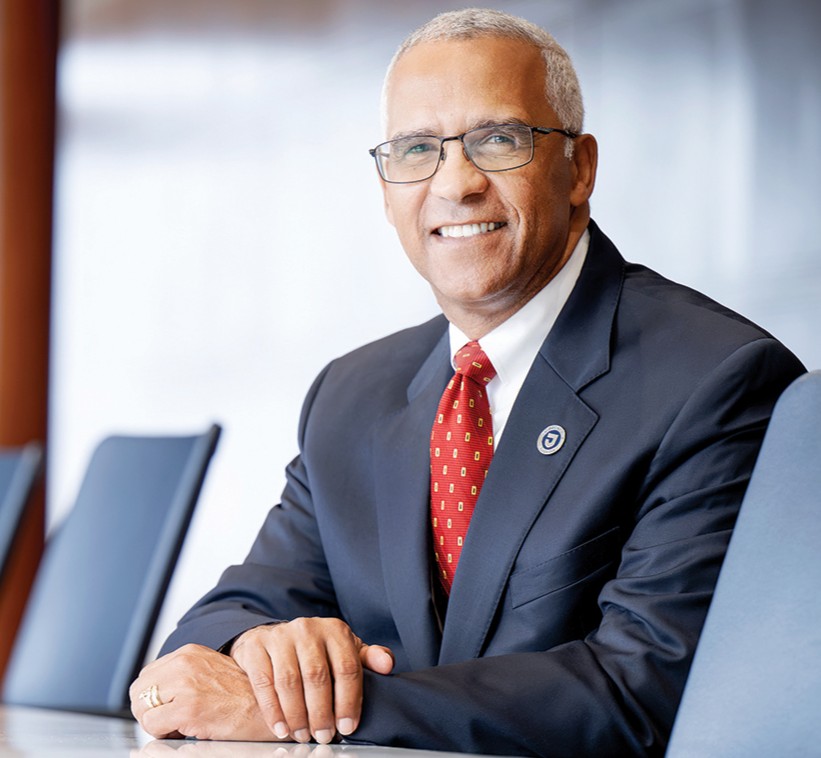
ROI don’t tell the whole story when it comes to patient-facing innovation. “The financial ROI isn’t the primary focus.”
When Jefferson Health introduced an AI voice agent to close gaps in mammography screenings, leaders anticipated it would boost screening rates. What they didn’t expect was that patients would prefer the AI agent to a human caller.
Two weeks after the agent, “Ava,” launched this past May, “We had one patient who said, ‘I really like talking to you. I’d rather talk to you all the time,’” said Luis Taveras, executive vice president and chief digital and information officer for Jefferson Health, a 33-hospital system based in Philadelphia. “Out of more than 200 patients, only two refused to talk to the AI agent.”
Today, the health system is eyeing 40 to 50 agentic AI use cases to deploy over the next year, scheduling post-operative visits, follow-up appointments and more as part of a movement to apply patient-facing AI.
As Jefferson Health expands investments in such technologies, leaders are finding that traditional measures of ROI don’t tell the whole story. That’s especially true at a time when financial returns could take years to prove out but the demand for patient-centered innovation and the potential for long-term benefits are strong.
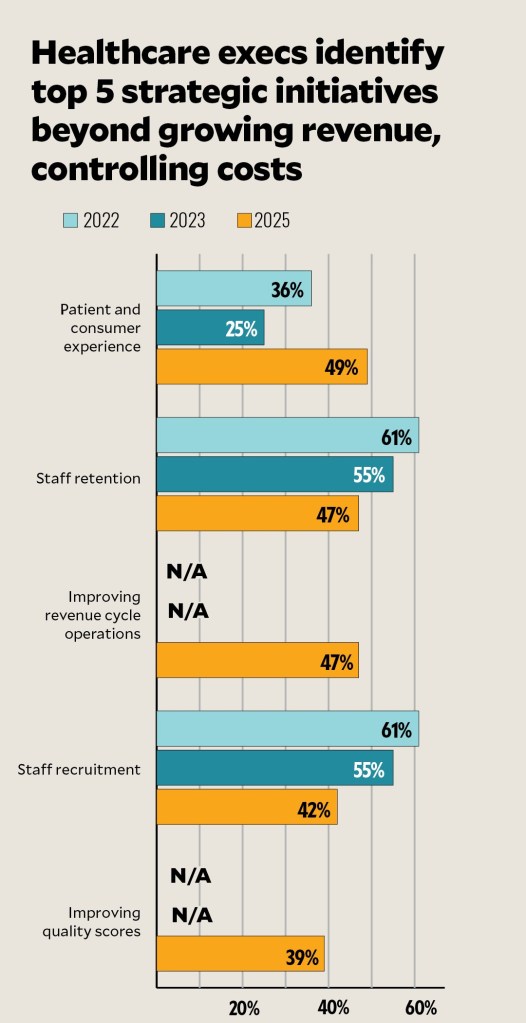
Note: Where “N/A” appears, these initiatives did not rank among the top five strategic initiatives during those years.
“It is not so much the ROI that we want to measure. It is the value that we want to measure,” Taveras said. “That value has an ROI component to it, but that’s not the only thing.”
In fact, the pace of patient-facing innovation is testing conventional ROI thinking among healthcare leaders, and it’s changing the way in which CFOs guide discussions about innovation with other senior leaders and their boards.
“There’s an understanding that it’s a different world, and we need to measure things differently,” Taveras said. “It doesn’t take away from the fact that we’ve still got to have money to continue to provide those services. No money, no mission, right? The financial pressures don’t go away. It’s just that the financial ROI isn’t the primary focus.”
Rethinking ROI: Metrics that matter
Jefferson Health is far from being alone in its perspective on the value of investments in innovative technologies like AI. When it comes to patient-facing innovation in particular, leaders say traditional ROI is overused.
“There’s too much focus on hard ROI, which is financial ROI,” said Abhi Sharma, MD, managing director and practice lead, clinical transformation for Premier. “For technology-based innovations, the true, hard ROI takes years to manifest.”
Instead, Sharma urges leaders to think of revenue at risk, or the impact on revenue if a patient-facing innovation were not deployed.
For example, decisions around patient-facing technology investments could affect patient loyalty and market share.
“The cost of inaction is going to be bigger than the cost of the technology you’re trying to implement [in some instances],” he said. “That’s the way these conversations often go. And some of the highest-return innovations protect revenue before they create it. So it is extremely important for us to view innovation through that lens, especially patient-facing innovations.”
Revenue at risk also can be tied to the impacts on physician satisfaction and market share if patient-facing advancements aren’t adopted. New innovations can draw consumers to a facility, including through word of mouth. Pass on an innovation consumers crave, and the risk of losing a customer to a competitor increases.
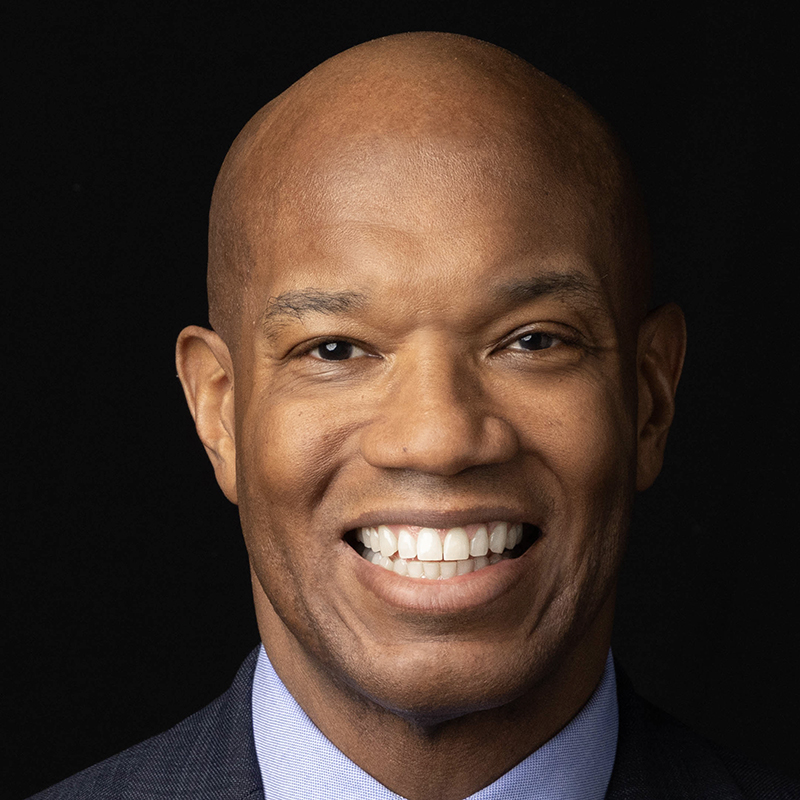
Indeed, at UChicago Medicine, patient-facing innovations are driven by a business case that goes beyond revenue.
The discussions don’t start with a focus on the financials, said Chris Allen, executive vice president and CFO for UChicago Medicine.
“We focus on, ‘What do we do in front of all these things that make the financials happen?’” he said. “It’s about: What problem are we trying to solve? Are we advancing quality? Are we advancing access? Are we making our care experience more efficient? And as we grow as an institution — and we’re on a super growth path — are all of the ways in which we’re thinking about innovation centered around the patient? That’s how we think about innovation.”
UChicago Medicine’s approach
UChicago leaders have applied their approach to innovation in designing a new cancer hospital, scheduled to open in April 2027. The facility will feature AI capabilities that will help in reducing the risk of falls in patient rooms, assessing patients’ mental health needs and physiologic signs of discomfort and alerting team members when clinical intervention is needed.
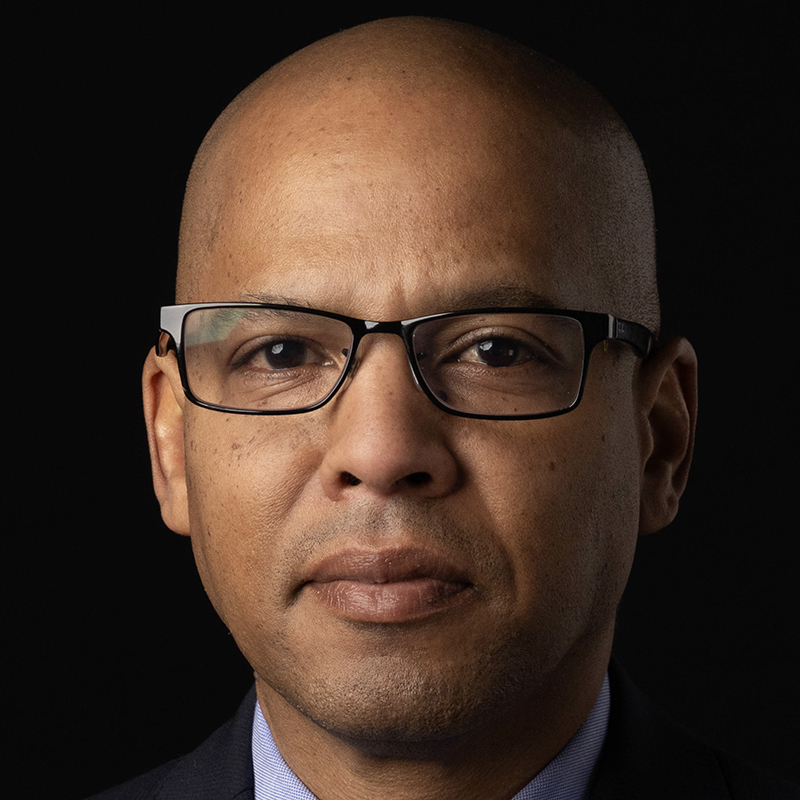
“We’ve got a pretty unique opportunity to reimagine the provision of care with this facility,” said Yeman Collier, senior vice president and CIO, UChicago Medicine. “The focus is not only on patients and families, but also on care teams, working to remove as much of the cognitive and administrative burden as we can.”
Collier said this approach is especially important for cancer patients.
“When you’ve got patients who are immunocompromised or have an altered mental status or have been prescribed some pretty powerful medication, there have to be ways to determine whether there’s a risk of a fall other than assigning a nurse to stay in the room with them,” he said. “We’ll have smart beds in the cancer center that can actually talk to the patient. They have pressure sensors in the mattresses that can detect when the patient’s weight shifts and the patient is trying to sit up and get out of bed. They can talk to a patient and encourage them to lie back down, and they can notify a member of the care team to intervene appropriately when the need arises.
“The good news is that we hope to extend a lot of those capabilities into our other clinical settings,” he said. “It’s just that it’s easier to do it in a greenfield space than it is in an older hospital.”
OSF’s focus on outcomes

Kirsten Largent, CFO, OSF HealthCare, based in Peoria, Illinois, encourages finance leaders to think about return on outcomes. It’s an idea she first heard from a leader at another healthcare organization, and it’s one that she comes back to in articulating the business case for patient-facing innovation.
“Are we impacting patient satisfaction and experience, access to care and wait times while reducing administrative friction and burden for our patients and our caregivers and mission partners?” she asked. “Are we improving the caregiver experience and retention through patient-facing innovation?
“If we go beyond those hard green dollars from a traditional ROI perspective, we know that those other important returns also impact the long-term sustainability of our organization, even if they aren’t tied directly to a dollar,” she said.
Reimagining use cases at Rush
What if patient satisfaction hinged on timely digital communication and small gestures during delays?
In 2024, leaders at Rush University System for Health in Chicago implemented a digital service recovery initiative designed to protect patient satisfaction as the patients wait to receive care. Patients receive a text message letting them know when they can expect to be seen by a physician or other clinician.

and CIO for Rush
“When delays are particularly long, we’ll send them a Starbucks gift certificate or a coupon for a cookie in our coffee shop so they can relax there,” said Jeff Gautney, senior vice president and CIO for Rush. “Then, we’ll reach back out to them digitally to let them know when it’s time to come up.”
The approach exceeded expectations.
“You would not believe the impact just from saying, ‘We care about your time and don’t want to waste it,’” Gautney said. “Our Press Ganey scores jumped from 66% to 85% in the course of about a year after implementing that technology.”
In piloting the digital service recovery program, Rush began by testing the approach at clinics throughout the health system’s geographic area. As a result, Gautney’s team could compare patient responses in the city and suburbs, enabling them to apply lessons learned to scale the program quickly.
Some of those lessons gave Rush a basis for deploying more complex patient-facing digital initiatives, like virtual specialty care for conditions that range from ear, nose and throat disorders and women’s and menstrual health to sports cardiology, cancer second opinions and liver and kidney transplant intake.
“This isn’t just a simple virtual care visit program for an allergy clinic or dermatology. It’s really a lot more advanced than that,” Gautney said. “We started with just four specialties, and now, it’s expanded to more than 10.”
The impact on reputation scores, net promoter scores and other indicators of patient satisfaction has been striking: For example, 93% of patients who use the virtual specialty care program would recommend Rush to their family and friends. Among cancer second-opinion patients, 92 of 113 patients seen during a recent four-month period were new to Rush.
“So it’s not just that we’re providing a more convenient service for people who are already in the friends and family of Rush,” Gautney said. “We’re expanding the different types of people we can provide service to, which is a big part of the goal.”
Like others interviewed, when Gautney thinks about ROI for patient-facing innovation, he considers not just the financial impact — with $600,000 in net revenue during the first nine months of the virtual specialty care program, which launched last year — but also patient satisfaction, customer loyalty and the impact on health equity for vulnerable patients.
“If you look at the side of our hospital, there’s a big banner that says, ‘Who gets the chance to be healthy?’ Our whole virtual program is very much in line with that,” Gautney said. “Now, we’re applying AI on top of all of that to use intelligence to make that patient journey even more streamlined. And on the back end, we’re using machine learning to help us forecast demand and what our capacity has to look like to meet that demand.
“Particularly with our cancer second-opinion program, you’ve got somebody who is probably at the most vulnerable point of their life. They are so terrified, and they’re looking for answers. When we can reduce the time it takes to get them the information they need so they can make good decisions about how to care for themselves, we’re not just increasing patient satisfaction. We’re reducing suffering.”
OSF’s new imperative
At OSF HealthCare, leaders launched an “automation imperative” in 2024 aimed at generating $200 million in financial impact from the use of automation and AI over a 10-year period. Today, the health system has documented nearly $98 million in positive financial impact through AI and automation initiatives since the imperative’s inception, Largent said.
One OSF program, called My Visit Guide, has reduced costs while improving patient access and satisfaction. The program is designed to reduce cancellation rates for patients who are scheduled to undergo colonoscopy.
OSF HealthCare achieves significant positive
financial impact through use of AI, automation
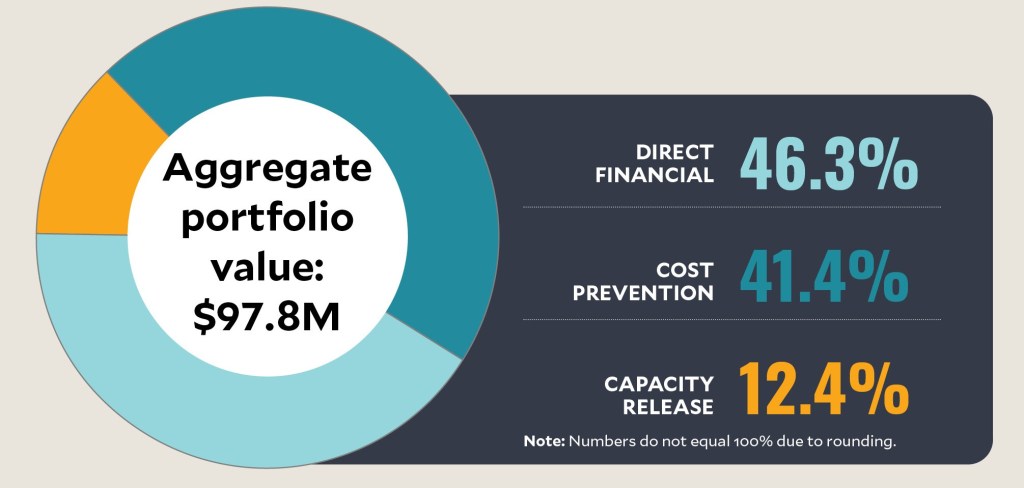
Note: Numbers do not equal 100% due to rounding.
“The entire prep process for colonoscopy can be confusing and difficult for patients to navigate,” said Michelle Conger, CEO for OSF HealthCare. “You often will get a high cancellation rate because patients perhaps didn’t stop their medications when they needed to, or they didn’t know when to pick up their prep. When that happens, that’s a very big dissatisfier for patients. It also has a revenue impact for a health system, and it’s a capacity constraint for other people who are trying to get in for their screening.”

The OSF Innovation Studio and the health system’s digital innovation development team worked together to create My Visit Guide. It’s a digital tool that personalizes the care preparation experience for colonoscopy visits. Scheduled patients receive personalized texts that walk them through each stage of the preparation process, complete with video links.
Within one year, the health system recorded an 18.25% reduction in colonoscopy cancellations and an estimated financial impact of more than $900,000.
“We were able to have people who are better prepared for this procedure — and that opens up capacity for other patients,” Conger said.
Each year, the health system prepares an innovation report for board members that outlines the projects implemented, the outcomes achieved, the total return — including ROI and return on outcomes — and the cost, CFO Largent said.
“It really helps them start to understand the different types of innovation we are exploring, which innovations are connected to our philanthropic arm as well as grants and which innovations are designed to improve what the health system is doing today,” Largent said.
This approach helps OSF’s leaders determine which patient-facing innovations to pursue.
“We don’t pursue technology just for technology’s sake,” Largent said. “It’s about ensuring that the investments we make align with our strategic priorities and position us for the future of healthcare delivery.”
Serving patients
Jefferson Health’s strategy is to free up more than 10 million hours of clinician time by 2028 using AI.a The goal: to reduce administrative burden and expense while delivering human-centered experiences at scale.
“Think about patients that have not scheduled their mammogram. Now, after scheduling a mammogram with the AI agent, we may find a malignancy in a percentage of those patients,” Taveras said. “If we hadn’t made that call, we could have patients out there with potential breast cancer issues who are just getting worse. So that’s the value: We’re here to serve our patients to make them better.”
Note: Listen to Jeff Gautney of Rush speak more about making technology decisions with a non-financial ROI on an HFMA Voices in Healthcare Finance podcast to be posted in early October.
Footnote
a. Jefferson Health, “Jefferson Health’s bold AI strategy to reclaim time, empower clinicians and transform healthcare,” press release, Sept. 18, 2025.
Lessons learned in patient-facing innovation
How can health system leaders most effectively determine where to invest in patient-facing innovation and how to achieve the desired impact? Leaders point to four takeaways.
1 Know that speed to value is critical. Leaders should be prepared to change course when their expectations for a technology or vendor aren’t being realized, said Luis Taveras, executive vice president and chief digital and information officer for Jefferson Health. “For quite some time, we were going down the route of a co-development partnership with an organization, and it was just taking way too long and getting too complicated,” Taveras said. “The speed to value was really starting to be noticeable and hurtful. That’s when we pivoted and said, ‘No, we’ve got to go with a proven solution provider that is the best out there.’ We pivoted, and I’m really happy that we did, because if we had continued the way that we were going, there’s no way that we would have [been able to deploy the innovation] for three to four months, which is a long time in this day and age.”
2 Don’t deploy the most difficult use cases first. “We’ve made that mistake already, but I will not make that mistake again,” Taveras said. “Find easy use cases to prove value, because people are still skeptical [about the impact of patient-facing technology]. Make sure that you find use cases that you know are going to be successful and that will generate a lot of enthusiasm for innovation.”
3 Make sure your technology investment strategy is backed by a human capital strategy. “Eventually, technology is not going to work on its own,” said Abhi Sharma, MD, managing director and practice lead, clinical transformation for Premier. “You need people to adopt technology and be good stewards of that technology so that adoption sticks and drives the value that organizations want it to drive. Health system leaders really need to think about and create a human capital strategy that works in lockstep with how they’re thinking through innovation.”
4 Focus on how innovation affects patients and clinicians. “Technology should definitely make the healthcare experience less scary, it should make it less complex, and it should make the work experience more efficient,” said Yeman Collier, senior vice president and CIO, UChicago Medicine. “Even as we think about AI, it’s not just about how cool AI is; it’s about, ‘What can we do to make our everyday work experience [easier, more efficient] and better than it was yesterday?’”
