


Healthcare Revenue Cycle

Overcoming mid-revenue cycle bottlenecks: Leaders share tips for improvement

Published
July 31, 2026
12:49 pm
Sponsored by Waystar
Patient documentation is typically viewed as an unglamorous administrative burden. Physicians want to take care of patients, not push paperwork. But complete and accurate documentation is required to optimize the revenue cycle. If a procedure isn’t documented in a patient’s chart, it’s as if it didn’t happen. This means it can’t be billed properly or accurately.
Denied claims cost hospitals nearly $20 billion per year, according to research.1 Denials often stem from coding inaccuracies. Today, 55% of providers say claim errors are increasing, compared with 44% in 2022.2
The middle revenue cycle, which bridges clinical care and financial processes, is critical for ensuring that services rendered are accurately documented, coded and prepared for billing. However, the middle revenue cycle often suffers from inefficiencies and bottlenecks, such as misunderstandings between clinicians and revenue cycle professionals, according to participants in an HFMA Executive Roundtable sponsored by Waystar.
“Accuracy of clinical documentation is vital to achieving a high-performing revenue cycle,” said Diana O’Connor, vice president, clinical services at Waystar. “It’s also essential to ensuring health systems capture the dollars earned for the care and services they provide. The ability to make clinical documentation as easy as possible for clinicians is one important step toward revenue cycle success.”
The roundtable brought together several healthcare industry leaders to discuss the challenges they’re facing within the mid- revenue cycle. They also explored how they’re using AI and other solutions to uncover bottlenecks and future-proof the revenue cycle while minimizing administrative burden.
What are the most persistent bottlenecks in the mid revenue cycle that directly affect revenue integrity?
Faisal Hussain: One major bottleneck we often encounter is siloed operations — two teams believing their interests are vastly different when in reality, they are closely aligned. A common example is the disconnect between physician compliance and coding documentation teams. From a physician’s perspective, it’s all about documentation, but each group views it through a different lens.
I recall a case involving an orthopedic surgeon who frequently used skin substitutes in procedures but wasn’t documenting the medical necessity for their use. As a result, we faced repeated denials, each costing $60,000 to $70,000. This issue wasn’t something a typical clinical documentation improvement specialist or coder would easily catch, as this was mainly related to charges, and many of these cases were inpatient admissions. Fortunately, an astute manager in revenue cycle reached out, and the physician was very receptive to adjusting his documentation practices after I educated him. This underscores the importance of breaking down silos and fostering communication. Often, all it takes is someone initiating the conversation. We need to ensure our teams are talking to each other.
Kiran Batheja: One area of opportunity I see is in charge capture. Internally, we don’t always communicate when there’s a new clinical service coming on board or there’s a new test being performed or something of that nature. We are good at pushing updates and information out to clinical departments. But it’s important to hardwire revenue integrity with the clinicians just to make sure that you are capturing all the revenue. When we have the opportunity to audit the charts, we find instances where there’s charge capture that may not be coming to light. Taking action proactively is always the best way to maximize charge capture.
Garland Goins: From a physician organization perspective, one of the most significant bottlenecks we experience lies in the sharing of patient and clinical information. There’s a significant reliance on facility affiliations, particularly for cardiologists performing surgeries and catheterization procedures. However, those facilities have to provide that information back to us, whereby authentication of demographics, insurance plan type and more are necessary for accurate claim submission. The administrative and technical burden remains a considerable lift for reconciliation purposes.
Heather Wilson: We see breakdowns in information sharing on the facility side, where we have external providers coming in to perform procedures, and their organization is handling the professional billing. We may be handling the facility billing, or we may be doing the professional billing for them. A lot of these arrangements are made without revenue cycle representatives in the room. Others are negotiating these arrangements, and then it becomes the work of revenue cycle to determine how to operationalize these joint venture arrangements. Or, one of our providers may leave the organization, and we have to get their information back into our records to facilitate billing and ensure a complete record for the patient. Delays in information sharing are challenging. It’s 2025, and we’re still operating with spreadsheets and emails and faxing information.
Nikki Harper: If you think about it from the angle of the patient experience, for them, it’s episodic: “My physician’s going to see me in the outpatient space, and then they’re going to be there at the hospital for this procedure.” During that post-op visit, the patient may get caught in the middle because we may not have the right information, whether it’s medical documentation, prior authorization or insurance information. They’re going to have multiple bills from multiple facilities, and sometimes, they are going to call the hospital. A lot of times, they’re going to call their physician, because that’s where this started. So we have to make sure we’re not operating in silos.
What metrics should organizations track to assess the health of their mid-revenue cycle?
Harper: I always track leading and lagging indicators. There will be individual indicators where you have to get the stakeholders involved because you’ll need to track the indicators per physician. And then there are department-level indicators. But you also have to track charge lag, such as who hasn’t completed documentation or who hasn’t added surgical supplies. You want to know your denial rate by payer, by specialty line, by physician. Then you always have to look at the workforce component. There are key performance indicators (KPI) around the productivity and quality of our teams, and when you’re talking about lagging, you’ve got net collection rate, revenue and whether you are getting paid according to the contract.
Desmond Jackson: I take a very similar approach, but we also look at employee satisfaction, because it can inform the story of why something could be happening in certain areas. That metric is essential to us in understanding how well we’re performing, whether it be in siloed areas or just overall across the organization.
Wilson: Having clean data is so important. You cannot change what you cannot measure, and you cannot measure if you don’t understand your workflow and where your data is coming from. And your data must be normalized because you cannot take the data forward to your leadership or providers if you are not confident in it. You have to understand your data and be able to ensure your data is telling an accurate story.
Christopher Johnson: Not only do you have to be confident in your data, but you have to be able to parlay that confidence down to the people who you’re delivering it to, because if they don’t trust your data or if they find an error, then they’re going to question everything you bring. The lagging indicators tell a tremendous story about where your problem is.
How can organizations build clinician trust and engagement in CDI processes without increasing administrative burden?
Batheja: Data transparency and communication are crucial. I have lined up practitioners’ data with their peers, all cardiologists or all orthopedics, and so on to show them how their metrics compare with each other. You can share that information with full transparency and then ask them to discuss, for example, why their length of stay is four days longer for a knee replacement versus their peers. The data is very powerful.
Diana O’Connor (sharing insight after the panel discussion): At Johns Hopkins, we developed an application for query management that enables providers to compare their performance against that of other providers in their network with tremendous accuracy. We’ve actually seen physicians ask each other: “What’s your percentage?” It brings out their competitive side, which in turn helps the health system.
Hussain: One of the key strategies is understanding the audience we’re engaging with and identifying what matters most to them. For example, in cardiology, chiefs and service line leaders may not prioritize direct reimbursement, but they care deeply about metrics such as heart failure mortality ratios and length of stay. These outcomes are directly influenced by documentation. Our approach should be to focus on those critical metrics and partner with leaders to drive improvement. Data transparency and user-friendly dashboards play a vital role in this process. There’s something powerful about making data visible — drilling down to the finest level of granularity, from practice-level to individual providers. Once that data is out there, improvement happens quickly because physicians are inherently competitive.
Larami Oliver: Be mindful not to overshare data as well. You can lose the audience very quickly when this happens. While we measure tons of things behind the scenes, when we’re having conversations with our physicians, we really pare that down to what grabs their attention, because we’ve got about a 10-minute window. You really have to bullet-point that information and grab those highest priority things in small bits.
Harper: We have to remember it’s so much easier to build trust when it’s bidirectional. We may have the data and we’re looking at it from a particular perspective, but we also need to approach it in a way that makes sense to them. The more you know each one of your physicians and how they work, the better able you will be to collaborate on a solution. Everyone is motivated differently. For some, you need to come at discussions from a patient-centric approach. For others, compensation is a motivating factor.
Batheja: In a prior organization, when we approached physicians to get buy-in, we started by asking, ‘What are your pain points in documentation and charting?’ Sometimes, they might say they went to medical school to be a physician and take care of people, not to sit there in an [electronic health record (EHR)] and click 32 boxes. So, we focus on what we can do within their workflow to help relieve those pain points. Once they see that you’re trying to help make their lives better or streamline their workflow, that helps with engagement and buy-in. If you can address those operational issues or those systematic issues for them, they’re more ready to listen to what you’re saying. It’s not rocket science, but it’s important to build credibility and buy-in with very busy clinicians.
How do you see AI and large language models transforming core revenue cycle functions like coding and clinical documentation, and what factors influence your organization’s decision to build AI capabilities in-house versus partnering with external vendors?
Oliver: I think we are on the precipice of a major change in that area. We are entering a world where a doctor walks into an exam room or a hospital room and their phone captures that visit and documents that entire visit. Three to five years from now, it’s going to be an entirely different, hopefully less burdensome area for our physicians. The barrier will be getting these tools to work in a way that makes sense in the EHR.
Batheja: When it comes to building AI in-house or buying a solution, I don’t think anybody feels that they’ve got the bandwidth or the skill sets to properly do it internally yet. We always want to do it internally if we can, but I think everybody realizes that the ability to automate clinical processes is something that depends on investment in external solutions. But these investments need to occur with a collaborative partner because the technology is evolving so quickly, and we need to be able to respond to providers’ needs. Every provider is different; pediatrics needs it one way, [obstetrics] needs it another, internal medicine needs it another and cardiology needs it another way. Automated solutions need to be customizable for them to work effectively in a healthcare environment.
Wilson: We are implementing an autonomous coding solution as well as some other AI tools in mid revenue cycle. These are expensive investments that we’re making, and the compliance aspect is important. As part of our governance process, we have implemented an AI checklist because every vendor is coming forward with their AI solution. Our IT and compliance department said we had to develop something because we are just getting inundated with all of these different AI solutions that folks want to implement across the organization. We have to give our people something to help make sure that these solutions do what the vendors say they will do. But things keep changing. I’ve had to go back to my vendors and say, ‘I know you filled out an AI checklist, but I’m going to need you to fill out part two of our AI checklist because it is just evolving that fast.’
Conclusion
The roundtable conversation confirms that healthcare organizations are grappling with intense pressure around denials, workforce capacity and the AI revolution. Providers want to find ways to strengthen collaboration between clinical staff and revenue staff. They view efforts to harness technology to simplify the documentation process for both clinicians and revenue cycle professionals as an important step toward more robust internal partnership.
Roundtable participants said revenue cycle leaders can make strides by dismantling the silos that separate clinical and revenue cycle teams and communicating more openly across teams. Some noted that providing physicians with data can inspire them to improve documentation; for example, data that shows how claim approvals for one physician’s patients compare to those of their peers can be motivating. Another participant said providing clinicians with data to improve clinical metrics that matter to them can also help improve documentation practices. Overall, participants are committed to adopting new technologies and developing new approaches to help meet their goals of working throughout the mid revenue cycle to improve patient care and achieve accurate, effective billing.
Panelists

KIRAN BATHEJA,
FHFMA, is director of patient registration and financial counseling at University Hospital in Newark, N.J., and 2025-26 HFMA Chair.

GARLAND GOINS,
EHRC, CRCR, MBA, is vice president of revenue cycle for Cardio One in Durham, N.C.
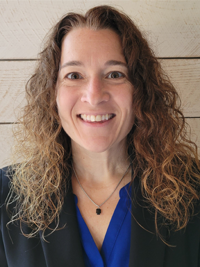
NIKKI HARPER,
FHFMA, EHRC, is division chair, revenue cycle – reporting analytics automation at Mayo Clinic in Detroit.
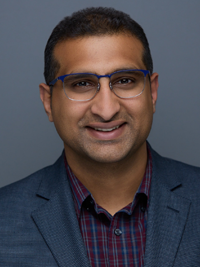
FAISAL HUSSAIN,
MD, MS (HIIM), RHIA, is system CDI physician advisor at MedStar Health in Columbia, Md.

DESMOND JACKSON,
DBA, MBA, is vice president of revenue cycle management for Monument Health in Baltimore.
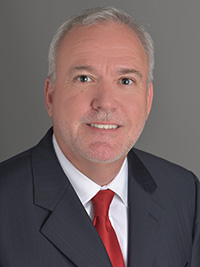
CHRISTOPHER JOHNSON
is vice president, patient account services and vendor management at Advocate Health in Charlotte, N.C.

BRIAN KIRK
is CFO at Alaska Native Medical Center in Anchorage, Alaska.
DIANA O’CONNOR
RN, CCS, CCDS, is vice president, clinical services at Waystar in Louisville, Ky.

LARAMI OLIVER
is director of revenue cycle for Heart and Vascular Care in Cumming, Ga.

HEATHER WILSON,
CRCR, MPH, RHIA, is vice president, chief revenue cycle officer at Christ Hospital Health Network in Cincinnati.
About Waystar
Waystar’s mission-critical software is purpose-built to simplify healthcare payments so providers can prioritize patient care and optimize their financial performance. Waystar serves over 30,000 clients, representing over 1 million distinct providers, including 16 of 20 institutions on the U.S. News Best Hospitals list. Waystar’s enterprise-grade platform annually processes over 7.5 billion healthcare payment transactions, including over $2.4 trillion in annual gross claims and spanning approximately 60% of U.S. patients and one in three U.S. hospital discharges. Waystar strives to transform healthcare payments so providers can focus on what matters most: their patients and communities. Discover the way forward at waystar.com.
This published piece is provided solely for informational purposes. HFMA does not endorse the published material or warrant or guarantee its accuracy. The statements and opinions by participants are those of the participants and not those of HFMA. References to commercial manufacturers, vendors, products, or services that may appear do not constitute endorsements by HFMA.
Footnotes
- Premier, “Trend Alert: Private Payers Retain Profits by Refusing or Delaying Legitimate Medical Claims,” March 21, 2024.
- Experian Health, “The State of Claims – 2024,” Sept. 18, 2024.
