


Healthcare Revenue Cycle

Supporting, not substituting: How revenue cycle leaders are putting AI to work

Published
7 hours ago
Sponsored by Arintra
Healthcare revenue cycle leaders are under pressure to do more with the same (or fewer) resources, and AI has quickly become one of the most talked-about tools for getting there. As organizations move beyond early experimentation, the conversation is shifting from whether to use AI to where it can deliver value and how to bring skeptical staff along.
In this HFMA Executive Roundtable, leaders discussed how they’re approaching AI across the revenue cycle — from coding to authorizations, denials and appeals — and where they’re seeing the strongest returns. They also spoke candidly about the harder parts: building trust, establishing governance that can keep pace with the technology and scaling its use without losing sight of accuracy, accountability and the people doing the work.
How are you approaching AI and prioritizing where to implement it within the revenue cycle?
Shawn Steffen: We’ve been looking at AI for the last two years, trying to see what others are doing. It’s the very beginning of our journey, and there are a lot of companies coming and going, so we’re trying to assess who is going to be there for the long term. We’ve broken it down into a couple areas. First, how can AI support our staff and providers? I’m not looking to replace people. We look at AI as a supplement. Second, we want to move away from productivity-based to quality-based, increasing accuracy, efficiencies and revenue leakage. So, we went down the coding route. We’re working with an autonomous coding vendor for professional billing and are also assessing AI for hospital billing, including reimbursement, denials management and appeals and professional billing and are also assessing AI for hospital billing, including reimbursement, denials management and appeals.
Natalie Noyd: One of our first priorities was making it clear that implementing AI was about redeploying resources, not reducing positions. We started basic, using AI to clean up emails so staff could build confidence. From there, we deployed AI into authorizations, eligibility and coding, particularly professional billing, as well as outpatient and inpatient appeals.
Sal Brown: We took a holistic look at operations and asked: What are those high-touch, tedious, labor-intensive tasks our staff manages day to day, and where can we gain efficiencies? We identified dozens of use cases — we’re up to 45 or 50 now, with more added each day. Ultimately, the goal is to move toward a truly exceptions-based revenue cycle where we automate the routine work that creates noise and leave higher-yield activities requiring human judgment to our staff.
David O’Connor: We’re looking at the whole spectrum, from when the patient comes in through case management, clinical documentation improvement and coding. This includes how many times we’re touching the chart, who’s touching it and whether automation should be doing some of that work. We’re going through that process from point A to Z and asking how we can improve our operations and use our resources differently.
Tammy Dumlao: We use a lot of vendors, and I’m still trying to find out from the vendors what part of AI is actually in their systems. But we’re trying to get up to speed on what could help us, especially in the revenue cycle, including coding, patient access and business office follow-up.
Where are you finding the greatest value for AI deployment?
Steffen: Our greatest win has been around coding for professional billing. We’ve freed up our coding team and increased the accounts we code daily — something we couldn’t do before. I couldn’t hire enough people to manage that volume. We’re monitoring results, including level-of-service coding, which payers frequently challenge, and we’re seeing an overall decrease in denials. With autonomous coding, you’re going to get accuracy and compliance. It’s not going to do it all yet, but it does a good chunk. What I’m really looking for is consistency to keep my revenue cycle moving forward every day. I don’t want my 25-year-experienced coder to leave and suddenly I’m stuck. I also need a solution that can grow with us. As an independent facility, I need a partner that can support us as we expand into new specialties. I need that flexibility more than ever.
Brown: The greatest ROI is in high-touch, labor-intensive tasks, such as claim status, payer follow-up and appeal status follow-up. But it’s not just about automating the initial task. You need the entire workflow to keep moving. An AI agent may follow up on an appeal, but then the account moves into a different status in the EHR [electronic health record], and that process needs to recognize the change and trigger the next follow-up. Otherwise, the appeal just falls into another black hole.
Rahul Banerjea: We’re also using AI on the back end of the revenue cycle to better understand payer behavior — denial trends, payer bulletins and process changes our teams need to respond to quickly. It helps surface that information for teams reviewing denials and flag new payer behaviors we may need to address through our escalation process.
Darlynn Tate: Some of our AI deployment has been very helpful with coding, particularly improving productivity and pointing out trends where we need to educate providers. It’s helping us catch denials more quickly and identify where we need to make improvements. We’re also using AI to assist with appeals, pulling in the necessary data as we build it out.
Jason Roche: Every dollar flows through coding. Reviewing 100% of professional billing encounters reveals trends and provider-specific documentation opportunities, giving coding teams insights at scale to educate on CDI [clinical documentation improvement] and prevent denials upstream.
What challenges are you facing with coding today, and where do you see opportunities for AI to help?
Sarah Babcock: It’s very difficult to hire experienced coders in our state. We’ve had to hire inexperienced coders and train them from the bottom up. So, the fact that autonomous coding gives us the ability to do 100% review without as much coder touch, freeing our staff to focus on more important things, has been huge. Our autonomous coding vendor also helps with guidelines Epic hasn’t gotten to yet — ICD-10, excludes-one and code-first. It’s not foolproof, but much improved over the denials we were having. Our autonomous coding vendor also helps with guidelines Epic hasn’t gotten to yet — ICD-10, excludes-one and code-first. It’s not foolproof, but much improved over the denials we were having.
Tate: Sarah, is that giving you code-first guidance before the manifestation code, so you’ve got the primary diagnosis?
Babcock: It does. It also helps when two diagnoses that shouldn’t be reported together are on the same claim.
Tate: My challenge is the same. We’re bringing people in with some experience, but not necessarily the specialty areas we need. We also want thought leaders, not robotic coders. When we look at medical documentation, we think of it as a story. The provider is trying to tell the payer a story to get the claim paid. I encourage coders to ask questions and look at the whole picture, not just their siloed area. AI has been helpful there too. It flags trends where a physician could have documented more clearly and points out whether it was the coder who missed something or the provider who didn’t document it well enough.
Marc Santoro: Every organization has its own payer rules, compliance posture and specific preferences. There’s no knowledge base external to the organization where a vendor can learn all of that. You have to deeply discover those details up front. If you don’t, the solution isn’t going to work on the other side.
Brown: I would push it further — not just coding, but provider queries too. Getting providers to respond in a timely way without hurting DNFB [discharged not final billed] is a challenge. You’re constantly hunting down outstanding information. We’re working with provider groups on service level agreements and tracking who’s outstanding. It touches the front-, middle- and back-end of the revenue cycle.
Steffen: So, where do we meet the provider? They don’t want to do this at 1 a.m. or 2 a.m. We’ve got to do it in real time. How do we tie that technology to query the provider while they’re actually doing transcription within our EHR? That’s our future.
How do you build trust and ensure appropriate governance of AI?
Steffen: Our greatest challenge has been fear. A lot of people don’t fully understand how quickly this world is changing, and that makes them nervous. We knew we had to build trust, not only with our team but across the system since this was our first large AI initiative. We have an AI committee we present to, and we’ve worked through compliance and legal questions we didn’t have with previous vendors. We had to over-engineer our review and auditing process and re-validate the data repeatedly before we got approval. At the same time, the industry is demanding we move faster, so we’re constantly balancing thoughtful governance with the need to move forward.
O’Connor: Your internal auditors, or whoever is responsible for the auditing function, need to be continually auditing what the company is coding. In automation, when something gets out of whack and you’re not consistently checking it, it stays out of whack. The next thing you know, 10,000 claims could have gone out wrong.
Brown: We struggle with fear of the unknown, but there’s another layer to it. We tend to treat AI vendors differently than a typical third-party vendor, when really you have to ask why — they’re doing the exact same things. We also learned quickly that automating a process exposes your vulnerabilities. Who owns the workflow once an agent brings back information about an account? Where does it belong, and what team is responsible? That’s essential to figure out along the way.
Banerjea: It’s important to have a governance structure around this. We have a chief AI and data officer who reports to our CIO and is responsible for governance of every AI product we bring in. Revenue cycle is actually leading a lot of our charge into AI, so we’re working within that broader governance structure as we evaluate and implement these tools.
What are some lessons you’ve learned about effectively applying AI to the revenue cycle, and how are you measuring success?
Tate: We look at standardizing our workflows first. Garbage in is going to be garbage out. We work with providers to keep documentation clean and consistent, and governance reviews what edits come out and what change management is needed. We also reorganized our team. My strongest coders are now my leads, so they’re looking at things from a different perspective.
Noyd: One of the golden rules is that you need good, clean workflows before you enter into AI discussions. We started basic with professional billing coding in internal medicine and family practice first, to get staff comfortable, then added specialties a few at a time. That approach built confidence, trust and a keen eye for catching issues.
Brown: Most organizations get into trouble when they don’t have a clear outcome or goal. A lot of people say, ‘I want AI,’ because it’s a buzzword. Then they set it and forget it and say it didn’t work. The models are sophisticated, but they still need tight oversight and governance. You need to know the outcome you want, then build around that, even if it means small, incremental steps rather than going big bang.
Steffen: Good controls and decision-making make this whole process better. If your organization already struggles to approve basic vendor contracts, this will be very difficult for AI — it just delays things further. One thing that helped us a lot was physician champions. We have four physicians who backed our coding product, so it wasn’t just us trying to get everyone on the same page.
Babcock: For me, AI is just a tool, and it’s only as good as the rules you build inside of it, so, I’m taking a lot of time on the front end to make sure that what we have built is accurate. My staff knows AI is a tool — it does not have a brain, it cannot think. It is our job to think and make sure that what it’s giving us is accurate.
Conclusion
Across the organizations represented in this roundtable, one theme held constant: AI in the revenue cycle works best as a force multiplier, not a replacement. It can free coders, documentation specialists and providers to focus on decisions that require human judgment while absorbing repetitive work. But successful adoption requires more than the technology itself — it requires clean workflows, thoughtful governance, staff trust and clear measures of success.
As these leaders’ experiences show, organizations that take an incremental, disciplined approach can begin realizing gains in accuracy, denial reduction and staff capacity while building a foundation for broader AI adoption.
PANELISTS
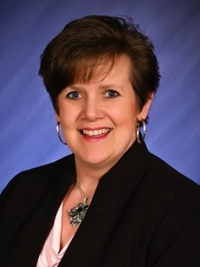
SARAH BABCOCK,
CPC, CPC-I, CPC-M, is manager of patient accounts and professional coding at Mercy Cedar Rapids in Iowa.

RAHUL BANERJEA
is assistant vice president of patient access and revenue cycle management at Inova Health in Falls Church, Va.

SAL BROWN,
CRCR, MBA, is system vice president of revenue cycle management at Mount Sinai Health System in New York.

TAMMY DUMLAO,
CRCR, EHRC, is director of revenue cycle at Hawaii Health Systems Corporation in Honolulu.
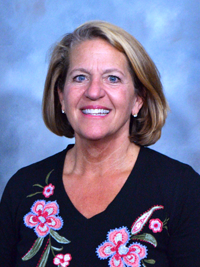
NATALIE NOYD,
RN, BSN, is director of revenue integrity at Confluence Health in Wenatchee, Wash.

DAVID O’CONNOR
is executive vice president and CFO at CaroMont Health in Gastonia, N.C.

JASON ROCHE,
MPH, is product marketing lead at Arintra in San Francisco.

MARC SANTORO
is director of product at Arintra in San Francisco.

SHAWN STEFFEN
is executive director of revenue cycle at Mercy Cedar Rapids in Iowa.

DARLYNN TATE,
MBA, CCS, CPC, is director of revenue cycle and coding at Columbia University Irving Medical Center in New York.
About Arintra
Arintra is an enterprise AI platform for revenue assurance in healthcare, empowering health systems to get paid accurately, promptly, and fairly. Combining agentic AI with deep clinical expertise, Arintra autonomously codes every chart, explainably, across 23+ specialties and every care setting a health system operates — then cascades that intelligence across the revenue cycle through documentation intelligence (CDI) and denial appeals. Leading enterprise health systems including UC Davis Health, Mercyhealth, Meritus Health, Rochester Regional Health, Reid Health, Mercy Medical Center, and more use Arintra as their centralized, audit-ready revenue cycle platform. Arintra is available in the Epic Toolbox and on the athenahealth Marketplace, is HITRUST e1 certified, and earned a 93/100 with A+ performance rating from KLAS Research. To learn more about autonomous medical coding, visit www.arintra.com.
This published piece is provided solely for informational purposes. HFMA does not endorse the published material or warrant or guarantee its accuracy. The statements and opinions by participants are those of the participants and not those of HFMA. References to commercial manufacturers, vendors, products, or services that may appear do not constitute endorsements by HFMA.
