


Vitalic Health
5 questions with Paul Markovich, president & CEO, Ascendiun
When Paul Markovich launched Worthy, a movement to create a healthcare system that is “worthy of our family and friends and sustainably affordable for everyone,” he envisioned bold, practical solutions for making an impact — including putting the entire healthcare system on a budget.

Published
2 hours ago
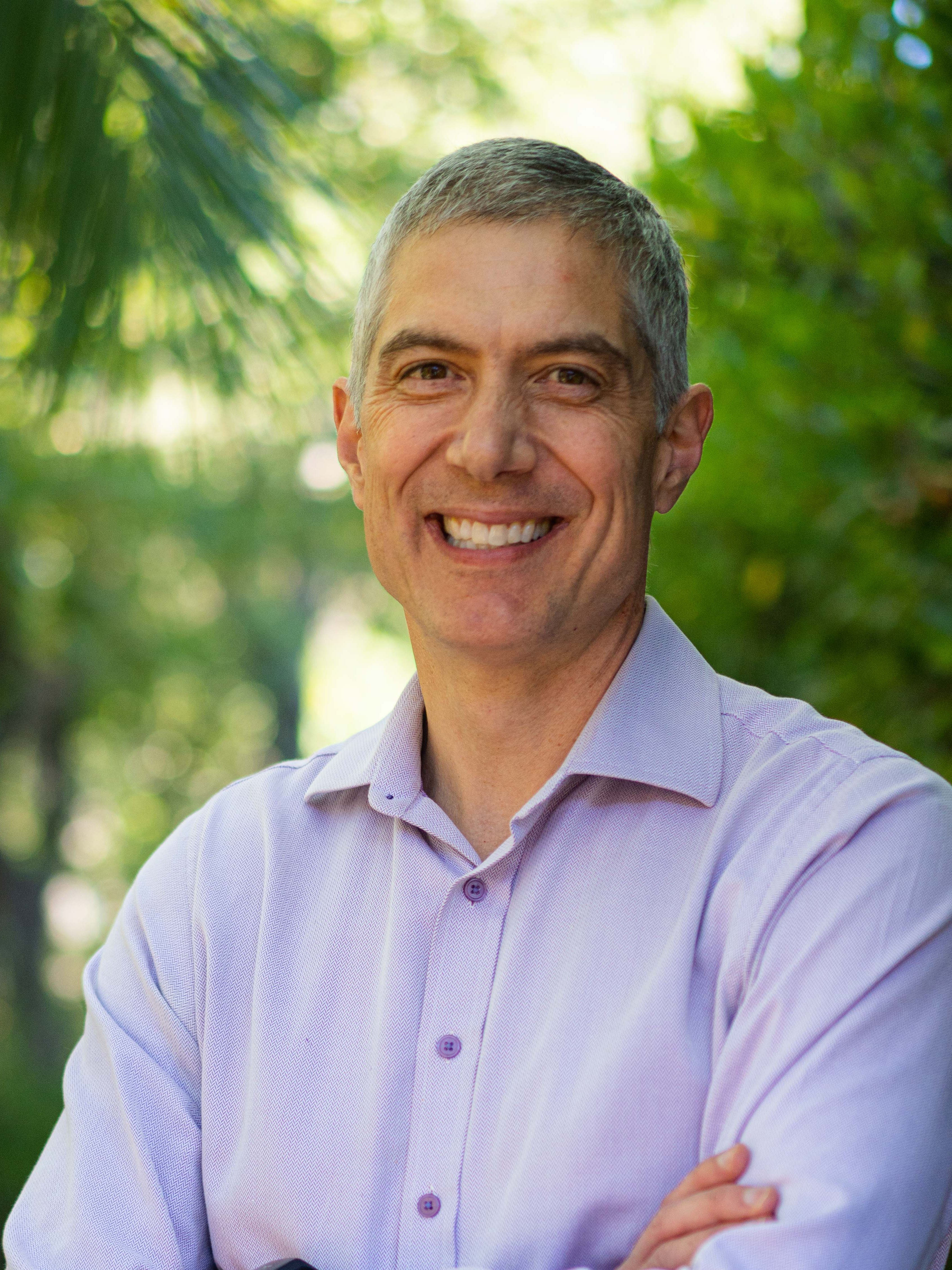
“There are all these things that need to happen to fulfill that ambition, and in my experience, they’re not going to happen on their own, comprehensively across the country, without some external intervention,” said Markovich, president and CEO of Ascendiun, the parent company of Blue Shield of California, Blue Shield of California Promise Health Plan, Altais and Stellarus.
“Worthy is our attempt to both advocate for that agenda and try to convince the federal government to step in and play a more assertive role in pushing the industry in the right direction,” he said.
HFMA spoke with Markovich to get his insight on what it will take to drive a more affordable and sustainable healthcare system.
1 You’ve said many healthcare stakeholders are going to have to get comfortable with making less money if consumer affordability is going to improve. What do you mean by that?
Well, just to give you an example, over the last 20 years or so, we’ve had about a 150% increase in the number of physicians in this country, and we’ve had a more than 3,000% increase in the number of administrative jobs. There are entire industries like revenue cycle management that probably should just disappear. I mean, there’s no reason to have all these intermediaries between a health plan and a provider just to determine the accurate payment, but that’s an example of where the administrative waste goes.
Consider a drug like Humira. A year or so ago, the list price for Humira was around $7,000 a month, and the net amount that was going to Humira for the drug was a little over $2,000 a month. So there’s about $5,000 in fees and rebates, with the pharmacy benefit manager and the specialty pharmacy doing the distribution. The cost of distributing the drug was even more than the drug itself. There are all these intermediary businesses that, frankly, probably need to just disappear altogether. You can’t command that kind of price and profit margin and make healthcare affordable in the long run. They’re certainly going to have to get by in some of those cases with a lot less revenue.
2 You’ve been a fan of solve-based convening and the concept of bringing together organizations whose financial incentives may be fundamentally at odds and arriving at solutions they are willing to support.
Where do you see the greatest opportunity for stakeholders to reach consensus today? And where are disagreements still hardest to overcome?
The answer to both questions is the same: How do we think about paying hospitals differently? Because we have an aging population that has very substantial and growing healthcare needs over time. And right now, we have a system where hospitals — which are very high-fixed-cost institutions by nature — get paid by doing more services for people. So their incentive, and the way their whole model is set up, is to do more care, not necessarily to do better care, and certainly not to do prevention. Prevention actually threatens their revenue stream. It doesn’t mean that some of them don’t do it, because they’re nonprofits, and they look to do it, but fundamentally, we’re investing in a lot of acute care that’s extremely expensive and not necessarily in efforts to keep people healthy.
If we paid fire departments for the number of fires they put out, we’d probably have a lot more fires. But what if we were to flip that model? What if we basically said, “These institutions are really important to us. We need them there when something goes awry, so we want to make sure they’re equipped and staffed and trained and ready in life-threatening situations to step in and intervene. But those things don’t happen all the time. So, what do they do when there aren’t fires?”
Well, there are fire codes. Fire departments check to make sure organizations are abiding by the fire codes to keep fires from happening.
So, I think if we were to do that with hospitals and say, “Look, Hospital X, we are going to pay you to serve a certain section of the population. We’re going to pay you on a risk-adjusted basis a certain flat amount, like a budgeted amount every year, so that we’re covering your fixed costs to do that, and we’ll also pay you if your quality of care is higher and the health outcomes of the population you serve are better. You’ll get a base amount, plus you can get more when the quality of care for the patients you see is good and when the population itself is healthier and experiencing better outcomes.”
All of a sudden, the hospital is saying, “I don’t want to go build another new hospital because that’s going to cost a lot of money, and my payments aren’t going to go up a whole lot. I actually want to see how I can serve this population in the most cost-effective way possible with the highest possible quality outcomes, and one of the ways to do that is to help this population stay healthy, be open 24 hours a day, and have all the right medical staff in place and all the right equipment to support that.”
This, to me, is a much better payment system.
That said, hospitals in general really understand how the fee-for-service model works. They’ve got teams built around that. They are accustomed to it. This type of model would involve a very different mindset. So I think it would be both the thing that’s very possible and important to do, and the thing that might be the most difficult to do.
3 A recent HFMA survey indicates that while value-based care is inevitable, value-based readiness isn’t. Many healthcare leaders say their organizations still lack the core capabilities needed to manage risk. In your view, what will it take to create a new payment structure standard in healthcare — one that ties pay to healthy outcomes — and bring everyone on board?
I think the fastest and easiest way to do that would be for the federal government, via Medicare and Medicaid, to create payment models and standards, and then basically say, “Look, if you’re going to be a part of this — if you want to serve this population — you’ve got to move to these payment models.”
If we could get to that place, I think the private sector could quickly then just follow that same structure. It might not be at the same payment levels, but the same structure of payment. That would be the fastest way to get to payment that is truly tied to outcomes and efficiency and patient satisfaction levels. There are other ways to get there, for sure, but I think it’s a lot harder.
One of the things I worry about in our case is that we’ve been really pushing these models and working on them with providers. But if we’re in the minority and the majority of their business is still in that traditional fee-for-service model, then the DNA of the organization is still in that mode of, “How do we provide more care?” And it’s difficult.
What you really want is for the physician’s practice in its entirety, the hospital in its entirety, to basically have the same reward system, irrespective of who the payer is and irrespective of who the patient is. And then they can just focus all of their time and energy on how to be more cost effective, how to deliver high-quality care and how to make sure that the patients are satisfied. It really changes the playbook for everyone.
This goes back to: Why Worthy? Well, because we would like to advocate for the federal government having a role. I think it has a very important role, in particular, in moving to new payment models.
4 Another HFMA report suggests that adoption of standardized claim edits could substantially improve claim accuracy and acceptance. Having worked for a health plan, do you think standardized claim edits are key to bridging the payer-provider divide?
I think they can be a very helpful and important intermediate step, but they won’t solve the problem in its entirety. I think where they could ideally play a role is as a bridge between the current payment model and future payment model.
And what I mean by that is, if it’s a hospital, “I’m going to move you from this fee-for-service model to this global budget-with-incentives model.” The hospital’s first question would be, ”How is this going to work out for me financially as compared to if I stayed on a fee-for-service model?” And I think what you could do is say, “You know what, we’re going to do this for a year, maybe two, and we’re going to run in parallel the billing and the payment that would have happened in the fee-for-service model so that we know the difference.”
We might even have some arrangements where it’s like, “If the amount gets way higher or way lower than you would have been paid under the old system, we might make adjustments to your budget,” and that might help them move to the new model. And one of the ways to make that a fully automated process would be to have these standardized claim edits and have them be accepted. I think it can also help with increasing efficiency around the way in which we pay providers.
But what I’d also say is that over the long term, when you have a system that rewards providers for doing a higher volume of more expensive care, you’re going to keep getting a higher volume of more expensive care.
So fundamentally, standardized claim edits can be a very helpful and valuable interim step, but this type of move needs to get us to different payment models and aligned incentives, or it won’t solve the problem in and of itself.
5 What role could AI realistically play in affordability? Where could AI actually eliminate costs rather than simply automate existing complexity?
I think there are several places where AI could make a big difference.
One is in driving reduced administrative costs, largely through automation. I mean, you mentioned just a moment ago having standardized claim edits and applying them. Well, there’s no reason that technology, including AI, couldn’t do that and make the entire payment and settlement process way, way, way more efficient. It could also do a lot to eliminate some of that 3,000-plus percent increase in administrative jobs in healthcare.
So I think one category is automation. Another category is just in the quality and level of personalization of care that a patient receives. There was a study in Health Affairs a handful of years ago that indicates that on average, it takes about 17 years or more for a new clinical protocol that is evidence-based to become common practice the majority of the time. The reason is because — as another study indicated — for any common specialty, a physician would have to read 29 hours per day to keep up with all the new research that was applicable to their specialty, and you know, obviously, that’s physically impossible. What that means is that no matter how smart or how well-trained a physician happens to be, no one human being has the capacity to keep up with all the latest research and breakthroughs on clinical care.
So that’s one of the areas where AI can really be helpful. Once we get all of your data in a comprehensive, real-time digital health record, which is fundamental to making this system more efficient and personalized, you can use AI to look at all the credible research that’s out there in the world up to the minute, synthesize it and be able to say, “OK, looking at your particular personal circumstances, here’s the various treatment options that are available to you, the evidence that’s available on how other patients have fared when they’ve chosen this option and the potential risks and benefits of each of those treatment options.” Not to make a diagnosis, and not to recommend a treatment, but to give both the patient and the physician up-to-the-minute, latest-available credible clinical information on their particular condition and their particular circumstances.
That kind of truly personalized care is possible with AI assisting patients and physicians to a shared decision. It could be very powerful when it comes to personalizing care and improving the quality of care. It can do a lot to support administrative cost reduction and efficiency, but also more personalized, higher quality care.
It changes the paradigm in the sense that the patient now becomes as informed as the doctor is in many cases on their particular circumstance and their particular condition.
